
Reviewed · CAPPADOCIA TOURS FROM ISTANBUL
7 Churches of Revelation 10 Days Tour with Istanbul & Cappadocia
Istanbul’s grand mosques and palaces are only the opening act. This 10-day route carries you from Byzantine and Ottoman landmarks to Cappadocia’s fairy chimneys, then follows the biblical sites of Pergamum, Thyatira, Smyrna, Sardis, Philadelphia, Laodicea, and Ephesus.
I like the small maximum group of 10, which should make site visits and questions easier. I also like the practical design: domestic flights, airport transfers, prepaid entrance tickets, and a Bible-oriented guide are all arranged for you.
The main drawback is the pace. You change regions several times, take early departures, and spend many hours on the road in western Turkey. This is a focused pilgrimage and history tour, not a slow holiday with long afternoons at the pool.
In This Review
- Key Points
- Why This Route Works for Bible and History Travelers
- Istanbul’s Imperial Center in One Day
- Cappadocia’s Rocks and Underground Rooms
- Following the Seven Churches West
- Sardis, Philadelphia, and Laodicea
- Ephesus and the Last Aegean Stops
- What $2,269 Includes
- Who Should Book This Tour
- FAQ
- How long is the Seven Churches of Revelation tour?
- What cities and regions does the tour visit?
- Are all Seven Churches of Revelation included?
- Are domestic flights included?
- What type of accommodation is included?
- Are entrance fees included?
- Is food included?
- Can I be picked up from either Istanbul airport?
- Is the tour suitable for vegetarians?
- How large is the group?
- Should You Book It?
Key Points
- Seven biblical sites in one route: Visit all seven churches named in Revelation, including Pergamum, Thyatira, Smyrna, Sardis, Philadelphia, and Laodicea.
- Istanbul in one full sightseeing day: See the Hippodrome, Hagia Sophia, Blue Mosque, Topkapi Palace, and Grand Bazaar.
- Two days in Cappadocia: Explore fairy chimneys, Pigeon Valley, Kaymakli Underground City, Goreme, Avanos, and Uchisar.
- Ephesus gets proper attention: Walk its marble streets, see the Library of Celsus and Grand Theater, then visit the House of the Virgin Mary.
- Comfortable but active travel: Expect 4 and 5-star hotels, a Cappadocia cave hotel, air-conditioned minibus transport, and moderate walking.
- Good value for a full-service itinerary: The $2,269 price includes nine nights, domestic flights, most entrance fees, nine breakfasts, and two dinners.
Why This Route Works for Bible and History Travelers
This tour makes sense if you want the Seven Churches of Revelation placed in their wider setting. The route is not limited to church ruins. It adds the empires, trade centers, theaters, temples, mosques, and natural sights that shaped these cities.
You begin in Istanbul, once Byzantium and Constantinople, before moving through Cappadocia and then west toward the Aegean coast. That sequence gives you a useful sweep of Turkey, but it also means the tour covers a lot of ground in a short time.
The Bible focus is clear. Pergamum is linked to Revelation 2:12, Smyrna to Revelation 2:8, Sardis to Revelation 3:1, Philadelphia to Revelation 3:7, and Laodicea to Revelation 3:14. Thyatira and Ephesus add further New Testament connections through Revelation and Acts.
You will have a professional guide with a Bible-oriented approach rather than simply a driver who points out ruins. One especially useful quality to expect is punctuality and clear explanation. The Istanbul guide was praised for arriving on time and adding cultural context to the monuments, which matters when a single day contains five major stops.
More Cappadocia trips from Istanbul:
- 2 Day All Inclusive Cappadocia Tour from Istanbul with Optional Balloon Flight
★ 5.0 · 429 reviews - From Istanbul: 2-Day All-Inclusive Cappadocia Guided Trip
★ 4.9 · 380 reviews - Istanbul: 2-Day Cappadocia Trip with Flights and Cave Hotel
★ 4.7 · 318 reviews
Istanbul’s Imperial Center in One Day
Day two is a concentrated walk through the old city. The morning begins at the Hippodrome, the former center of Byzantine chariot racing and public unrest. Little of the original racing arena remains, but its location helps you understand how public life worked in Constantinople.
Next comes Hagia Sophia, built in 532 by the Roman Emperor Justinian I. It has served different religious and political roles across the centuries, and its scale is the main reason to take your time inside.
There is an important practical change here. Since January 15, 2024, live guiding is not allowed inside Hagia Sophia. You need a smartphone and headphones to use the audio-style system. Headphones can be bought at the entrance for $3.50 if you do not bring your own, while visitors without smartphones follow the signs and written information.
The Blue Mosque is about a five-minute walk away. Its famous blue Iznik tiles give the interior its familiar name, but remember that it remains a place of worship. Shoulders must be covered, and shoes are not worn inside mosques.
Topkapi Palace receives about two hours, a welcome amount of time after the quicker mosque visits. The palace was built between 1460 and 1478 by Sultan Mehmed II after the conquest of Constantinople. You see the former residence and administrative center of the Ottoman sultans, including the weapons section.
The day ends at the Grand Bazaar, a huge covered market opened in 1461. Its maze includes more than 58 covered streets and over 1,200 shops selling jewelry, pottery, spices, and carpets. You get about an hour and a half here, enough to look around without turning the visit into a full shopping expedition.
If day two falls on Sunday, the Grand Bazaar is closed. The schedule substitutes the Spice Market, so you still get a traditional market visit.
Cappadocia’s Rocks and Underground Rooms
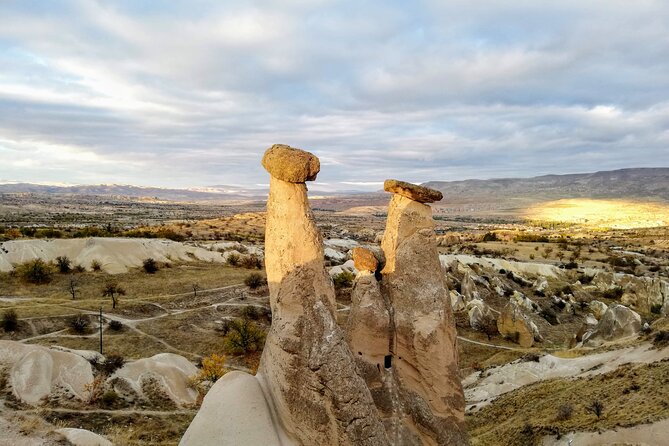
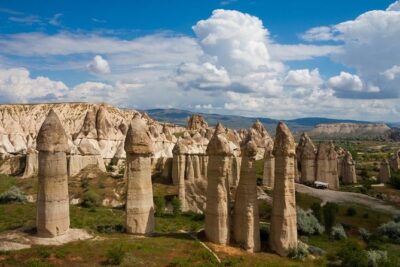
Day three begins with a flight from Istanbul to Cappadocia, followed by a first afternoon among the region’s unusual volcanic rock formations. The tour visits the Three Sisters Fairy Chimneys near Urgup, a well-known group of tall formations often shown in promotional images of Cappadocia.
Pigeon Valley follows. Local people carved pigeon houses into the soft rock because pigeons were useful to the farming economy. Look closely and you will see that some of these openings resemble small homes, a reminder that Cappadocia’s rock-cut spaces were made for practical reasons as well as shelter.
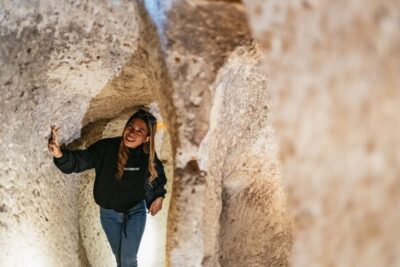
Kaymakli Underground City is the day’s most distinctive stop. You descend into one of Cappadocia’s largest and deepest underground settlements, with passages and rooms built below ground. If enclosed spaces trouble you, this is the point to consider carefully. The tour allows about an hour, so you get a strong sense of the site without spending half a day underground.
Day four shifts from underground spaces to open views. Devrent Valley is known for its unusual rock shapes and pale, moonlike setting. Pasabag, also called Monks Valley, provides some of the finest examples of fairy chimneys on the route.
In Avanos, the focus turns to pottery and tile workshops. The stop is not listed with an entrance fee, and the schedule gives you an hour. It offers a useful change from ruins and rock formations, especially if you want to see one of Cappadocia’s working crafts.
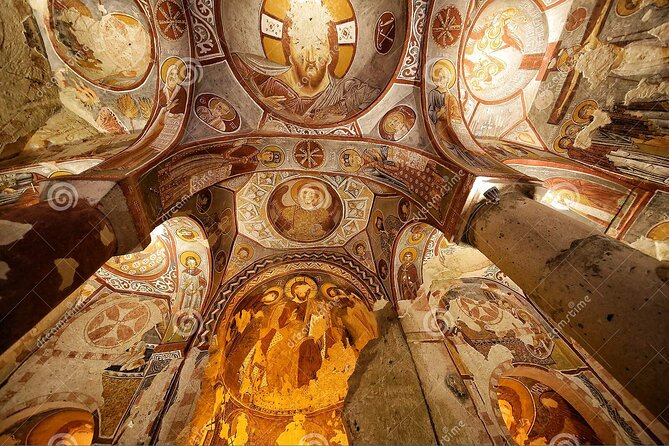
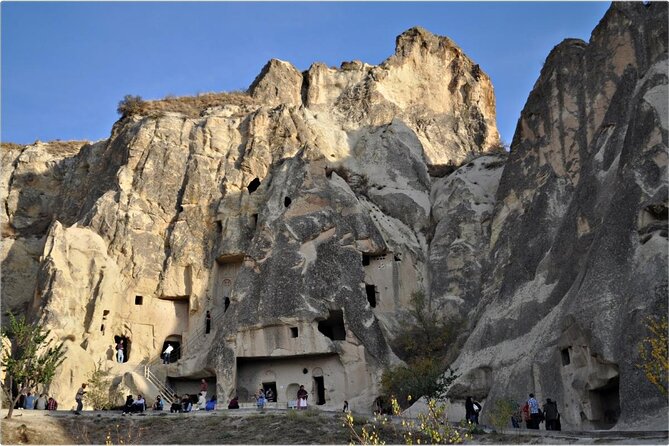
After lunch, Goreme Open Air Museum brings the religious thread back into focus. Rock churches contain frescoes from various centuries, painted on the walls of chapels cut into the stone. The visit lasts about an hour, so pay attention to the guide’s explanations and the details in the surviving paintings.
Uchisar Castle ends the Cappadocia touring day with a broad panorama from the region’s highest dominant point. You should expect stairs, uneven surfaces, and steady walking across both Cappadocia days. The stated fitness requirement is moderate, but this is not a route for someone seeking a fully accessible sightseeing program.
Following the Seven Churches West
Day five is mostly a transfer day. You fly from Kayseri or Nevsehir to Izmir, then continue to your hotel. The domestic flights save you from an even longer road journey, though the schedule still involves airport time, luggage handling, and transfers.
Day six begins at Pergamum, now Bergama. At the Acropolis, the remains sit high above the surrounding area, and the theater is known for its exceptionally steep slope. You also see the site associated with the Altar of Zeus, described in Revelation as the Throne of Satan, along with the Temple of Trajan and the former library.
The library was once among the ancient world’s leading collections, with an estimated 200,000 volumes. Pergamum also helped inspire the wider use of parchment, a detail that gives the ruins a practical connection to the spread and preservation of written material.
The Asklepion, a famous medical center of classical times, follows. The sanctuary is important because it shows Pergamum as more than a religious center. It was also a place connected with healing and medicine.
Thyatira comes next at modern Akhisar. The visible remains are more limited than at Pergamum, consisting mainly of a basilica and architectural fragments from the Roman period. That makes the Bible context particularly important here. Thyatira was known for purple dyes, and Lydia, the seller of purple mentioned at Philippi, came from this city.
The day ends with a panoramic ride through Smyrna, modern Izmir, including its Clock Tower. Smyrna is one of the Seven Churches and is linked with Revelation 2:8. The stop is brief, only about 15 minutes for the Clock Tower, so think of it as a city orientation rather than a full Izmir visit.
Two continents, plenty of other ways to spend a day:
- Istanbul: Bosphorus Dinner Cruise & Show with Private Table
★ 4.8 · 44,561 reviews - Istanbul: Daytime or Sunset Sightseeing Cruise & Audio Guide
★ 4.8 · 14,430 reviews - Istanbul: Bosphorus Dinner Cruise with Turkish Night Show
★ 4.8 · 10,127 reviews - Best of Istanbul 1, 2 or 3-Day Private Guided Istanbul Tour
★ 5.0 · 8,922 reviews
Sardis, Philadelphia, and Laodicea
Day seven starts early for Sardis, now Sart. Sardis was the capital of the ancient Lydian kingdom and is presented in Revelation as a dying church. The archaeological area includes the Temple of Artemis, a restored gymnasium, a reconstructed synagogue, and the final visible stretch of the royal Persian Road from Susa to Sardis.
You also see the Pactolus, the river associated with the area’s ancient wealth. The site spreads across open ground, so good shoes and sun protection are sensible, even though those items are not formally listed as requirements.
Philadelphia, modern Alasehir, is next. The remains include part of a Byzantine basilica made of brick, a surviving high arch, and some 11th-century frescoes. In the biblical letters, Philadelphia is the only one of the seven churches not censured, giving this modest archaeological stop unusual importance.
Laodicea is the final church on the Seven Churches route. Founded in the third century BC by Seleucid ruler Antiochus II and named for his wife Laodice, it grew at a crossroads near the Lycus tributary of the Meander River.
Its commercial position helps explain why the city mattered. The setting also gives added meaning to the biblical references to wealth, trade, and spiritual condition. You will have about an hour and 15 minutes here, enough for an informed visit but not a slow archaeological study.
The day closes at Hierapolis and Pamukkale. Hierapolis includes a theater, the Temple of Apollo, and a large necropolis. Pamukkale’s white travertine terraces were formed by mineral springs and look like snow or rounded cotton formations, which explains the Turkish name Cotton Castle.
The combined visit lasts about two hours before you check into a thermal hotel. That hotel is a pleasant change after a long day, but the schedule does not promise extensive time for using the thermal facilities. You should view the stay as comfortable lodging tied to the site, not as a dedicated spa vacation.
Ephesus and the Last Aegean Stops
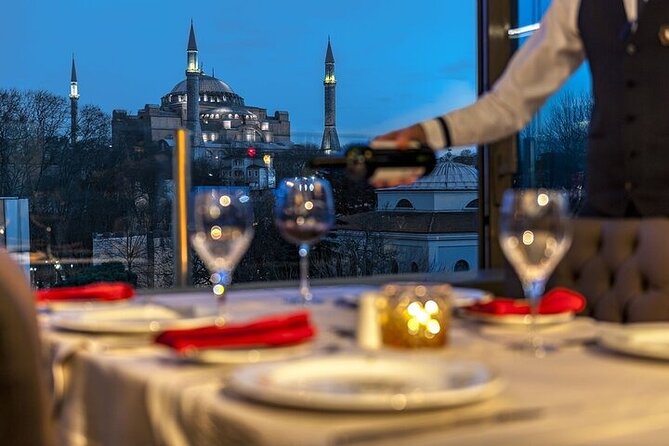
Day eight covers the Ephesus area after a drive of about two and a half hours. Ephesus was one of the 12 cities of the Ionian League and a major port connected with trade routes into Asia Minor.
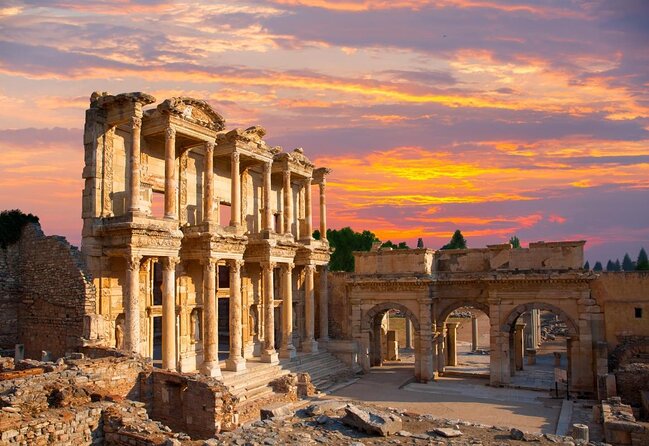
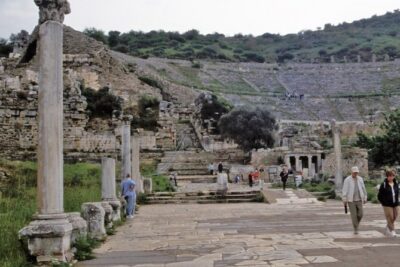
The ancient city is one of the tour’s strongest archaeological visits. You walk along marble streets past the Baths of Scholastica, the Library of Celsus, the Temple of Hadrian, and the Grand Theater.
The Library of Celsus was built in the early second century AD as a memorial to Gaius Julius Celsus Polemanus, a Roman governor of Asia. The Grand Theater began in the third century BC and was later enlarged by the Romans to hold about 24,000 spectators.
You get two hours in Ephesus. That is enough to see the main monuments with a guide, but it is not enough for an unhurried look at every side street and inscription. Wear sturdy shoes because the marble paving can be uneven, and expect a great deal of walking in open sun.
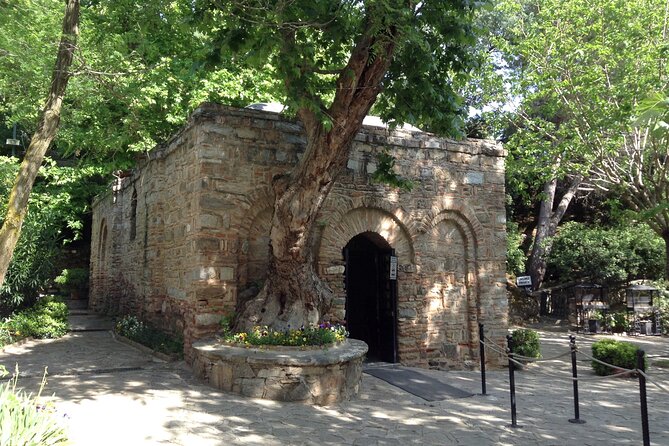
The House of the Virgin Mary is five miles from Ephesus in the Aladag Mountains. According to the tradition presented at the site, Mary came to Ephesus with St. John in AD 37 and lived there until her death in AD 48. The place became an official pilgrimage site in 1892, and Pope Paul VI visited in 1967.
This is a religious stop rather than a large archaeological complex, and the visit lasts about 45 minutes. As with the mosques and other holy places, dress modestly. Bare shoulders are not permitted at churches, monasteries, mosques, or synagogues.
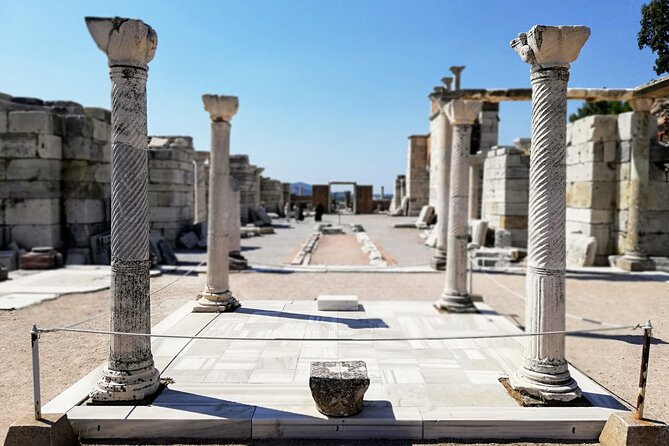
St. John’s Basilica comes next. It is traditionally associated with the burial place of the evangelist St. John on the southern slope of Ayosolug Hill. The final stop is the Temple of Artemis, once counted among the Seven Wonders of the ancient world. Only limited remains survive, and the visit takes about 20 minutes, but its connection to Ephesus makes it worth including.
You spend the night in Kusadasi, then fly from Izmir back to Istanbul on day nine. The afternoon in Istanbul is free for your own plans, though the exact amount of free time depends on the flight and transfer schedule. Day ten is the airport transfer for your international flight.
What $2,269 Includes
At $2,269 per person, the price is easiest to judge as a bundled touring package rather than a simple guided sightseeing day. It includes nine nights in 4 and 5-star hotels and cave-style lodging, domestic flights between Istanbul, Cappadocia, Izmir, and Istanbul, an air-conditioned minibus, entrance fees, nine breakfasts, and two dinners.
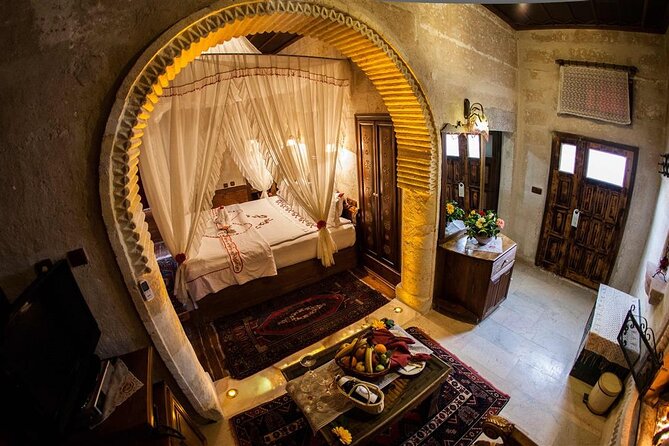
The accommodation list includes Istanbul properties such as Yasmak Sultan or Dosso Dossi Old City, Cappadocia options such as Zeydem Suites or Yunak Cave Hotel, Izmir hotels including DoubleTree by Hilton Alsancak and Hilton Garden Inn Bayrakli, thermal lodging near Pamukkale, and Efe Boutique Hotel in Kusadasi.
Exact hotels may be similar alternatives, so check the confirmed names before you book if a particular property matters to you. The included flights allow 15 kilograms of checked baggage and 8 kilograms of cabin baggage. Pack carefully, since those limits are lower than some international airline allowances.
Prepaid entrance tickets are another real convenience. Your guide handles the tickets, which helps avoid separate queues at major sites. International flights, unlisted meals and drinks, and dinners in Istanbul and Izmir are not included.
The value is strongest if you want one company to coordinate hotels, transfers, flights, site tickets, and guiding. It is less attractive if you prefer to choose your own restaurants, linger at ruins, or spend several nights in one place.
Who Should Book This Tour
I would recommend this tour to a Bible study group, a first-time visitor who wants a broad introduction to Turkey, or anyone who values a clear historical and religious theme. The group cap of 10 is small enough to keep the guide accessible, while the included transport removes much of the work of connecting distant sites.
You should be comfortable with early starts, flights, road transfers, uneven ruins, stairs, and moderate physical activity. The itinerary gives you many highlights, but it rarely gives you a full free day.
Vegetarian meals are available if requested at booking. Pickup is offered from either Istanbul Airport or Sabiha Gokcen Airport, and the booking is offered in English. Confirmation is provided at booking, and the cancellation terms allow a full refund when you cancel at least six full days before the start time. A 50 percent refund applies two to six days before departure, with no refund inside two days.
FAQ
How long is the Seven Churches of Revelation tour?
The tour lasts approximately 10 days and includes nine nights of accommodation.
What cities and regions does the tour visit?
The route includes Istanbul, Cappadocia, Izmir, Bergama, Akhisar, Sardis, Alasehir, Laodicea, Hierapolis, Pamukkale, Ephesus, and Kusadasi.
Are all Seven Churches of Revelation included?
Yes. The route visits Pergamum, Thyatira, Smyrna, Sardis, Philadelphia, Laodicea, and Ephesus.
Are domestic flights included?
Yes. Flights are included between Istanbul, Cappadocia, Izmir, and Istanbul. The allowance is 15 kilograms of checked baggage and 8 kilograms of cabin baggage.
What type of accommodation is included?
The package includes nine nights in 4 and 5-star hotels, including cave-style hotels in Cappadocia and thermal hotel accommodation near Pamukkale.
Are entrance fees included?
Yes. Entrance fees listed for the archaeological and cultural sites are included, with prepaid tickets provided by the guide.
Is food included?
Nine breakfasts and two dinners are included. Other meals and drinks are not included, and dinners in Istanbul and Izmir are separate.
Can I be picked up from either Istanbul airport?
Yes. Private pickup and transfer are offered from Istanbul Airport and Sabiha Gokcen Airport.
Is the tour suitable for vegetarians?
Yes. A vegetarian option is available, but you need to request it when booking.
How large is the group?
The tour has a maximum of 10 participants and is offered in English.
Should You Book It?
Book this tour if you want the Seven Churches tied to the wider story of Turkey, and if you prefer one organized package over arranging several flights, hotels, guides, and archaeological visits yourself. The combination of Istanbul, Cappadocia, Pergamum, Pamukkale, and Ephesus gives you far more than a narrow pilgrimage.
Skip it if you want a relaxed pace, extensive free time, or the freedom to spend several hours at each ruin. For the right traveler, $2,269 is a sensible price for the transport, lodging, domestic flights, entry fees, and Bible-focused guidance packed into 10 demanding but rewarding days.
Latest additions around Istanbul
- Istanbul: Hagia Sophia Skip-the-Line Ticket with Live Guide★ 3.7 · 3 reviews
- Ephesus Private Tour From Istanbul including transfers & domestic fights★ 5.0 · 3 reviews
- 6 Days Multi City Turkey Tour★ 5.0 · 3 reviews
- Princess Islands Daily Tour from Istanbul★ 5.0 · 3 reviews
- Premium Line : Private Istanbul Tour : All Inclusive Package★ 4.3 · 3 reviews
- Private Istanbul Combo Tour – Classic Old City and Bosphorus Cruise★ 5.0 · 3 reviews
- Private tour: 12-Day Turkish Adventure Package Tour From Istanbul★ 4.5 · 3 reviews
- Istanbul: Hagia Sophia Guided Tour with Optional Ticket★ 3.3 · 3 reviews
Cappadocia Tours from Istanbul, compared.
2 Day All Inclusive Cappadocia Tour from Istanbul with Optional Balloon Flight
Read our review →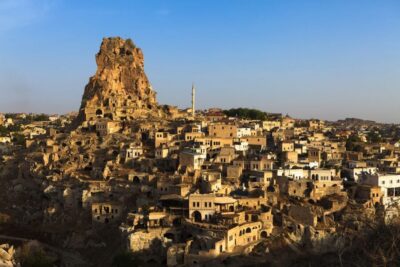
2-Day Cappadocia Trip with Flights and Cave Hotel
Read our review →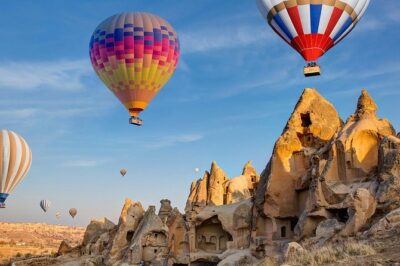
2 Days Cappadocia from Istanbul with Cave Hotel+Optional Balloon
Read our review →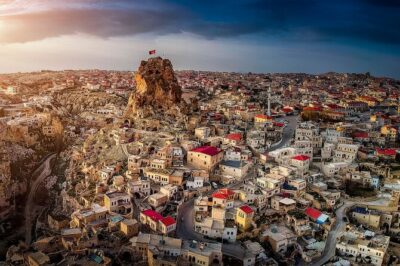
Cappadocia Dream: 2-Days Tour from Istanbul & Balloon Ride Option
Read our review →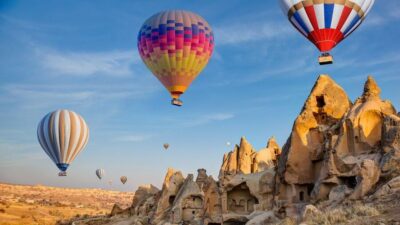
4 Days Turkey Tour – Cappadocia, Ephesus and Pamukkale Tour
Read our review →
Browse the lists this tour appears in