
Reviewed · PRIVATE DRIVERS
Istanbul: 1 or 2-Day Private Guided Tour with Hotel Transfer
Istanbul is a city where Byzantine churches, Ottoman palaces, ferry docks, markets, and everyday neighborhoods all crowd into one remarkable setting. This private tour gives you a guide for the big sights and the city’s confusing public transport, with the option to cover the essentials in one day or spread the pace across two.
I especially like the flexible sightseeing and the chance to move around by tram, ferry, funicular, bus, train, or taxi rather than staying inside a tour vehicle. I also like that a private guide can adjust the day for your interests, from Islamic architecture to photography, food, or less obvious stops such as old artisan hans. The main drawback is cost: at about $188 per person, you still pay separately for transport, entrance fees, lunches, and drinks.
In This Review
- Key points to know before booking
- Why a private guide helps in Istanbul
- Day one: Hagia Sophia and the Byzantine center
- The Hippodrome and the story beneath the monuments
- Topkapi Palace, Ottoman power in rooms and courtyards
- The Grand Bazaar and the art of buying less badly
- Day two: the Spice Bazaar and the Bosphorus
- Dolmabahce Palace and the final Ottoman chapter
- Istiklal Street, Taksim Square, and Galata
- Walking, driving, and getting around
- What the $188 price really buys
- Who should book this Istanbul tour?
- FAQ
- Is hotel pickup included?
- How long does the tour last?
- What sights are included on the one-day itinerary?
- What is added on the two-day itinerary?
- Are entrance fees included?
- Is transportation included?
- Which languages are available?
- What happens if a museum is closed?
- Is the tour suitable for people with mobility impairments?
Key points to know before booking
- Hagia Sophia and Topkapi Palace anchor the first day: You get Istanbul’s essential Byzantine and Ottoman landmarks in one carefully arranged route.
- The two-day option adds the Bosphorus by boat: Palaces, mosques, fortresses, and the Europe-Asia divide make this the more relaxed and varied choice.
- Your guide handles the city’s transit puzzle: Expect some combination of tram, ferry, bus, train, funicular, taxi, and walking.
- Private touring allows real customization: Guides such as Musa, Saban, Numan, Hazal, and Kadir have adjusted routes, food stops, photo breaks, and sightseeing time to suit individual interests.
- The Grand Bazaar requires planning: It is closed Sundays, and the city’s major museums also have different closing days.
- This is an active day: Even with a driving option, the sights involve walking, steps, crowds, and time on public transport.
Why a private guide helps in Istanbul
Istanbul is easy to admire and surprisingly easy to misread. A mosque may have replaced a church, an ancient column may sit beside a busy tram route, and a palace can look impressive without explaining how power worked inside it. A good guide connects those pieces.
The private format is especially useful if you have only one or two days. You are not waiting for a large group or following a fixed script at every stop. Guides have adjusted the schedule for visitors interested in Ottoman architecture, Turkish food, photography, local music, or the Asian side of the city.
Several guides have received especially strong praise over the years. Musa is described as friendly, flexible, and strong on Istanbul’s history. Saban Sezer has been noted for humor, careful timing, and broad knowledge of the city. Numan, Ismail, Kadir Kucukeren, Ahmet, and Hazal are also names associated with warm, adaptable guiding.
Your assigned guide may be someone else, so do not book based on one individual alone. The useful point is the guiding style: the experience works best when you tell your guide what matters to you before setting out.
A few more Istanbul experiences to weigh up
- Private Transfer from Istanbul Airport to Fatih, Beyoglu and Besiktas
★ 5.0 · 1,793 reviews - Istanbul Private Transfer – IST Airport, Cruise Ports and Hotels
★ 5.0 · 943 reviews - Professional Airport Transfer Services in All Turkey
★ 5.0 · 751 reviews
Day one: Hagia Sophia and the Byzantine center
The first day begins with hotel or harbor pickup. The classic route focuses on Istanbul’s historic center, where several major sights are close enough to connect on foot.
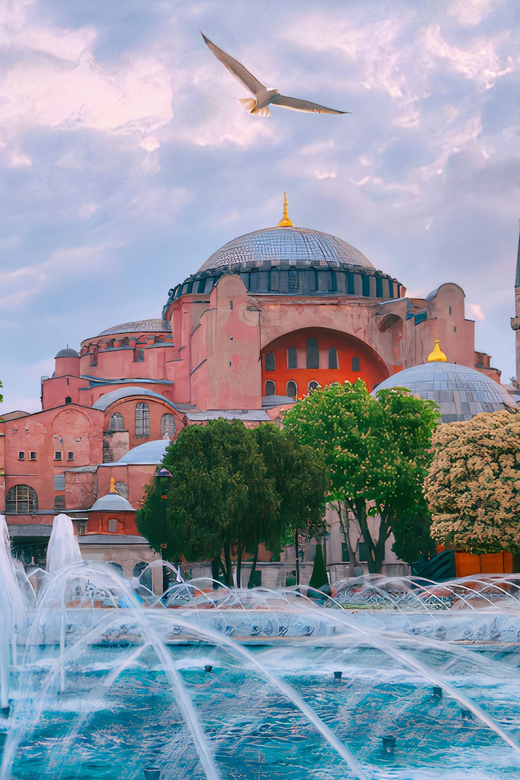
Hagia Sophia is the emotional high point for many people. Built as a Byzantine church and later used as a mosque, it was once the largest church in the world. Its great dome, mosaics, and layered religious history reward a guide who can explain what you are looking at rather than simply point out the architecture.
Allow yourself time to look upward and around. The building’s importance is not only its size. It is the physical record of Istanbul’s changing empires and faiths, and a short explanation about its Byzantine design and later Ottoman use can make the interior much easier to understand.
One practical caution: the attraction’s closing day is listed as Monday. If it is closed on your chosen date, the itinerary may shift to another day, or the supplier may substitute the Basilica Cistern or Galata Tower.
The Blue Mosque is a short walk away. Its popular name comes from the blue Iznik tiles used throughout the interior, while its official name refers to Sultan Ahmet I. The building remains one of Istanbul’s most recognizable landmarks, with a courtyard and multiple domes that help show how Ottoman mosque design developed.
The supplied information notes renovation work in the past, with portions of the ceiling temporarily covered. Conditions can change, so it is sensible to ask your guide what is open when you arrive. As with any active mosque, access can also be affected by prayer times, so your schedule may need to shift.
The Hippodrome and the story beneath the monuments
Between the major religious buildings, the Hippodrome gives you a quick lesson in Constantinople’s public life. This was once the city’s grand arena and a center for ceremonies, chariot races, and political gatherings.
You will see the Egyptian Obelisk, the Serpentine Column, the Constantine Column, and the German Fountain of Wilhelm II. These objects come from different periods, which is precisely what makes the area useful. With a guide, the square becomes more than a collection of old stones. You begin to see how Roman, Byzantine, Ottoman, and modern Istanbul overlap.
This part of the route is also a welcome outdoor break after time inside the monuments. It is not a long stop, but it helps orient you before continuing to Topkapi Palace.
Topkapi Palace, Ottoman power in rooms and courtyards
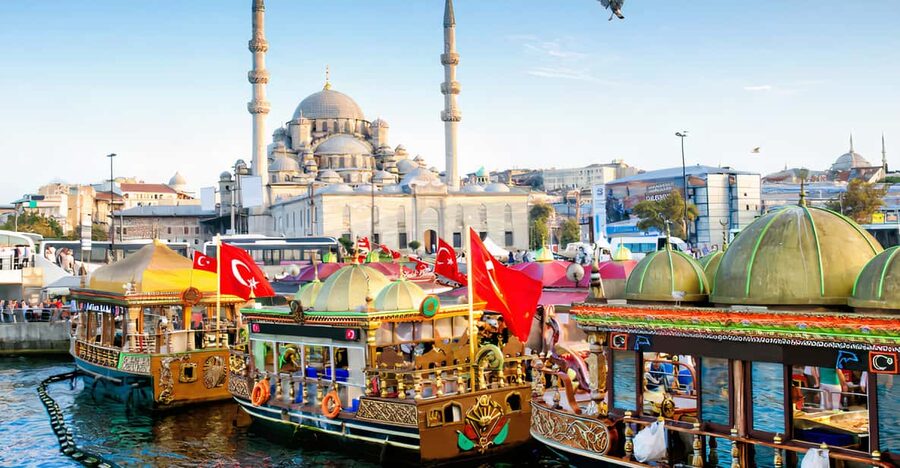
Topkapi Palace was the Ottoman court’s main home for nearly four centuries. It is less about one enormous building than a sequence of courtyards, gardens, chambers, tiled rooms, and views across the water.
Your guide can help you read the palace as a working center of government. You will see how public areas gave way to more private spaces, and how the palace’s design reflected rank and access. The harem is an important part of the visit, with lavish rooms and detailed Iznik tiles, but it can require a separate ticket.
Topkapi is closed Tuesdays according to the supplied schedule. Entrance fees are not included, so plan for additional costs. The benefit of a private guide here is not simply getting through the entry process. It is knowing which rooms deserve your attention and how the palace fits into Ottoman court life.
If you are interested in Islamic art, architecture, or the movement of Ottoman traditions into other parts of the former empire, tell your guide. One past itinerary was adjusted to include Suleymaniye Mosque for that reason. That sort of change is one of the strongest arguments for choosing a private tour.
Two continents, plenty of other ways to spend a day:
- Istanbul: Bosphorus Dinner Cruise & Show with Private Table
★ 4.8 · 44,561 reviews - Istanbul: Daytime or Sunset Sightseeing Cruise & Audio Guide
★ 4.8 · 14,430 reviews - Istanbul: Bosphorus Dinner Cruise with Turkish Night Show
★ 4.8 · 10,127 reviews - Best of Istanbul 1, 2 or 3-Day Private Guided Istanbul Tour
★ 5.0 · 8,922 reviews
The Grand Bazaar and the art of buying less badly
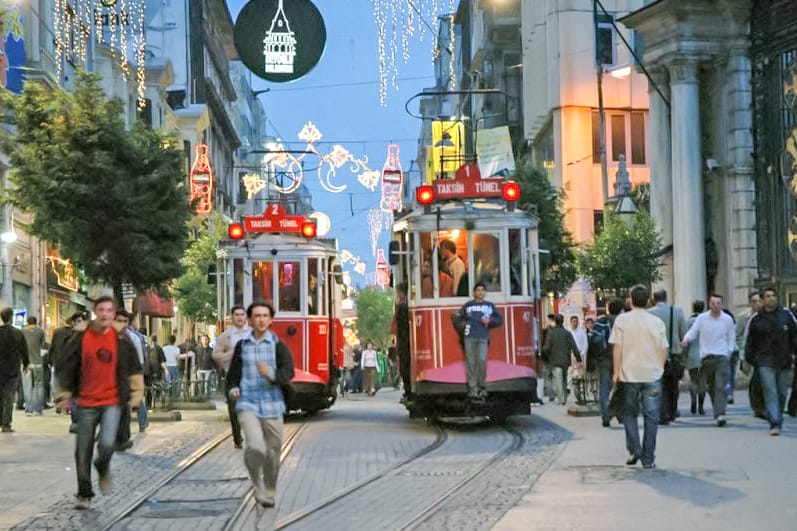
The Grand Bazaar is one of the world’s largest covered markets, filled with shops selling carpets, jewelry, spices, textiles, and souvenirs. It can be fun, tiring, confusing, and commercially intense, sometimes all within the same ten minutes.
This is the place to practice bargaining, but do not mistake bargaining for a requirement to buy. Walk through first. Compare quality and prices. If you find something you like, your guide can help you understand the process and avoid wasting time at shops that do not suit your interests.
The bazaar is closed Sundays. That detail matters because the first day contains several major sights, and a substitute market stop will not feel quite the same. If your schedule includes Sunday, ask in advance how the route will be rearranged.
Several past guiding experiences included stops for Turkish ice cream, tea, chestnuts, baklava, or a local lunch. Food is not included, and you should not assume a meal is part of the package, but a guide can recommend a place based on your taste and the day’s location.
Day two: the Spice Bazaar and the Bosphorus
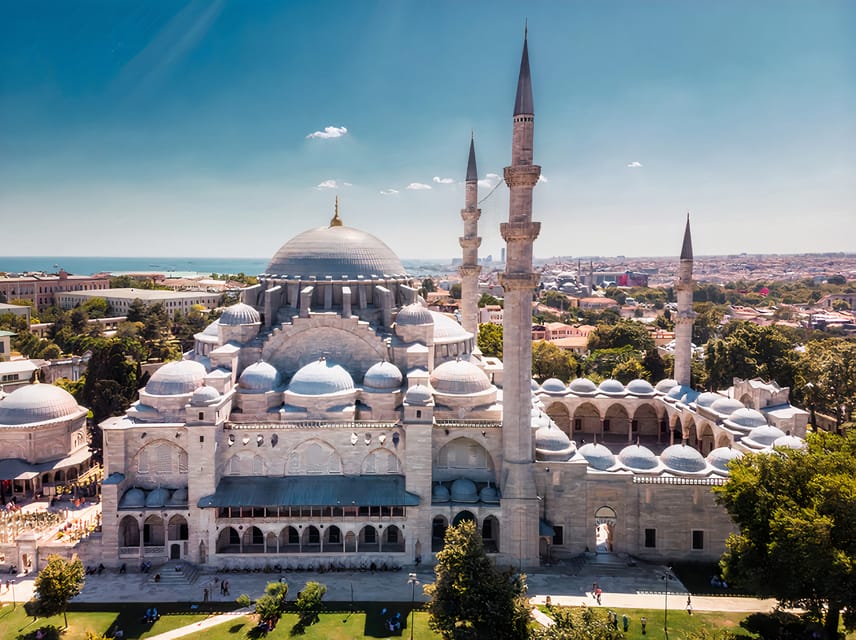
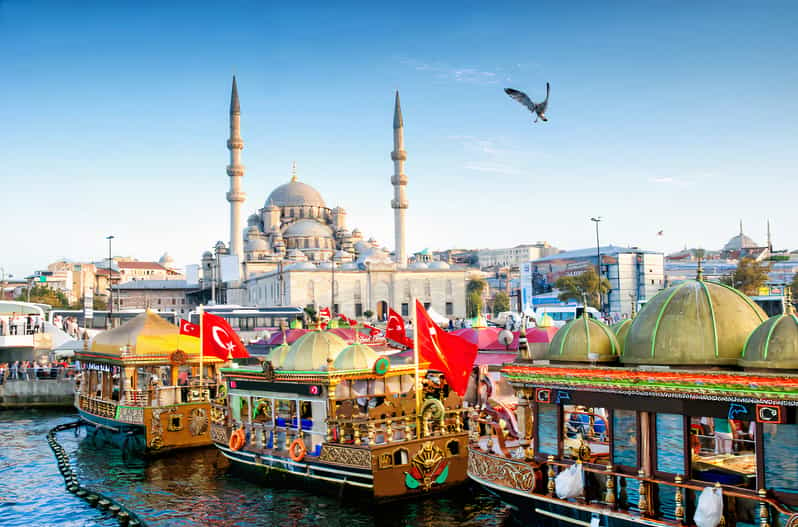
The second day opens at the Spice Bazaar, also called the Egyptian Market. It is smaller and more concentrated than the Grand Bazaar, with stalls selling herbs, teas, Turkish delight, dried goods, and other food items.
The appeal here is sensory and practical. You can smell the spices, watch shopkeepers arrange their displays, and pick up edible souvenirs without committing to a large carpet or jewelry purchase. It is a good contrast with the monumental first day.
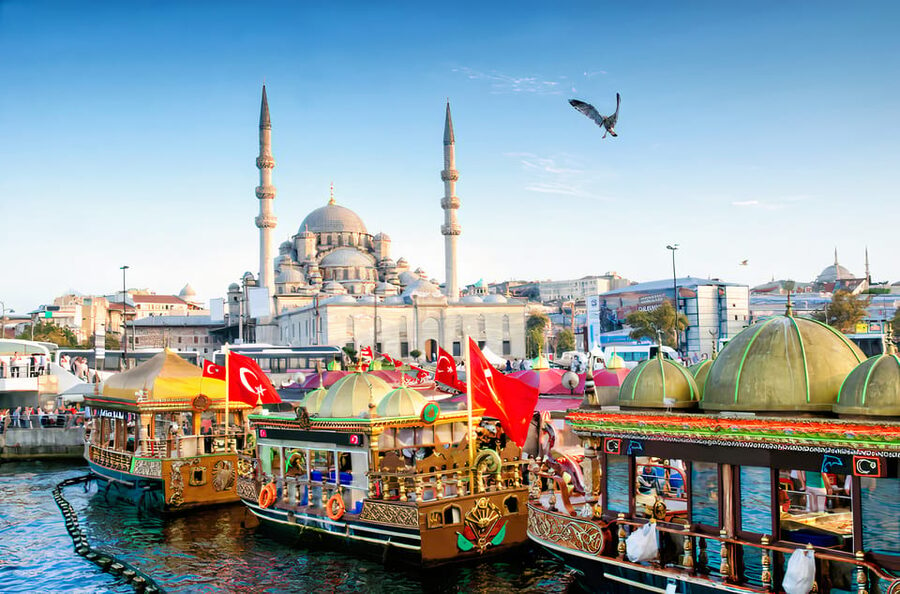
Next comes the Bosphorus cruise. This is the tour’s best change of pace. After walking through historic streets, you sit on the water and see Istanbul from the angle that explains its geography: the Bosphorus separates Europe and Asia while linking the Black Sea with the Sea of Marmara.
Look toward the shoreline for palaces, mosques, fortresses, and waterfront residences. The cruise also gives you a clearer sense of how widely Istanbul spreads. The Bosphorus Bridge, now commonly known by a newer official name, connects the two continents and is a memorable sight from the water.
The exact boat arrangement and timing are not specified, so check the day’s plan with the operator. Still, including a cruise adds something a land-only tour cannot: a calm view of the city’s two-sided identity.
Dolmabahce Palace and the final Ottoman chapter
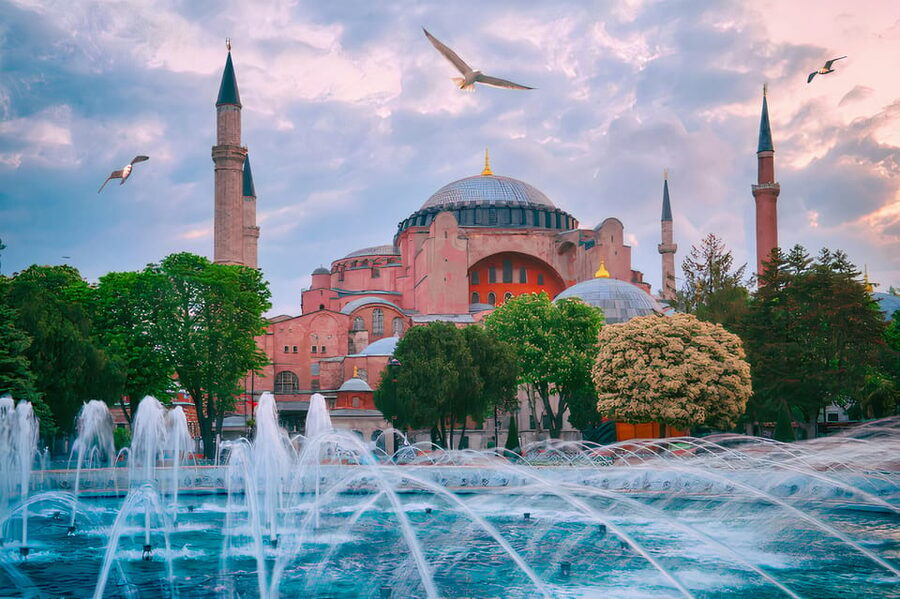
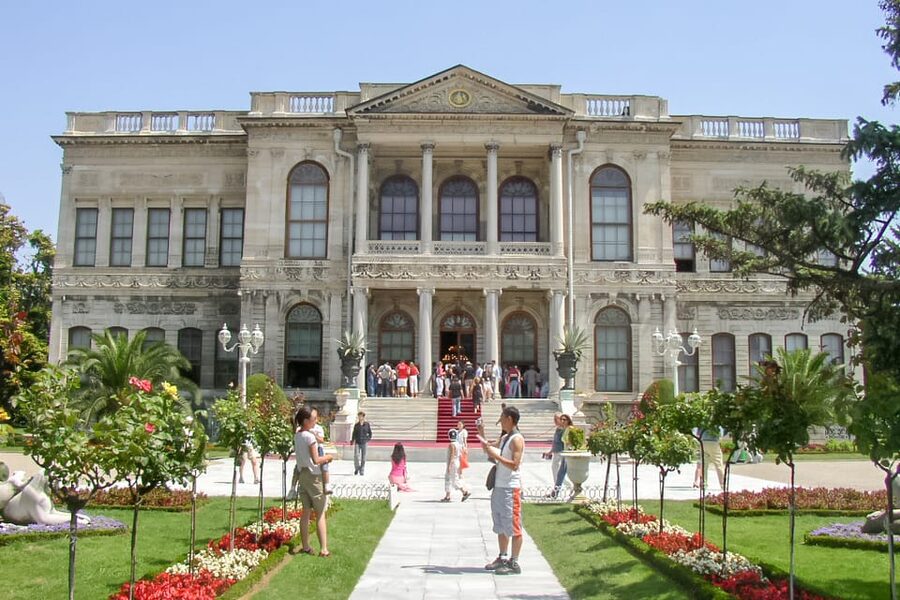
Dolmabahce Palace offers a sharp contrast with Topkapi. Topkapi feels like a layered imperial court. Dolmabahce was built in the 19th century along the Bosphorus and reflects a stronger European influence, with ornate halls, grand interiors, and glittering chandeliers.
This was home to the last Ottoman sultans. Its design shows an empire trying to present itself as modern and European while holding onto Ottoman court customs. That tension gives the palace its interest.
Dolmabahce is closed Mondays and Thursdays. Entrance fees are extra, and the palace is not simply a quick exterior photo stop. The inside is the point, so confirm that the interior visit is included in your selected itinerary and that the opening schedule works for your dates.
The palace visit can be visually heavy, especially after several historic buildings in a row. I find it works best when your guide explains the political and social setting rather than listing every decorative feature.
Istiklal Street, Taksim Square, and Galata
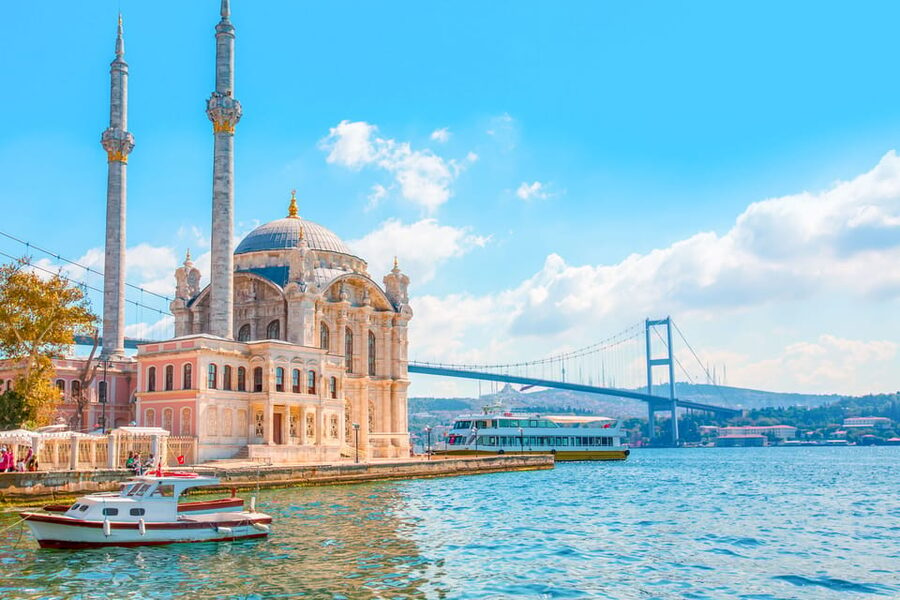
The tour ends in a very different Istanbul. Istiklal Street and Taksim Square are associated with shopping, cafés, restaurants, public life, and the city’s modern energy.
A walk down Istiklal leads toward the Galata Tower district. This section is useful because it shows you Istanbul beyond the old imperial core. You can finish with coffee, sweets, shopping, or further exploration, depending on the schedule and your interests.
Some past itineraries have included the Galata area, local cafés, and even a request to hear a Turkish pop song from the 1990s. That detail captures the value of a private guide: the day can include ordinary city life, not only famous buildings.
The route can also include the Asian side if arranged with the guide. One past itinerary used a ferry and a walk through smaller streets to reach the port. Since the Asian-side addition is not guaranteed in the standard outline, request it before booking if it is important to you.
Walking, driving, and getting around
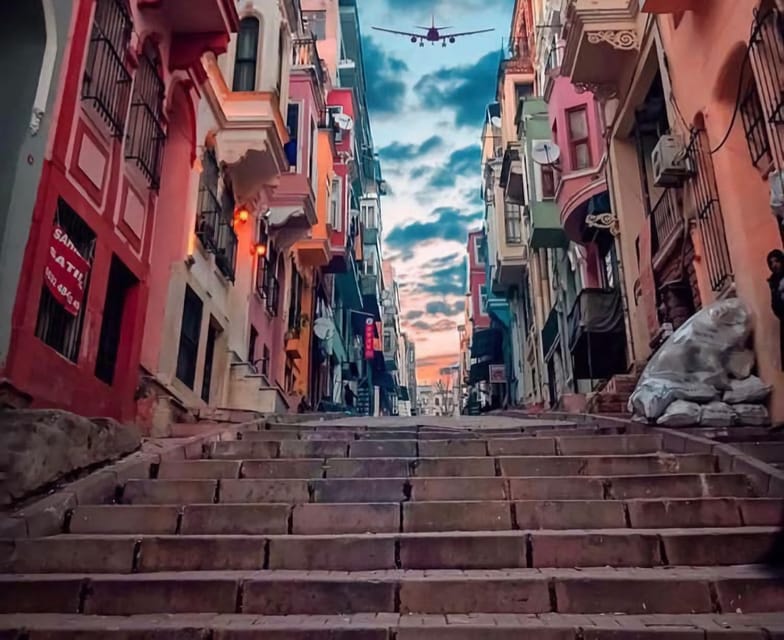
The tour offers walking or driving options, but the transport notes say that your guide may use public transport such as trams, trains, ferries, taxis, and buses. A one-way transport ticket is listed at 3 TL, roughly 1 EUR in the supplied information, though current fares may differ.
This matters because private does not mean a private car for every minute. The walking option is the more immersive way to experience the old center, while driving may help with comfort or longer connections. Traffic can make a vehicle less efficient in central Istanbul, so ask exactly what the selected option includes.
The pace is likely to feel full. One day is designed to cover the major sights quickly, with limited time to linger. Two days give you more breathing room and add the Bosphorus, Dolmabahce, Spice Bazaar, and Istiklal Street.
The activity is described as wheelchair accessible, but it is also listed as unsuitable for people with mobility impairments. Treat that as a warning to clarify the route before paying. Ask about steps, uneven streets, palace access, mosque entry, public transport, and how much walking is expected.
What the $188 price really buys
At roughly $188 per person, this is not a cheap sightseeing day. The price includes a private guide and hotel or harbor pickup and drop-off, but not transport, entrance fees, lunches, or drinks.
The value depends on your situation. If you have one day in Istanbul, a private guide can save time by arranging the order of sights, helping with ticket lines, and making quick transport decisions. That can be worth more than the apparent cost, especially when museum closing days and busy central streets complicate planning.
For two people or a small family, the price may compare well with several separate private services. For a solo visitor, it is a larger expense. You also need to budget for admission fees and meals, so calculate the full daily cost rather than stopping at the advertised rate.
Skip-the-ticket-line access is advertised, but it does not mean entrance is free. Ask how tickets are handled and what you will pay on the day.
The activity allows cancellation up to 24 hours before departure for a full refund, and reserve-now, pay-later booking is available. Those terms are useful if your Istanbul plans are still shifting.
Who should book this Istanbul tour?
I would choose this experience if you have limited time, want serious historical context, or prefer having someone else manage the city’s transport and opening schedules. It is also a strong fit for families, first-time visitors, photographers, and anyone with a specific interest that a standard group route might ignore.
The one-day option suits an efficient first look. Expect a packed schedule and plenty of walking. The two-day option is the better choice if you want the Bosphorus, Dolmabahce Palace, the Spice Bazaar, and the modern districts without turning every hour into a race.
I would skip it if you enjoy setting your own slow pace, dislike organized sightseeing, or want to avoid extra ticket and transport costs. Istanbul is very possible to explore independently, but the private guide earns the fee when you need context, quick decisions, local food advice, or help fitting major sights into a short stay.
FAQ
Is hotel pickup included?
Yes. Hotel or harbor pickup and drop-off are included regardless of the selected option.
How long does the tour last?
The activity lasts from seven hours for the one-day option up to two days for the extended option.
What sights are included on the one-day itinerary?
The first day covers Hagia Sophia, the Blue Mosque, the Hippodrome, Topkapi Palace, and the Grand Bazaar.
What is added on the two-day itinerary?
The second day adds the Spice Bazaar, a Bosphorus cruise, Dolmabahce Palace, Istiklal Street, Taksim Square, and the Galata Tower district.
Are entrance fees included?
No. Entrance fees are not included in the stated price.
Is transportation included?
No transportation costs are included. Your guide may use trams, trains, ferries, taxis, and buses, and the supplied information lists a one-way ticket at about 3 TL, roughly 1 EUR at that time.
Which languages are available?
Guiding is available in English, Spanish, German, Japanese, and Chinese.
What happens if a museum is closed?
The supplier may move that part of the itinerary to another available day. If that is not possible, the replacement may be the Basilica Cistern or Galata Tower.
Is the tour suitable for people with mobility impairments?
The activity is marked wheelchair accessible but also listed as unsuitable for people with mobility impairments. Contact the supplier before booking to confirm the exact walking, stair, and transport arrangements.
Latest additions around Istanbul
- Istanbul: Hagia Sophia Skip-the-Line Ticket with Live Guide★ 3.7 · 3 reviews
- Ephesus Private Tour From Istanbul including transfers & domestic fights★ 5.0 · 3 reviews
- 6 Days Multi City Turkey Tour★ 5.0 · 3 reviews
- Princess Islands Daily Tour from Istanbul★ 5.0 · 3 reviews
- Premium Line : Private Istanbul Tour : All Inclusive Package★ 4.3 · 3 reviews
- Private Istanbul Combo Tour – Classic Old City and Bosphorus Cruise★ 5.0 · 3 reviews
- Private tour: 12-Day Turkish Adventure Package Tour From Istanbul★ 4.5 · 3 reviews
- Istanbul: Hagia Sophia Guided Tour with Optional Ticket★ 3.3 · 3 reviews
Private Drivers, compared.

Princes’ Islands Cruise w/Music, Lunch & Transfer
Read our review →
Bosphorus Dinner Cruise Incl. Drinks with Transfer
Read our review →
Istanbul Private Guided Tour for Layover Flight. Transfer incl.
Read our review →Browse the lists this tour appears in