
Reviewed · HAGIA SOPHIA TOURS
Istanbul Highlights Blue Mosque, Hagia Sophia, Cisterns and More!
Istanbul’s greatest historic sights are packed into a walkable area, and this tour gives you a full day among them without making you sort out tickets, routes, or lunch. You’ll see the Blue Mosque, Hagia Sophia, and Basilica Cistern, then move through the old Hippodrome and Grand Bazaar with an English-speaking guide.
I like the small maximum of 10 people, which makes it easier to ask questions and keep a steady pace. I also like the useful price package: two major admission tickets, a three-course Turkish meal, tea, water, and a professional guide are included. The main catch is the rug demonstration. It can be interesting, but it may take time away from sightseeing if the group lingers.
In This Review
- Key points to know before booking
- Starting at the German Fountain in Sultanahmet
- The Blue Mosque and the rhythm of a working place of worship
- Hagia Sophia, a building with several identities
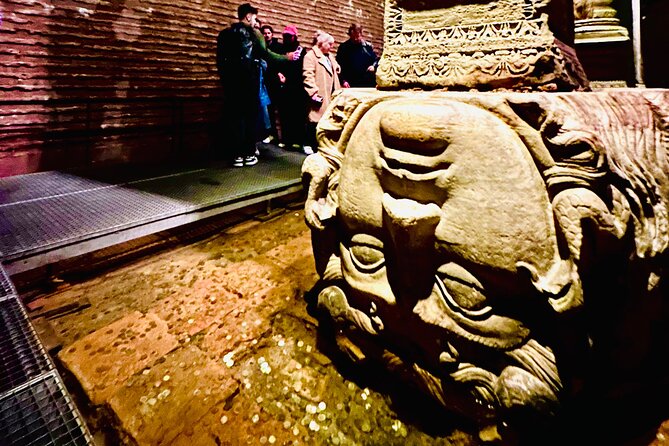
- The Basilica Cistern, Istanbul’s most atmospheric stop
- The Hippodrome’s three monuments in fifteen minutes
- The Nakkas Cistern and an unusual art stop
- The rug demonstration and the tour’s main compromise
- A filling Turkish lunch at Tamara Restaurant
- Divanyolu Street and the road toward the Grand Bazaar
- Grand Bazaar, four thousand shops and a maze of choices
- Constantine’s Column and Nuruosmaniye Mosque
- Is $150 a fair price?
- Who should book this Istanbul walking tour?
- Should you book it?
- FAQ
- How long does the tour last?
- What time does the tour start?
- Where does the tour begin?
- Where does the tour end?
- How many people can join the tour?
- Is lunch included?
- Are the Hagia Sophia and Basilica Cistern tickets included?
- Is transportation included?
- What happens if I need to cancel?
Key points to know before booking
- Three major sights with admission included: Hagia Sophia and the Basilica Cistern tickets are part of the price, rather than extra costs on the day.
- A real Old City walking tour: The route links the Blue Mosque, Hippodrome monuments, cisterns, Hagia Sophia, and Grand Bazaar on foot.
- Small group of no more than 10: You get more room to hear the guide and ask questions than on a large coach tour.
- Turkish lunch is built in: Expect soup, mezes, salad, mixed kebabs or vegetarian choices, dessert, tea, and water.
- Guide quality matters here: Guides named in the tour feedback include Emre, Tunc, Mustafa, Oguzhan, Ozzy, Kadir, Kamal Aslan, and Buket.
- Plan for a lot of walking: The tour lasts about 7 to 8 hours and requires a moderate level of fitness.
Starting at the German Fountain in Sultanahmet
The tour begins at 9:00 a.m. beside the German Fountain near the Hippodrome. This is a sensible meeting point because the main sights of Istanbul’s historic center sit close together, and the route can begin without a long transfer.
You spend about 15 minutes here. The fountain itself is a compact reminder of Istanbul’s connection with Europe, but the practical value of this first stop is orientation. Your guide can set the day’s rhythm, explain the nearby monuments, and get the group moving before the busiest part of the morning.
The tour ends back at the same meeting point. There is no air-conditioned vehicle included, so you should think of this as a walking day, not a vehicle sightseeing tour. Wear comfortable shoes and bring enough energy for several hours on stone streets, courtyards, and indoor museum floors.
More Blue Mosque visits:
- Istanbul: Blue Mosque & Hagia Sophia Guided Tour w/ Tickets
★ 4.8 · 3,600 reviews - Istanbul: Blue Mosque Guided Tour
★ 4.5 · 1,910 reviews - Istanbul: Blue Mosque, Hagia Sophia, & Basilica Cistern Tour
★ 4.7 · 1,806 reviews
The Blue Mosque and the rhythm of a working place of worship
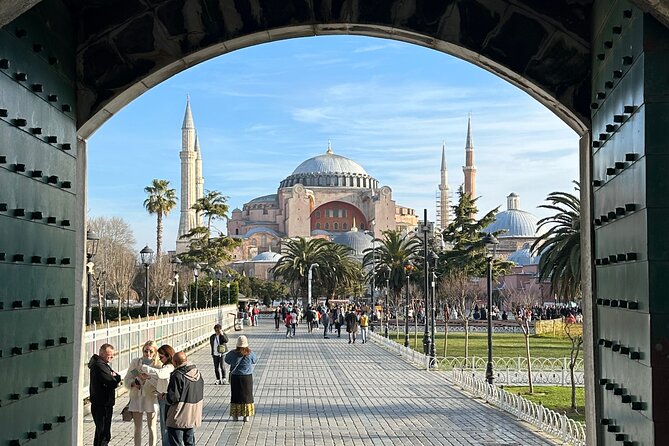
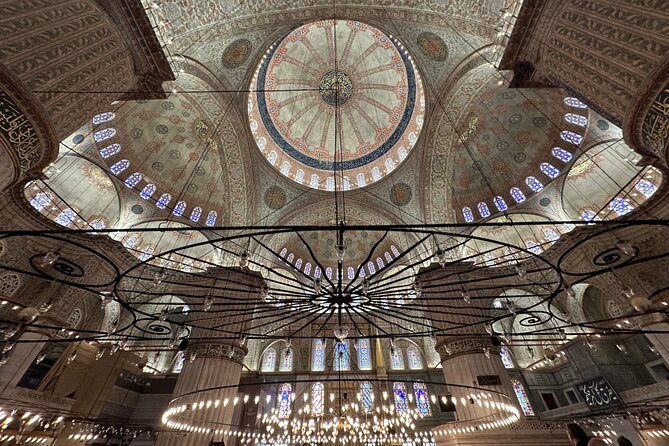
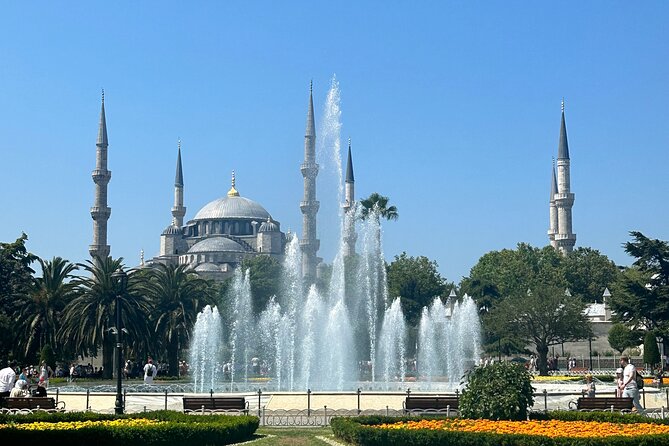
The Blue Mosque, officially the Sultanahmet Mosque, gets about 40 minutes. It is one of Istanbul’s essential sights, but it is also a functioning mosque, not simply a monument arranged for sightseeing.
That distinction matters. You may see the building from its grand outer courtyard as well as from the prayer area, and the guide can explain how the mosque fits into the city’s religious and imperial story. One guide was specifically praised for leaving the Blue Mosque until later in the day, when it was less crowded, so the exact order can change to suit conditions.
Admission is listed as free, but mosque visits can involve visitor controls and changing access arrangements. Dress and conduct should be respectful. The schedule allows enough time to look and take photographs, but this is not a long architectural study, so listen closely when the guide points out details.
Hagia Sophia, a building with several identities
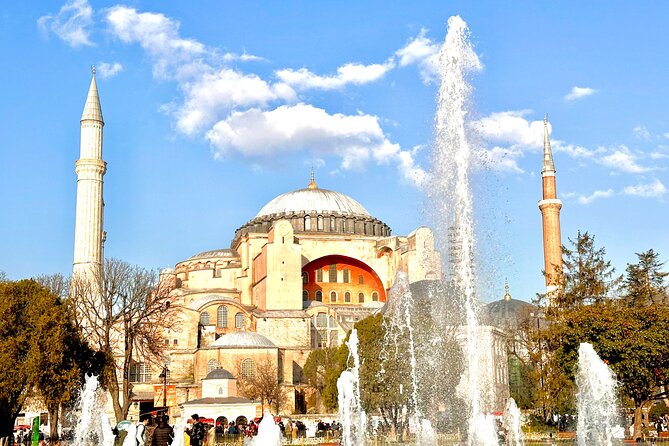
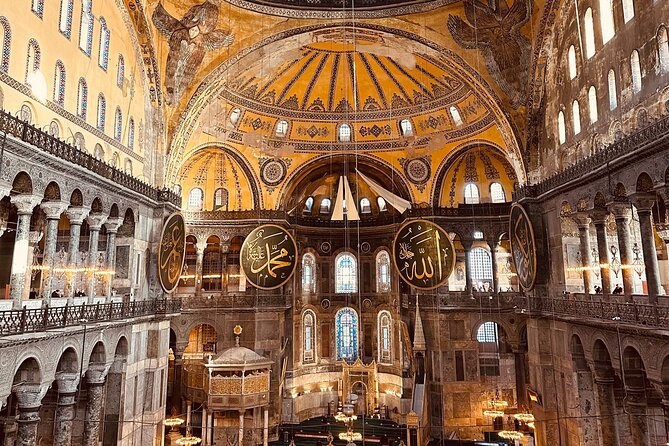
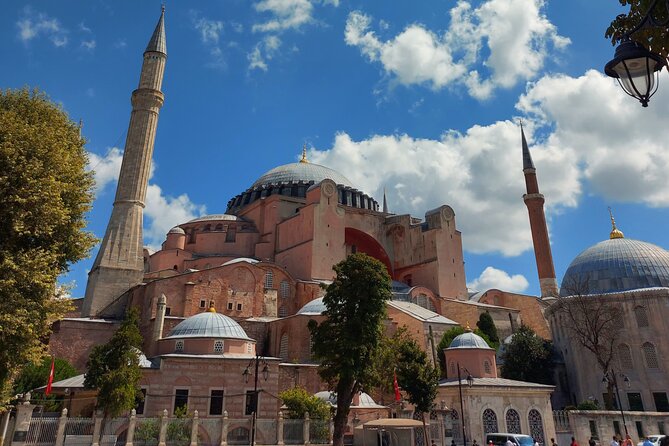
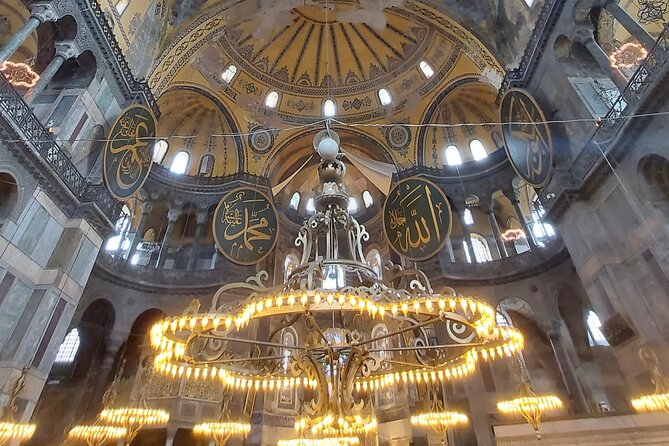
Hagia Sophia receives about an hour, with admission included. This is the place where a guide adds real value because the building is not easy to understand at a glance. It began as a major sixth-century church, later served as a mosque, and now functions as a Grand Mosque with its museum identity still central to the way it is presented to visitors.
The tour description refers to it as the Church of Divine Wisdom and the largest church of the sixth century. That long sequence of uses is the point. You are looking at a building shaped by the Byzantine and Ottoman eras, with layers of religious and political meaning in one extraordinary interior.
Allow the full hour. One less favorable experience involved spending about two and a half hours at Hagia Sophia, which left too little time for other stops. This tour is normally much shorter, but questions, crowd conditions, and the guide’s pace can affect the timing. The guide’s job is to give you context without allowing one sight to swallow the entire day.
The English-speaking guides are often the difference between simply entering Hagia Sophia and understanding what you are seeing. Emre, Tunc, Ozzy, Mustafa, Oguzhan, Kadir, and Buket were all singled out for clear explanations, historical detail, patience, or a good sense of humor. The quality of the day depends partly on which guide leads your group.
The Basilica Cistern, Istanbul’s most atmospheric stop
The Basilica Cistern takes about 45 minutes, and the admission fee is included. Built in the sixth century, it is Istanbul’s largest underground water cistern and one of the city’s most memorable spaces.
The appeal is physical as much as historical. Rows of columns, dim light, and the scale of the underground chamber create a sharp change from the open squares above. One guide helped the group avoid long lines, which is especially useful here because the cistern can become a slow stop when entry queues build.
You will get more from the cistern if you listen for the practical story. This was not a decorative palace room. It was part of the water system that kept imperial Constantinople supplied. The guide can connect the engineering, the city’s growth, and the reason such a large underground structure was needed.
The cistern was called the highlight of the day in one particularly enthusiastic account, and I can see why. Of all the included sights, this is the one most likely to surprise you. It also offers a welcome break from the sun and walking, though the visit still adds another stretch of standing and moving through a historic interior.
More Hagia Sophia visits:
- Istanbul: Hagia Sophia Skip-the-Line Ticket & Museum Option
★ 3.7 · 4,958 reviews - Istanbul: Hagia Sophia Skip-the-Line Ticket and Audio Guide
★ 4.3 · 2,246 reviews - Istanbul: Basilica Cistern & Hagia Sophia Combo Ticket
★ 4.6 · 1,990 reviews - Istanbul: Hagia Sophia Skip-the-Line Ticket with Audio Tour
★ 4.4 · 1,767 reviews
The Hippodrome’s three monuments in fifteen minutes
The route then covers the Hippodrome and its surviving monuments. The Hippodrome was once a horse-chariot arena said to hold 100,000 spectators. Today, much of the original arena has disappeared beneath the modern city, but the remaining markers let you picture the scale and public drama of Constantinople.
The itinerary separates out three monuments:
- The Obelisk of Theodosius, an Egyptian obelisk brought to Constantinople in the fourth century.
- The Serpent Column, associated with the Greek victory over Persia.
- The Walled Obelisk, a 32-meter central monument of the Roman Hippodrome.
The formal time for the Hippodrome is 15 minutes, followed by 15 minutes at the Egyptian obelisk, 10 minutes at the Serpent Column, and 10 minutes at the Walled Obelisk. These are outdoor explanations rather than full museum visits. That keeps the day moving, but you should not expect long periods for close inspection.
The guide’s storytelling is useful here. Without context, these objects can look like isolated columns in a square. With a good explanation, they become evidence of ancient games, imperial ceremonies, military victories, and the movement of objects across empires.
The Nakkas Cistern and an unusual art stop
The Cistern Art Gallery, identified as the Nakkas Cistern, takes about 30 minutes and includes admission. This cistern once supplied water to the Boukoleon Palace, and the space is used for an exhibition connected with Constantinople around 1200.
It is a different experience from the Basilica Cistern. The Basilica is the grand engineering sight, while the Nakkas Cistern adds an exhibition setting and a smaller, more specialized look at the city’s past. If you enjoy places that connect architecture with display and interpretation, this stop gives the day some variety.
The practical issue is time. You have several historic sites, a meal, a rug demonstration, and the Grand Bazaar ahead. The Nakkas visit is worthwhile, but you will need to stay aware of the schedule if you want enough time for shopping and photographs later.
The rug demonstration and the tour’s main compromise
At Nakkas Oriental Rugs and Textiles, you spend about 30 minutes at a carpet demonstration. Admission is included, and this is presented as a cultural stop rather than a required purchase.
A demonstration can help you understand Turkish carpet-making, textile patterns, and the trade traditions tied to Istanbul. It may also be useful if you are considering buying a rug and want a basic introduction before walking into the Grand Bazaar.
Still, this is the clearest point of caution. One otherwise very positive account said the group had to wait while someone selected a carpet and suggested placing the stop at the end so people who were not shopping could leave. Another account felt that a rug and pottery visit consumed nearly two hours and caused the Blue Mosque to be missed.
The supplied schedule lists only 30 minutes for the carpet stop, but the actual experience can depend on group interest and the guide’s time control. If you have a cruise departure, airport transfer, or fixed evening plan, tell the guide early that you need the advertised timing respected. You can enjoy the demonstration without feeling obliged to buy anything.
A filling Turkish lunch at Tamara Restaurant
Lunch at Tamara Restaurant in Sultanahmet lasts about an hour and is included in the price. The meal begins with soup, mezes, and salad, followed by a mixed kebab platter with five types of Turkish kebab.
Vegetarian diners have four options, and dessert, Turkish tea, and water are included. This is more useful than a vague lunch voucher because you know the meal covers the main components and drinks. Large portions were noted in the feedback, so you should arrive ready for a substantial midday break.
I like having lunch within a long walking tour because it gives you a fixed pause rather than leaving you to search for food in the middle of a packed schedule. It also lets you try familiar Turkish staples in one sitting. The meal is not the main reason to book, but it improves the day’s value and removes one common source of hassle.
The hour is also a chance to ask the guide about food, neighborhoods, shopping customs, or the sites still ahead. Several guides were described as approachable and willing to adjust the pace to the group’s interests.
Divanyolu Street and the road toward the Grand Bazaar
After lunch, the route follows Divanyolu Street for about 10 minutes. The name means Imperial Council Road, a useful clue to its former role in the city.
This is a short orientation stop rather than a major attraction. It helps you understand how the old imperial center was connected, and it leads naturally toward the Grand Bazaar. You will spend much of this section walking, so keep your belongings secure and stay close to the group in busy areas.
A small group helps here. Guides can point out details while keeping everyone together, and the walking pace can be adjusted more easily than on a large organized excursion.
Grand Bazaar, four thousand shops and a maze of choices
The Grand Bazaar gets about an hour. With more than 4,000 shops spread over 66 streets, it is one of Istanbul’s great commercial experiences, but it is also easy to lose your sense of direction.
The bazaar grew from the trade routes that carried silk, spices, textiles, jewelry, and other goods through the city. Today, you can browse carpets, ceramics, lamps, leather, jewelry, and souvenirs, but the strongest reason to visit is the setting itself: covered lanes, old trading spaces, shopfronts, and the constant negotiation between browsing and buying.
One hour is enough for an introduction, not a leisurely survey. Decide what interests you before entering. If you want a carpet, jewelry, or ceramics, use the guide’s local suggestions, but do not feel rushed into a purchase. One guide helped a visitor find a ceramics shop without a hard sell, which is the right tone for this kind of stop.
On Sundays, the tour uses Arasta Bazaar as an alternative. That market is smaller, so the Sunday version may feel less sprawling than the Grand Bazaar. The tradeoff is easier orientation against fewer lanes and shops.
Constantine’s Column and Nuruosmaniye Mosque
The final stops are short but help fill in the area around the bazaar. The Column of Constantine receives about 10 minutes. It is another reminder that this part of Istanbul was built around imperial monuments, public ceremonies, and major roads.
Nuruosmaniye Mosque is visited from the outside for about 10 minutes. It is identified as Istanbul’s first Baroque mosque, and its exterior gives you a quick look at how Ottoman architecture changed over time.
These stops are not meant to compete with Hagia Sophia or the cisterns. They work as closing details, giving you more than a checklist of the three famous sights. A good guide can make even a short exterior explanation worthwhile by linking the building to the city around it.
Is $150 a fair price?
At $150 per person, this is not the cheapest way to walk Sultanahmet. You are paying for structure, guiding, a small group, two included admissions, lunch, and the convenience of having the day arranged.
The listed Hagia Sophia ticket is 25 euros, and the Basilica Cistern ticket is 32 euros. Those two admissions alone represent a substantial part of the cost, though exchange rates change and ticket prices can change too. Add a three-course meal, tea, water, and seven to eight hours with a guide, and the package can make good sense for a first day in Istanbul.
The value is strongest if you want historical explanation and do not want to manage queues or restaurant choices. It is weaker if you prefer wandering alone, already have tickets, or want to spend half a day shopping. The rug demonstration is the part that may make the price feel less worthwhile if it runs long.
The 4.9 rating from 164 ratings and 98 percent recommendation indicate a strong overall record, but the lower ratings point to the same practical issue: timing and guide clarity. Most of the praise centers on the guides’ ability to explain history, answer questions, take photographs, keep a comfortable walking pace, and avoid long lines.
Who should book this Istanbul walking tour?
I would choose this tour for a first visit, especially if you have one full day in the Old City and want the major sights placed in a sensible order. It is also a good fit for cruise passengers with a full day ashore, provided your return schedule allows room for the seven to eight-hour duration.
It suits people who enjoy asking questions and learning the story behind a monument. The small group makes that easier, and several named guides were praised for clear English, humor, patience, and time management.
You should think twice if you dislike shopping demonstrations, have limited mobility, or need a tightly controlled finish time. The tour requires moderate fitness, includes a great deal of walking, and has no included vehicle. Also remember that the experience is offered in English only.
The booking confirmation arrives at the time of booking, and free cancellation is available up to 24 hours before the start time. Changes or cancellations inside that 24-hour window are not accepted for a refund.
Should you book it?
Book it if you want the essential Sultanahmet sights explained in one organized day, with the major admission fees and lunch already covered. The Basilica Cistern, Hagia Sophia, Hippodrome, and Grand Bazaar make a strong route, and the small group is a real advantage.
Before you commit, decide how you feel about the carpet demonstration. If you can enjoy it as a short cultural stop and speak up if the schedule slips, the tour offers solid value. If you want complete freedom to linger at every mosque or shop, explore independently instead.
For most first-time visitors, I would book it, then arrive in good shoes and with a clear request that the advertised timing be respected.
FAQ
How long does the tour last?
The tour lasts approximately 7 to 8 hours. Individual timings can change slightly depending on the group and the amount of time spent at each sight.
What time does the tour start?
The tour starts at 9:00 a.m.
Where does the tour begin?
The meeting point is the German Fountain at Binbirdirek, At Meydanı Cd, in Istanbul’s Fatih district.
Where does the tour end?
The tour ends back at the German Fountain meeting point.
How many people can join the tour?
The group has a maximum of 10 people.
Is lunch included?
Yes. The included meal has soup, mezes, salad, a mixed kebab platter or a vegetarian option, dessert, Turkish tea, and water.
Are the Hagia Sophia and Basilica Cistern tickets included?
Yes. Admission tickets for Hagia Sophia and the Basilica Cistern are included, along with all listed fees and taxes.
Is transportation included?
No. An air-conditioned vehicle is not included. The experience is primarily a walking tour in the historic center.
What happens if I need to cancel?
You can cancel for a full refund up to 24 hours before the experience starts. Cancellations or changes made less than 24 hours before the start time are not accepted for a refund.
Latest additions around Istanbul
- Istanbul: Hagia Sophia Skip-the-Line Ticket with Live Guide★ 3.7 · 3 reviews
- Ephesus Private Tour From Istanbul including transfers & domestic fights★ 5.0 · 3 reviews
- 6 Days Multi City Turkey Tour★ 5.0 · 3 reviews
- Princess Islands Daily Tour from Istanbul★ 5.0 · 3 reviews
- Premium Line : Private Istanbul Tour : All Inclusive Package★ 4.3 · 3 reviews
- Private Istanbul Combo Tour – Classic Old City and Bosphorus Cruise★ 5.0 · 3 reviews
- Private tour: 12-Day Turkish Adventure Package Tour From Istanbul★ 4.5 · 3 reviews
- Istanbul: Hagia Sophia Guided Tour with Optional Ticket★ 3.3 · 3 reviews
Hagia Sophia Tours, compared.

Hagia Sophia Skip-the-Line Ticket & Museum Option
Read our review →
Blue Mosque & Hagia Sophia Guided Tour w/ Tickets
Read our review →
Hagia Sophia Skip-the-Line Ticket and Audio Guide
Read our review →
Blue Mosque, Hagia Sophia, & Basilica Cistern Tour
Read our review →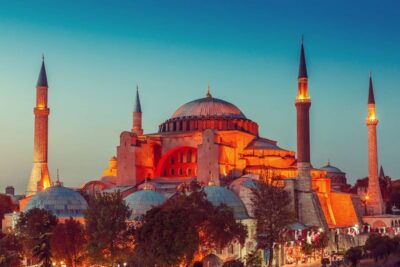
Hagia Sophia Skip-the-Line Ticket with Audio Tour
Read our review →
Blue Mosque, Basilica Cistern, & Hagia Sophia Tour
Read our review →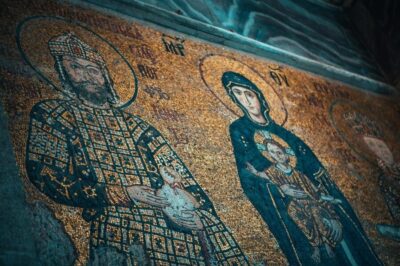
Hagia Sophia Skip-the-Ticket Line & Audio Guide
Read our review →Browse the lists this tour appears in