
Reviewed · TROY & GALLIPOLI TOURS
Private Day-Tour of Ancient Battle Fields (Troy & Gallipoli)
Troy and Gallipoli share one useful feature: both sit along the Dardanelles, where myths, empires, and the First World War meet in one long day. You’ll see Homer’s ancient city in the morning, then visit the battlefields and cemeteries that shaped modern Turkey, Australia, and New Zealand.
I like the private vehicle and hotel pickup, which make this demanding day much easier than arranging separate buses and ferries. I also like the chance to hear the story from a local guide. Guides such as Ali, Cenk, and Sevinc Kalik have been praised for their personal attention and, in Ali’s case, strong understanding of the Gallipoli campaign.
The catch is the distance. This is roughly a 12-hour outing, and some groups have not returned to Istanbul until about 8 pm. Troy is also a Bronze Age ruin, not a city of intact palaces, and admission fees and food are extra.
In This Review
- Key points before you book
- Why Troy and Gallipoli belong together
- The 6:30 am departure from Istanbul
- Crossing the Dardanelles
- Troy: what you actually see at the ruins
- The Trojan horse stop
- Behram and the Aristotle connection
- Gallipoli: moving history without theatrical treatment
- Anzac Cove and the 25 April landing
- The guide and driver make the price easier to judge
- Food, entry fees, and what to bring
- Who should book this day tour?
- Should you book Troy and Gallipoli?
- FAQ
- How long does the Troy and Gallipoli tour last?
- Where does pickup take place?
- Is this a private tour?
- Is transportation included?
- Is the tour offered in English?
- Are meals and drinks included?
- Are entrance fees included?
- Can I cancel for a full refund?
Key points before you book
- Two major sites in one long day: Combine Troy’s ancient ruins with Gallipoli’s WWI battlefields.
- A private experience: Only your group takes part, with transport from your Istanbul hotel or port.
- The Dardanelles ferry adds real context: You cross the strait that links the Sea of Marmara with the Aegean.
- Troy rewards imagination: Expect walls, foundations, the Temple of Athena, an Odeon, and wide views rather than grand standing buildings.
- Gallipoli is quiet and reflective: Anzac Cove, cemeteries, and battlefield viewpoints carry more emotional weight than visual spectacle.
- Budget for extras: Meals, drinks, and museum entrance fees are not included in the $541.85 per-person price.
Why Troy and Gallipoli belong together
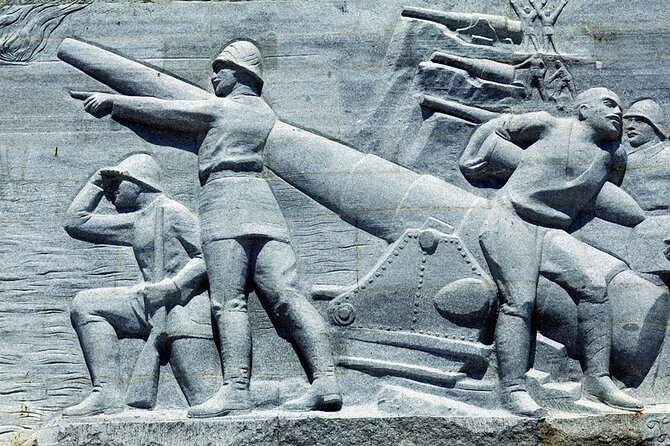
At first glance, Troy and Gallipoli seem like unrelated stops. One comes from the world of Homer and Bronze Age warfare. The other recalls the grim trench battles of 1915. Yet both are tied to the same narrow waterway and to the strategic importance of crossing between Europe and Asia.
The Dardanelles, also called the Hellespont in Classical Antiquity, connects the Sea of Marmara with the Aegean Sea. It also forms part of the route toward the Black Sea through the Bosphorus. That geography explains why ancient armies fought near Troy and why Britain, France, Russia, and the Ottoman Empire cared so much about controlling the strait during World War I.
I like this pairing because it gives you two very different ways to think about war. At Troy, the stories are part legend and part archaeology. At Gallipoli, the names, dates, cemeteries, and surviving sites bring you much closer to real people and documented events.
The private format matters here. You can ask questions as the day shifts from mythology to Ottoman and ANZAC military history. In a large group, those subjects can blur together. With your own guide, the pace and focus can be adjusted to your interests, at least within the tight schedule.
More Troy and Gallipoli trips:
- Istanbul to Gallipoli Full Day Tour with Lunch and Transfers
★ 5.0 · 567 reviews - Gallipoli Full-Day Tour from Istanbul
★ 4.9 · 468 reviews - From Istanbul: Gallipoli and Anzac Full-Day Tour
★ 4.9 · 345 reviews
The 6:30 am departure from Istanbul
The day begins early. Pickup is offered from your Istanbul hotel or port, with the exact time confirmed after booking. You are asked to wait in the lobby 15 minutes before pickup, and the stated start time is 6:30 am.
That early start is not a minor detail. Troy and Gallipoli are far from central Istanbul, and the tour needs to fit a ferry crossing and several site visits into one day. If you want a relaxed morning, this is not the right excursion. If you have only a short stay in Turkey and want to see both places, the early departure makes the schedule possible.
The drive follows the European shore of the Marmara Sea. You may see summer villas and coastal views along the way. The tour description also notes a ferry crossing over the Dardanelles, giving you a useful look at the waterway rather than treating it as something passed on the road.
Transportation from and back to your Istanbul base is included. Since this is a private tour, you do not share the vehicle with a large group. That is a meaningful part of the price, especially on a day with many hours on the road.
Crossing the Dardanelles
The Dardanelles is more than a scenic pause. It is the geographic key to the whole trip. The strait separates European Turkey from Asian Turkey and connects two important seas. Castles once guarded both sides during the Ottoman period, and the waterway has long been important to armies and merchants.
The tour allows about 30 minutes at this part of the route, with no separate admission fee. The ferry gives you a chance to pause before reaching Troy and to understand why this narrow passage has mattered for thousands of years.
This is also where the day begins to feel less like a standard city excursion. You are leaving Istanbul’s monuments behind and moving through the same broad region where the ancient Trojan story and the Gallipoli campaign unfolded.
Troy: what you actually see at the ruins
Troy is the morning’s main archaeological stop. Homer brought the city to life in the Iliad, but the site itself is more modest than the famous story may lead you to expect. A Bronze Age ruin does not offer a complete palace district or a perfectly preserved city center.
You will see layers of walls and foundations from different periods, along with remains connected to the city’s public and religious life. The Temple of Athena sits on a rocky rise, and the Odeon is described as a particularly well-preserved stone theater. City walls and large Hellenic columns near a gate help you picture the scale of the settlement.
The Temple of Athena is especially worthwhile for its position. On a clear day, the view reaches toward Lesbos to the south, Pergamum to the southeast, and Mount Ida to the east. The Tuzla River runs to the north. Those views help explain Troy’s setting far better than a map in a museum can.
You should plan to use your imagination here. The interest lies in the combination of archaeology, geography, and the stories attached to the site. I would not choose this tour if you want only dramatic ruins with tall columns and intact rooms. I would choose it if you enjoy working out how scattered remains fit together.
A few more Istanbul experiences to weigh up
- Istanbul: Bosphorus Dinner Cruise & Show with Private Table
★ 4.8 · 44,561 reviews - Best of Istanbul 1, 2 or 3-Day Private Guided Istanbul Tour
★ 5.0 · 8,922 reviews - Istanbul: Private Turkish Bath, Massage, and Spa in Old City
★ 4.6 · 3,225 reviews - Bosphorus Dinner Cruise with Show and Private Table
★ 4.5 · 2,021 reviews
The Trojan horse stop
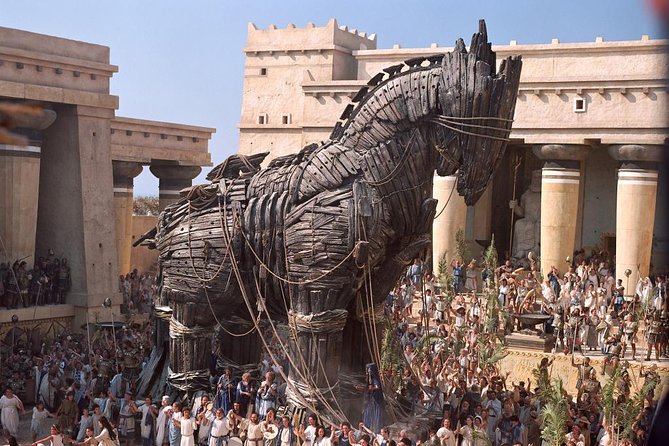
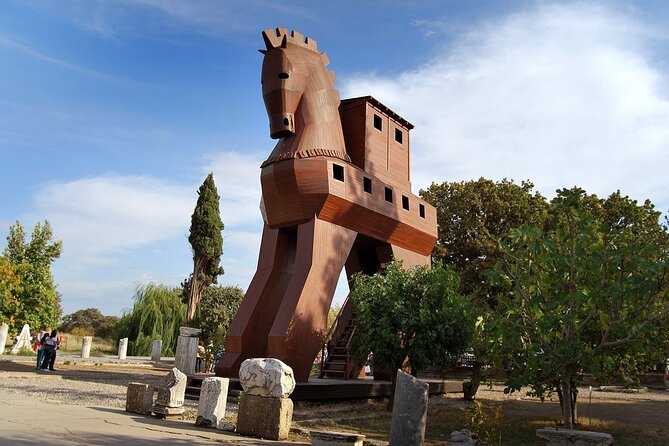
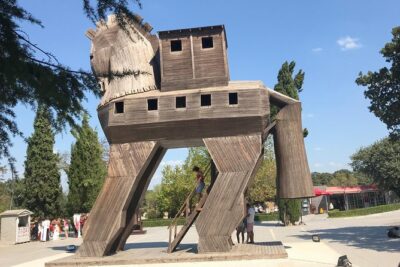
The reconstructed Trojan horse gives the site a memorable visual centerpiece. You can climb inside it and think through the famous Greek trick, in which soldiers hid inside a wooden horse and used it to enter the city after a ten-year siege.
The horse is a reconstruction, not an ancient object. That distinction is important, but it does not make the stop pointless. It helps younger visitors and anyone new to the story connect the physical site with the myth of Odysseus and the fall of Troy.
The horse stop is listed at about 45 minutes, while the Temple of Athena receives another 45 minutes. Entrance fees for the ruins are not included, so set aside extra money. One useful point from the tour information is that the site fee is relatively small, but it would still be better to know about it before arrival, particularly given the overall cost.
Behram and the Aristotle connection
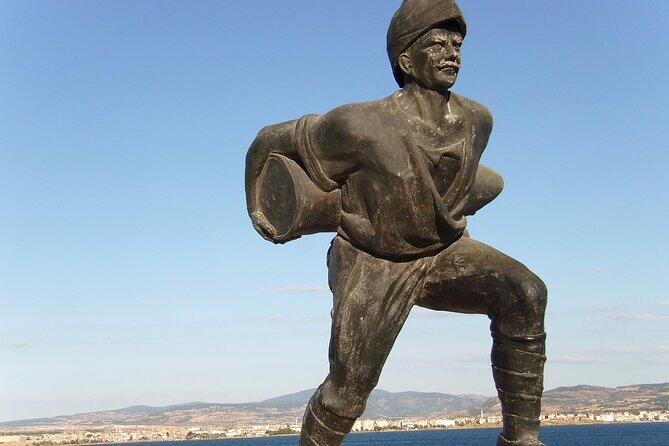
The itinerary includes about an hour in Behram, with no admission fee listed. The stop connects to Assos and Aristotle. After leaving Athens, Aristotle went to Assos, where he was welcomed by King Hermias and opened an academy. He later fled after the Persian attack on the city and went to Macedonia, where he tutored Alexander the Great.
A modern statue of Aristotle sits at the town entrance. This is a different kind of stop from Troy and Gallipoli. It adds a philosophical and classical Greek thread to a day already packed with ancient and modern history.
The supplied schedule gives Behram one hour, but it does not explain every activity included there. I would treat it as a brief cultural and historical pause rather than a full guided visit to a separate major attraction. If Aristotle interests you, ask the operator how the hour is handled when you confirm the booking.
Gallipoli: moving history without theatrical treatment
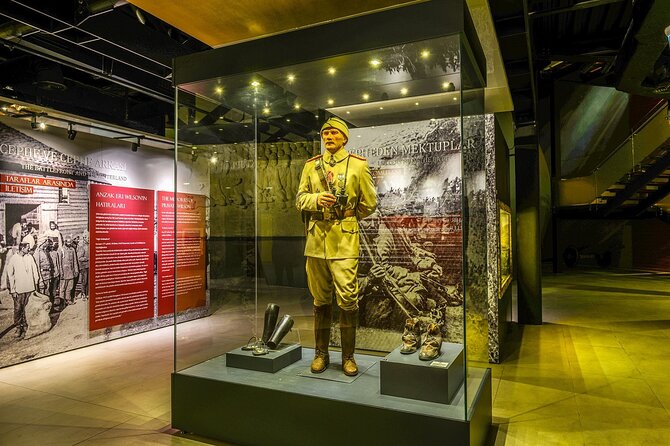
The Gallipoli campaign ran from February 1915 to January 1916. The Allied powers wanted control of the straits and hoped to weaken the Ottoman Empire while opening a supply route to Russia. The failed naval attack was followed by landings on the Gallipoli peninsula in April 1915.
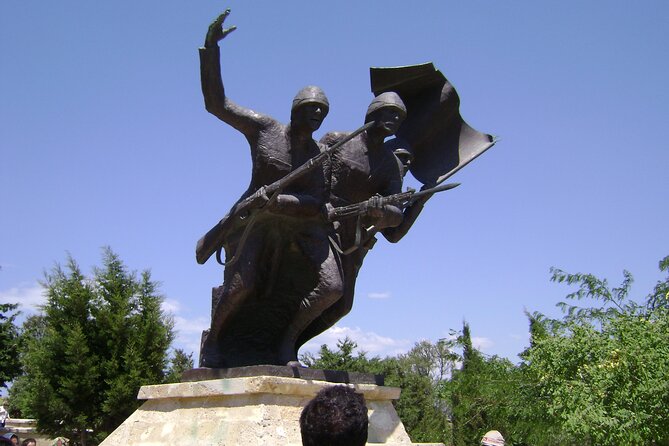
Your guide takes you to key battlefield areas and cemeteries, explaining the fighting between Ottoman troops and the ANZAC forces. The tour also presents the conflict from a local perspective and addresses why some people called it a Gentleman’s War. That phrase should not make the campaign sound polite. The fighting was severe, and the human cost was high.
Gallipoli is likely to be the more emotionally powerful half of the day. Troy asks you to sort fact from legend. Gallipoli puts you in places tied to named soldiers, military decisions, and national memory. The cemeteries and battlefields are places for quiet attention, not quick photo stops.
The battlefield visit is scheduled for about an hour. That is enough for a focused introduction, but not enough for an exhaustive study of the entire peninsula. If Gallipoli is your main reason for booking, understand that you are receiving a concentrated overview rather than a multi-day battlefield program.
Anzac Cove and the 25 April landing
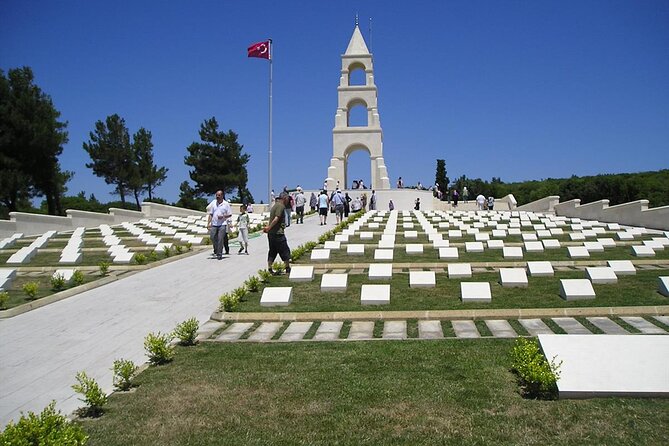
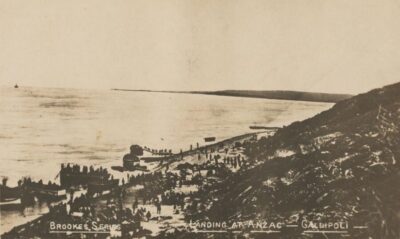
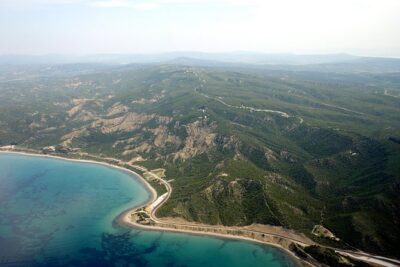
Anzac Cove is one of the central stops. On 25 April 1915, Australian and New Zealand troops landed on the Aegean side of the peninsula at night. They came ashore about a mile north of the planned landing beach, and the difficult terrain and Ottoman resistance quickly disrupted the original plan.
The troops advanced in mixed formations and received changing orders. Units were sent into different areas, often in confusion. At Anzac Cove, the physical setting helps you understand why the landing did not unfold as planned.
The stop lasts about an hour and has no separate admission fee listed. You may find the beach itself less dramatic than the story attached to it. That is part of the point. A quiet shoreline can be hard to reconcile with the confusion and violence of the landing, and your guide’s explanation supplies the missing context.
I would give this part your full attention. The visit is not about collecting another scenic view. It is about recognizing what the terrain meant to the troops who arrived there in darkness and under fire.
The guide and driver make the price easier to judge
The listed price is $541.85 per person. That is a serious amount, but this is a private full-day trip from Istanbul, not a short local tour. Transport, a driver, hotel or port pickup, a private guide, the ferry route, and a 12-hour schedule are all part of the calculation.
The value depends heavily on group size. For one or two people, the per-person price may feel high. For a larger private group, the cost can become easier to justify because the vehicle and guide service are shared within your party while the tour remains private.
The strongest praise has focused on the comfort and personal service. One couple traveled with a guide and driver in a comfortable BMW and found the day carefully handled. Cenk was described as attentive and personable. Ali was singled out for his command of Gallipoli’s battles and political setting. Sevinc Kalik was also named as a guide who helped make the long day worthwhile.
Guide quality can vary, so I would confirm the language and guide arrangements when you book. English is offered, but one experience described the guide’s English and subject knowledge as average. That is a fair reminder that the guide can shape this tour as much as the ruins and battlefields do.
Tips for both driver and guide are not listed as included. One review specifically advises carrying tip money for two people. Gratuities are discretionary, but it is practical to be prepared.
Food, entry fees, and what to bring
Meals and drinks are not included. One group enjoyed a distinctive lunch featuring food from southern Turkey, but lunch arrangements are not described as a guaranteed part of the package. Ask about the day’s meal plan before departure, and carry water and money for food.
Museum and archaeological entrance fees are also excluded. The Trojan horse stop itself lists no included admission, and the ancient ruins require a separate entry payment. The additional cost may be small, but it belongs in your budget.
You should also be ready for a moderate level of physical activity. The day includes archaeological ruins, outdoor battlefield areas, walking around the Temple of Athena, and time near Anzac Cove. Comfortable shoes are a sensible choice, and an early start means you should handle a long day on your feet and in a vehicle.
The tour accepts a mobile ticket, but the meeting instructions say you may be asked to show a printed voucher and photo ID. Bring both if possible. Confirmation is provided at booking, and if you book less than 48 hours before departure, contact the operator right away to confirm pickup.
Who should book this day tour?
I would recommend it to anyone with a strong interest in mythology, ancient civilizations, World War I, or Turkish history who has limited time in Istanbul. It is particularly useful if you want both Troy and Gallipoli but do not want to organize a complicated route with separate transport.
It also suits people who value privacy and direct access to a guide. You can ask about Homer, Ottoman defenses, ANZAC memories, or the Dardanelles without waiting for a large group to move on.
I would hesitate if you dislike long road journeys, early mornings, or ruins that require explanation. The day is ambitious. You will spend many hours traveling, and Troy can feel underwhelming if you arrive expecting a fully rebuilt city.
The tour’s 4.6 rating from eight reviews suggests a strong overall response, but the small number of ratings means you should focus on the practical details rather than treat the score as a guarantee. The most useful signs are the repeated praise for private transport, comfortable vehicles, attentive guides, and the emotional impact of Gallipoli.
Should you book Troy and Gallipoli?
Book this tour if your priority is seeing two major Dardanelles sites in one day with private transport and a guide. The combination is hard to arrange independently from Istanbul, and the ferry crossing, Troy ruins, Anzac Cove, and battlefield cemeteries create a meaningful day of contrasts.
Think twice if you want a slow archaeological visit or a detailed military study. The schedule gives you an important introduction to both places, not total coverage. At $541.85 per person, the best value comes when your group can share the private vehicle and when you care enough about the history to make the long return trip worthwhile.
FAQ
How long does the Troy and Gallipoli tour last?
The tour lasts approximately 12 hours. The scheduled start time is 6:30 am, and one reported return time was around 8 pm.
Where does pickup take place?
Pickup is offered from your Istanbul hotel or port. The exact hotel pickup time is confirmed after you call to confirm the reservation.
Is this a private tour?
Yes. Only your group participates in the activity.
Is transportation included?
Yes. Transportation from and back to your Istanbul base in Istanbul is included.
Is the tour offered in English?
Yes. English is the listed tour language.
Are meals and drinks included?
No. Meals and drinks are not included in the tour price.
Are entrance fees included?
No. Museum and archaeological site entrance fees are not included. The tour information specifically notes that the Troy entry fee is extra.
Can I cancel for a full refund?
Yes, if you cancel at least 24 hours before the experience start time. Cancellations made less than 24 hours before the start time are not refunded.
Latest additions around Istanbul
- Istanbul: Hagia Sophia Skip-the-Line Ticket with Live Guide★ 3.7 · 3 reviews
- Ephesus Private Tour From Istanbul including transfers & domestic fights★ 5.0 · 3 reviews
- 6 Days Multi City Turkey Tour★ 5.0 · 3 reviews
- Princess Islands Daily Tour from Istanbul★ 5.0 · 3 reviews
- Premium Line : Private Istanbul Tour : All Inclusive Package★ 4.3 · 3 reviews
- Private Istanbul Combo Tour – Classic Old City and Bosphorus Cruise★ 5.0 · 3 reviews
- Private tour: 12-Day Turkish Adventure Package Tour From Istanbul★ 4.5 · 3 reviews
- Istanbul: Hagia Sophia Guided Tour with Optional Ticket★ 3.3 · 3 reviews
Troy & Gallipoli Tours, compared.
Istanbul to Gallipoli Full Day Tour with Lunch and Transfers
Read our review →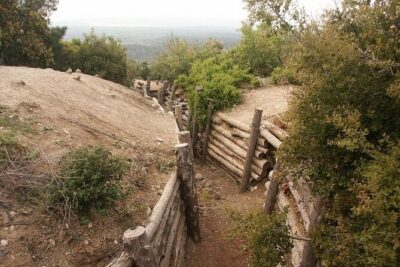

Istanbul to Gallipoli, Canakkale and Troy. 2 Day Tour with Hotel
Read our review →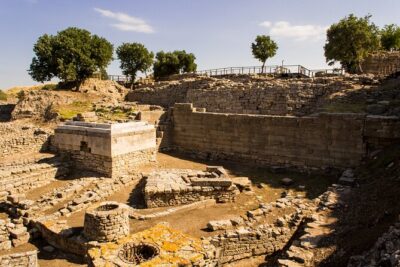
Istanbul to Truva Troy Guided Day Tour with Lunch and Transfers
Read our review →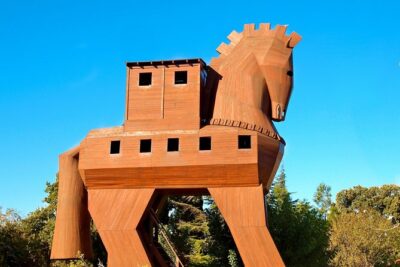
Troy Full-Day Guided Tour incl. Transfer, Ferry Tickets w/Lunch
Read our review →Browse the lists this tour appears in