
Reviewed · TOPKAPI PALACE TOURS
Private Topkapi Palace and Harem Tour with Skip Line Entry
Topkapi Palace puts you inside the former home and command center of Ottoman sultans, but the real prize is the Harem, where tiled chambers, family apartments, and courtly routines make palace life feel surprisingly personal. The Treasury adds a flashier moment with the Topkapi Dagger and Spoonmaker’s Diamond.
I like the private group format, which gives you a better chance to ask questions than a large coach tour. I also like that the Harem entrance is included, since this is the section many visitors most want to see. The main drawback is physical: expect several hours on foot, stairs, and uneven surfaces, and large backpacks must be checked.
In This Review
- Key points to know before you go
- Why Topkapi Palace deserves a full morning
- Meeting at Orient Market in Sultanahmet
- The First Courtyard and Imperial Gate
- The Second Courtyard, kitchens, and Imperial Council
- The Harem, where royal family life was kept private
- The Sultan’s Apartments and Circumcision Room
- The Treasury and its famous jewels
- The Pavilion of the Holy Mantle
- Is $136 per person a fair price?
- What to bring and what to leave behind
- Who should book this palace tour?
- Should you book it?
- FAQ
- Where does the tour begin?
- Where does the tour end?
- How long does the tour last?
- What language is the tour offered in?
- Is this a private tour?
- Is skip-line entry included?
- Is the Harem entrance included?
- Are hotel pickup and drop-off provided?
- Can I bring a backpack?
- Is the tour suitable for wheelchair users?
Key points to know before you go
- The Harem ticket is included, so you do not need to arrange this important section separately.
- The Treasury contains the Topkapi Dagger and Spoonmaker’s Diamond, two of the palace’s most famous objects.
- You meet by Orient Market in Sultanahmet, where the guide carries a Manolya Tours flag or umbrella.
- The private English tour covers the palace’s major courtyards, including the Imperial Council, kitchens, royal apartments, and Holy Mantle Pavilion.
- You need comfortable shoes and light belongings, since large bags and backpacks are not allowed inside.
- The advertised price is $136 per person, a cost that makes the most sense if you value a private guide and saved time at the entrance.
Why Topkapi Palace deserves a full morning
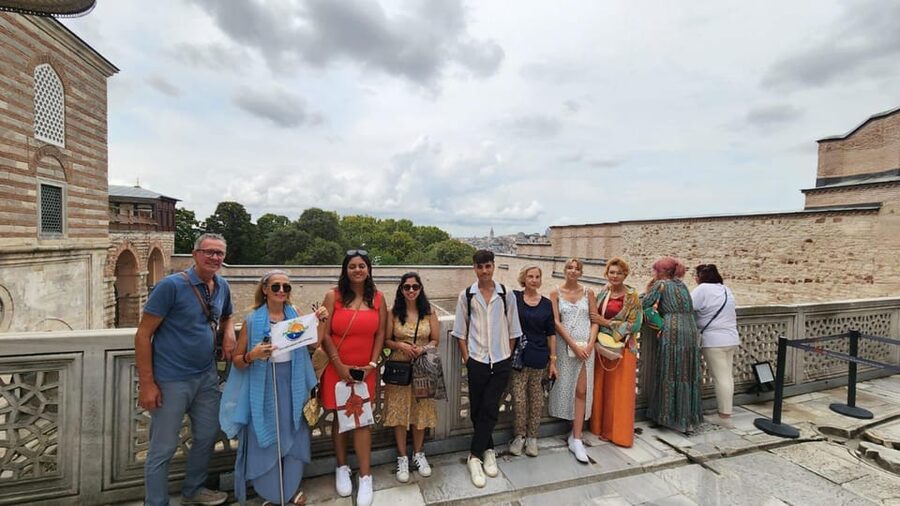
Topkapi Palace was the main residence and administrative center of the Ottoman Empire for nearly four centuries. It sits on Seraglio Point, where the Golden Horn, Bosphorus, and Sea of Marmara open out around the historic peninsula.
That location matters. This was not simply a royal house. The palace was a working seat of power, with courtyards arranged according to access and rank. As you move farther into the complex, public business gives way to private royal life.
The palace dates to the 15th century, after the Ottoman conquest of Constantinople. It remained the sultans’ main residence until the 19th century, when the court moved to newer palaces. The buildings you see today are not one single grand block. They form a series of courtyards, pavilions, chambers, gardens, and service areas.
I find that layout more revealing than a single enormous throne room. You can see how the palace controlled movement. Officials, soldiers, servants, family members, and the sultan each had their own place in the system.
The tour lasts about three hours according to the activity details, though the guided itinerary also describes a 3.5-hour palace visit. Confirm the exact timing when you book, especially if you plan lunch, a ferry, or another timed sight afterward.
More Topkapi Palace visits:
- Istanbul: Topkapi Palace & Harem Museum Ticket & Audio Guide
★ 4.1 · 3,977 reviews - Istanbul: Topkapi Palace and Harem Guided Tour with Ticket
★ 4.8 · 1,726 reviews - Basilica Cistern &Topkapi Palace &Hagia Sophia Combo Tickets
★ 4.6 · 1,306 reviews
Meeting at Orient Market in Sultanahmet
The tour begins in front of Orient Market at Sultanahmet. Look for the guide holding a Manolya Tours flag or umbrella. The meeting point is central to Istanbul’s Old City, but give yourself enough time to reach it, since Sultanahmet’s streets can be crowded and confusing.
Hotel pickup and drop-off are not included. You make your own way to the meeting point, then return there when the activity ends. That arrangement keeps the tour focused and avoids a long hotel collection route, but it means you need to plan your walk or transport in advance.
The guide speaks English and is a licensed professional. Since this is a private group, the pace should be easier to manage than on a large shared tour. You can ask for clarification when a name, room, or Ottoman custom is unfamiliar.
Your guide takes you into Topkapi Palace rather than leaving you to work out the complex alone. That matters here. The palace has many courtyards and displays, and a guide helps connect the rooms to the people and duties that once filled them.
The First Courtyard and Imperial Gate
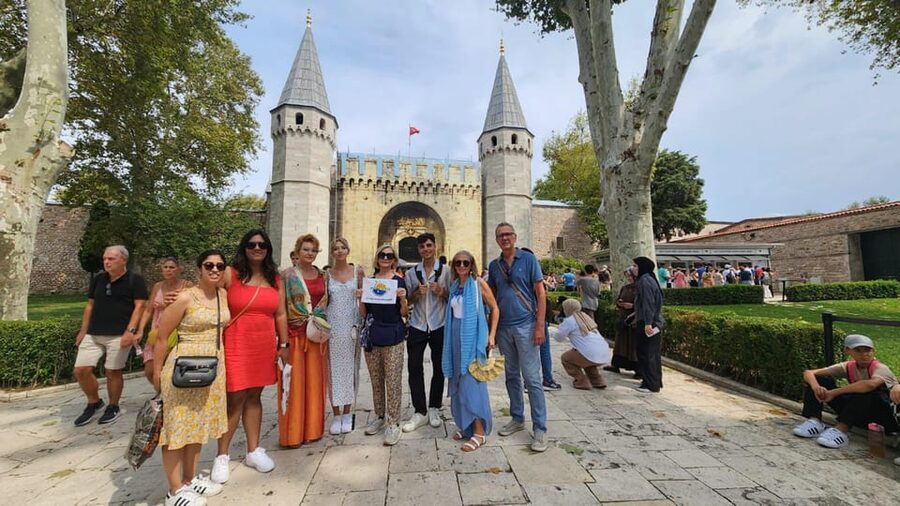
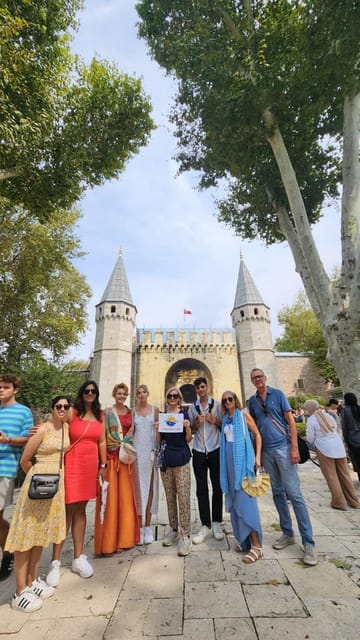
The First Courtyard is the most open part of the palace complex. It includes gardens and leads toward the Imperial Gate, the formal entrance to the inner palace.
This first area helps you understand the palace’s scale and layers. It feels less like entering a single museum and more like moving through a protected royal district. The open grounds also provide a gentler start before the more crowded indoor rooms.
Your guide should help explain how access changed as you passed from one courtyard to the next. The First Courtyard was public compared with the inner sections, while the later courtyards were reserved for more official and private business.
You will want your camera ready outdoors, but remember that flash photography is not allowed inside the museum. A hat and water are sensible, especially if the weather is warm and you are spending much of the morning walking between buildings.
The Second Courtyard, kitchens, and Imperial Council
The Second Courtyard brings you into the palace’s administrative world. Here you see the Imperial Council Hall, the Library of Ahmed III, and the Palace Kitchens.
The Imperial Council was where state business took place. Even if the room itself is not the largest space in the complex, its purpose gives it weight. This was where officials discussed matters of government and empire.
The library offers a change of mood. After the formal council areas, it points to the palace as a place of study, record keeping, and cultivated court life. Ask your guide to explain the role of the library and how it fits into the palace’s wider duties.
The Palace Kitchens are another useful stop because they show the scale of royal household life. A palace supporting the sultan, his family, officials, guards, and servants needed a serious food operation. The kitchens help you picture the daily work behind the polished rooms.
I like this part of the route because it prevents Topkapi from becoming a parade of pretty tiles. You see the machinery of the court, not only its decoration. The possible drawback is that indoor museum rooms can feel busy, and you may need to stay close to your guide as the group moves through the displays.
A few more Istanbul experiences to weigh up
- Istanbul: Bosphorus Dinner Cruise & Show with Private Table
★ 4.8 · 44,561 reviews - Best of Istanbul 1, 2 or 3-Day Private Guided Istanbul Tour
★ 5.0 · 8,922 reviews - Istanbul: Private Turkish Bath, Massage, and Spa in Old City
★ 4.6 · 3,225 reviews - Bosphorus Dinner Cruise with Show and Private Table
★ 4.5 · 2,021 reviews
The Harem, where royal family life was kept private
The Harem is the heart of this tour. The word refers to the private household, not simply a collection of romantic stories. This was where the sultan’s mother, consorts, children, and other members of the court lived under strict rules and supervision.
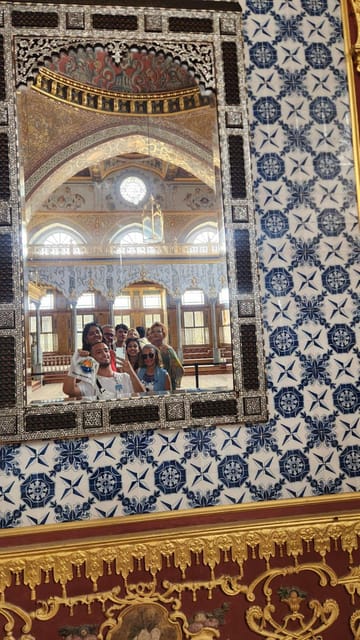
The section includes the Queen Mother’s Apartments, the Sultan’s Consorts’ Apartments, the Harem Courtyard, and the Sultan’s Apartments. You also see rooms with intricate tilework and richly decorated surfaces.
The tilework is one of the clearest reasons to include the Harem ticket. Look for the repeated patterns, colored panels, and careful arrangement of decoration across walls and doorways. These rooms were designed to signal rank and refinement, but they also served as living quarters and passageways.
The Queen Mother held an important position in the palace household. Her apartments are not just another royal room. They reflect the influence of the sultan’s mother within the family and court structure.
The Sultan’s Consorts’ Apartments and the Harem Courtyard help you understand that the private part of the palace was still highly organized. Privacy did not mean informality. Movement, status, and access were closely controlled.
You should expect stairs and walking through narrow or uneven sections. The experience is not suitable for wheelchair users or people with mobility impairments, according to the activity information. Wear shoes with good support, and do not plan to rush through the Harem just to reach the next stop.
The Sultan’s Apartments and Circumcision Room
The Sultan’s Apartments give you a closer look at the private royal quarters. These rooms help balance the political spaces of the Second Courtyard with the domestic side of the palace.
The Circumcision Room is another distinctive stop. Its name refers to the ceremonial circumcision of royal princes, an important event in Ottoman court life. The room’s decoration and purpose show how ceremony reached into family life.
Your guide can add the context that a label alone cannot provide. Without explanation, a tiled chamber may look beautiful but vague. With the story of who used it and why, the room becomes easier to place within the palace system.
Keep your expectations realistic. Topkapi is not presented as a modern reconstructed palace with every room furnished exactly as it once was. You are seeing historic rooms, objects, and displays within a large museum complex. The appeal lies in the combination of surviving architecture, royal collections, and the setting.
The Treasury and its famous jewels
The Treasury is the most immediately dramatic part of the visit for many people. It contains the Topkapi Dagger and the Spoonmaker’s Diamond, two objects that have become symbols of the palace.
The Topkapi Dagger is known for its jeweled decoration and distinctive form. The Spoonmaker’s Diamond is the other major draw, with its large size and surrounding stones making it an easy object to remember after the tour.
I recommend listening carefully to the explanation here rather than treating the Treasury as a quick photo stop. The objects are valuable not only because of their materials, but because they represent the wealth and ceremony of the Ottoman court.
Photography rules matter. Flash photography is forbidden inside the museum, and the displays may be crowded. Large backpacks must be checked at the entrance, so carry only what you need and keep your phone or camera ready without bringing bulky equipment.
The Pavilion of the Holy Mantle
The Pavilion of the Holy Mantle houses religious relics and offers a more solemn change from the glitter of the Treasury. It is one of the palace sections where Ottoman political power and religious identity meet.
The displays here require a slower pace and a respectful attitude. You may find the atmosphere more restrained than in the Treasury, but that contrast is part of the value. The palace was not only a residence filled with luxury. It was also a center of religious and dynastic authority.
If you are especially interested in Ottoman religion, court ceremony, or sacred objects, pay close attention to this section. If your main interest is architecture, the guide can help you connect the relics to the palace’s wider role.
Is $136 per person a fair price?
At $136 per person, this is not a budget museum visit. You are paying for a private English-speaking licensed guide, skip-line entry, the Topkapi Palace admission, and the Harem ticket.
The value depends on how you like to sightsee. If you are comfortable reading museum panels, waiting in line, and finding the main rooms yourself, buying admission independently will likely cost less. If you have limited time in Istanbul, the saved entrance time and direct route through the palace may justify the higher price.
The private format is the strongest reason to consider it. You are not simply joining a large crowd and listening to a guide from a distance. You can ask about the Spoonmaker’s Diamond, the Harem’s family structure, or the Imperial Council when those details catch your attention.
The tour also reduces the risk of missing the Harem. Since that entrance is included, you do not have to make a separate decision at the palace or worry about overlooking one of the most requested sections.
The price makes the most sense for couples, families, or small groups who want personal explanation without arranging a private guide independently. Solo visitors should compare the cost with a regular admission visit, since the per-person charge is substantial.
What to bring and what to leave behind
Bring comfortable walking shoes. The palace is large, and the Harem includes stairs and uneven areas. A hat and water are useful, particularly during hot weather or a long day of sightseeing in Sultanahmet.
Bring a camera if you want to record the courtyards and approved interior views, but do not use flash inside. Check large bags and backpacks at the entrance. Pack light so the security process is easier.
Food and drinks are not included. Plan to eat before or after the visit rather than expecting a meal during the tour. Since the activity ends back at the meeting point, you can continue around Sultanahmet afterward.
Free cancellation is available up to 24 hours before the tour for a full refund, and you can reserve now and pay later. Those terms help if your Istanbul schedule is still changing, but the practical details of your start time should still be checked before booking.
Who should book this palace tour?
I would choose this tour if Topkapi is a priority and you want the palace’s major sections explained in one visit. It is especially useful if you want the Harem, Treasury, and Holy Mantle Pavilion without sorting out the route yourself.
It suits first-time visitors who want Ottoman context, families who benefit from a private pace, and small groups who can share the cost. It also works well for anyone with only a few days in Istanbul and no desire to spend time organizing museum logistics.
I would think twice if you have mobility limits, dislike indoor museum crowds, or prefer to explore at your own speed. The tour is not suitable for wheelchair users or people with mobility impairments, and the three-hour schedule leaves limited time to linger over every display.
Should you book it?
Book this Topkapi Palace and Harem tour if you want an efficient, guided introduction to Ottoman royal life and place a high value on the private group format. The included Harem entrance, skip-line access, Treasury objects, and English-speaking licensed guide give the tour a clear purpose.
Skip it if your main goal is the lowest possible price or a slow, self-directed museum visit. For most visitors who want the palace’s key rooms, jewels, relics, and family quarters tied together in one route, the cost can be reasonable, provided you are ready for several hours of walking.
FAQ
Where does the tour begin?
You meet in front of Orient Market in Sultanahmet. The guide holds a Manolya Tours flag or umbrella.
Where does the tour end?
The activity ends back at the meeting point by Orient Market.
How long does the tour last?
The activity information gives a duration of three hours. The detailed itinerary describes a guided Topkapi Palace visit lasting 3.5 hours, so confirm the exact timing when checking availability.
What language is the tour offered in?
The live tour guide speaks English.
Is this a private tour?
Yes. The group type is listed as a private group.
Is skip-line entry included?
Yes. Skip-the-line entry is included, along with the entrance ticket for Topkapi Palace Museum.
Is the Harem entrance included?
Yes. The entrance ticket to the Harem section is included in the tour price.
Are hotel pickup and drop-off provided?
No. Hotel pickup and drop-off are not included. You make your own way to the meeting point and return there at the end.
Can I bring a backpack?
Large bags and backpacks are not allowed inside and must be checked at the entrance. Bring only the essentials.
Is the tour suitable for wheelchair users?
No. The activity is not suitable for wheelchair users or people with mobility impairments. Comfortable shoes are recommended because the visit involves considerable walking.
Latest additions around Istanbul
- Istanbul: Hagia Sophia Skip-the-Line Ticket with Live Guide★ 3.7 · 3 reviews
- Ephesus Private Tour From Istanbul including transfers & domestic fights★ 5.0 · 3 reviews
- 6 Days Multi City Turkey Tour★ 5.0 · 3 reviews
- Princess Islands Daily Tour from Istanbul★ 5.0 · 3 reviews
- Premium Line : Private Istanbul Tour : All Inclusive Package★ 4.3 · 3 reviews
- Private Istanbul Combo Tour – Classic Old City and Bosphorus Cruise★ 5.0 · 3 reviews
- Private tour: 12-Day Turkish Adventure Package Tour From Istanbul★ 4.5 · 3 reviews
- Istanbul: Hagia Sophia Guided Tour with Optional Ticket★ 3.3 · 3 reviews
Topkapi Palace Tours, compared.
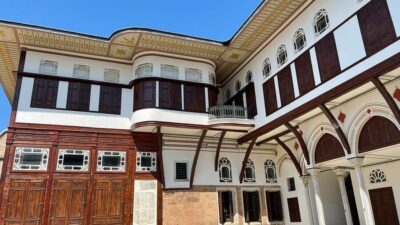
Topkapi Palace & Harem Museum Ticket & Audio Guide
Read our review →
Topkapi Palace and Harem Guided Tour with Ticket
Read our review →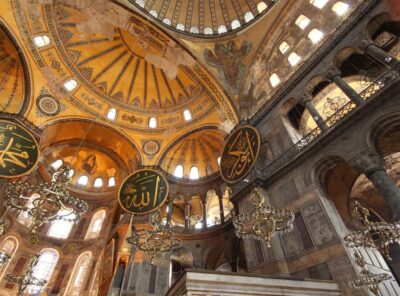
Basilica Cistern &Topkapi Palace &Hagia Sophia Combo Tickets
Read our review →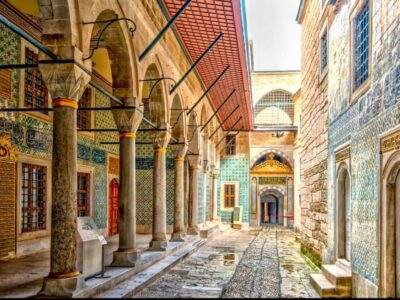
Topkapi Palace & Harem Tour Skip-the-Line Ticket
Read our review →
Dolmabahce Palace & Harem Fast-Track Entry with Audio Guide
Read our review →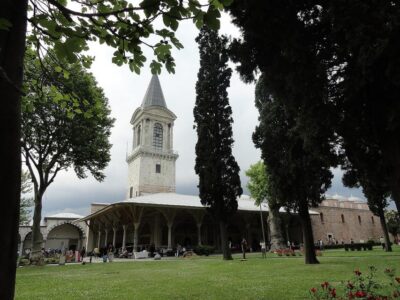
Topkapi Palace and Harem Ticket with Audio Guide
Read our review →
Dolmabahce Palace and Harem Skip-the-Line Ticket
Read our review →
Istanbul Highlights! Blue Mosque, Hagia Sophia, Topkapı and More!
Read our review →Browse the lists this tour appears in