
Reviewed · HISTORICAL TOURS
Private Tour to Historical Peninsula in Istanbul
The most useful thing about this tour is its private format. You explore Istanbul’s core sights with Ibrahim, a guide praised for linking religion, politics, daily life, and long layers of history instead of simply naming dates. I like the flexible pace and the chance to ask questions as you go. I also like that lunch can happen near the sights rather than interrupting the day with a long transfer.
The main caution is cost. The $182.14 group price covers up to four people and the guide, but major admission fees and lunch come separately. Topkapı Palace and Basilica Cistern alone add up quickly, and the supplied details give conflicting information about Hagia Sophia’s entrance charge, so confirm current fees before booking.
In This Review
- Key points at a glance
- Why this private Istanbul tour works
- Hagia Sophia, where centuries overlap
- Blue Mosque and the color behind its name
- The Hippodrome’s stones and missing spectacle
- Lunch near Galeyan Restaurant
- Topkapı Palace and the Ottoman court
- Basilica Cistern below the city
- What Ibrahim adds to the day
- Walking, pickup, and the morning meeting point
- Price, admissions, and real value
- Who should book this experience?
- Final call: a strong private introduction, with costs to confirm
- FAQ
- How long does the private Istanbul tour last?
- What time does the tour begin?
- Where does the tour start?
- Where does the tour end?
- Is hotel or cruise port pickup included?
- How many people can join the private tour?
- Are entrance fees included?
- Can I cancel for a full refund?
Key points at a glance
- Ibrahim leads a private walk through Istanbul’s historic core, with room to adjust the pace and focus.
- Hagia Sophia, the Blue Mosque, and the Hippodrome form a compact opening sequence packed with Roman, Byzantine, and Ottoman stories.
- Topkapı Palace receives the longest visit, about two and a half hours, allowing time for its court, administration, and ceremony history.
- Basilica Cistern brings you underground among Roman waterworks and the famous upside-down Medusa head.
- Public transportation or walking replaces private hotel transport, which can be practical in the Old City but requires planning.
- The price is strongest for a group of four, since the guide fee is shared, but entrance tickets are still extra for everyone.
Why this private Istanbul tour works
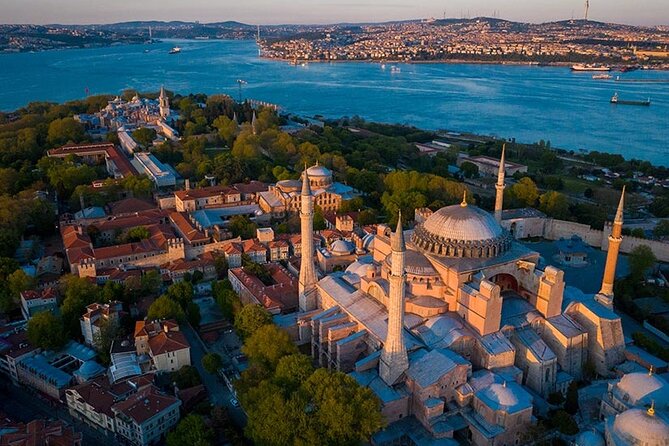
Istanbul’s Historic Peninsula can feel like a history book with the pages shuffled. A Roman chariot track sits beside an Ottoman mosque, while a Byzantine church turned mosque rises over layers of earlier buildings. This tour puts those pieces in a sensible order.
You begin near the German Fountain at 8:30 a.m., close to the main sights in Sultanahmet. From there, the day is mostly a walking history lesson, with a lunch pause and visits inside the major monuments.
I like the private setup because it gives you a chance to stop Ibrahim when a question comes up. His strongest quality, based on the experience described by past clients, is his ability to move between history, religion, politics, and modern Turkish life without making the subject feel stiff. He has also been praised for working well with teenagers, children, and families with different interests.
You should still know what this tour is not. It is not a private car tour, and it is not an all-inclusive ticket package. The guide service is included, but meals, paid entries, and any transportation costs are yours.
More historic Istanbul visits:
- Istanbul Gedikpasa Historical Turkish Bath with Privacy Option
★ 5.0 · 1,285 reviews - Istanbul: Acemoglu Historical Turkish Bath w/Private Options
★ 4.6 · 1,190 reviews - Istanbul: Gedikpasa Historical Hammam with Privacy Add-On
★ 4.8 · 918 reviews
Hagia Sophia, where centuries overlap
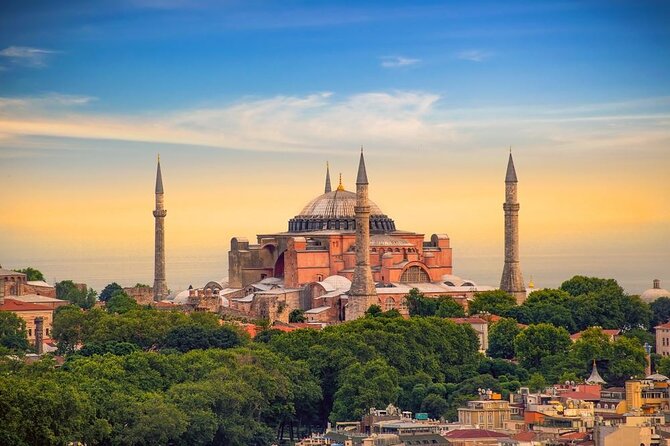
Hagia Sophia is the natural place to begin. The building presents a remarkable sequence of change: Roman engineering, Byzantine Orthodox Christianity, Ottoman preservation and conversion, and its present use as a grand mosque.
The tour allows about an hour here. That is enough time to look at the enormous dome, study surviving Christian mosaics, and hear how the building moved from church to mosque through the centuries. The description points to its unusual rectangular basilica plan and the early dome built over it, which gives Ibrahim plenty of material to explain how the structure changed over time.
I would pay close attention to the contrast between the mosaics and the mosque setting. That visual tension tells you more than a simple list of dates. You are seeing two major religious traditions sharing one architectural space, with traces of each period still visible.
There is an important ticket detail to check. The supplied information lists Hagia Sophia as free at the stop, but it also separately lists an entrance charge of 25 euros per person. Since access rules and visitor areas can change, ask for the current arrangement before you commit to the booking.
Dress and mosque etiquette matter here, though the supplied tour information does not give specific clothing instructions. Since Hagia Sophia functions as a mosque, you should be ready to follow the site’s current visitor rules.
Blue Mosque and the color behind its name
The Blue Mosque follows with a shorter, roughly 30-minute visit. That may sound brief, but it works well after Hagia Sophia because the two buildings are close and invite comparison.
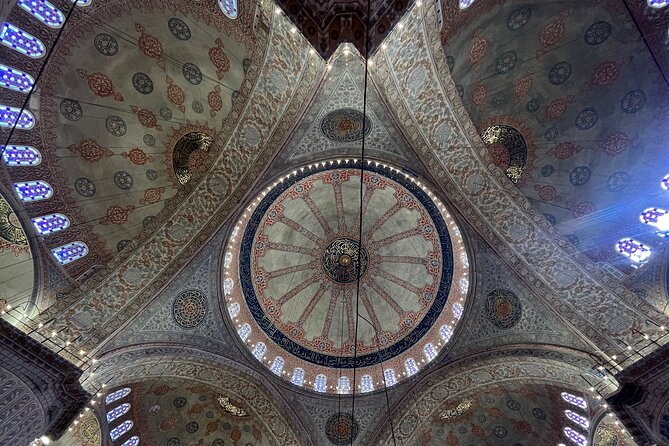
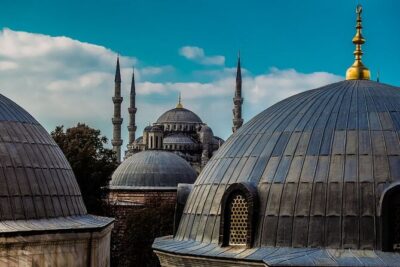
This mosque represents the classical period of Ottoman architecture. Its nickname comes from the blue-toned interior tiles and hand-drawn decoration, rather than from the exterior stone. Ibrahim’s historical explanation can help you see the building as more than a beautiful prayer hall. It belongs to a period when Ottoman architecture, imperial identity, and religious purpose were closely linked.
I like the pairing of Hagia Sophia and the Blue Mosque. You can compare the Byzantine and Ottoman approaches to sacred space without spending half a day crossing town. The tradeoff is that 30 minutes gives you an introduction, not a slow architectural study.
The stop is listed with free admission. As with any active mosque, access can be affected by worship services or current visitor arrangements, so the exact amount of time inside may depend on the day.
The Hippodrome’s stones and missing spectacle
The Hippodrome is an open-air stop, scheduled for about 30 minutes. Today, you see a public square and several ancient monuments. In Roman and Byzantine times, this was the city’s great arena, a place tied to racing, ceremony, and public life.
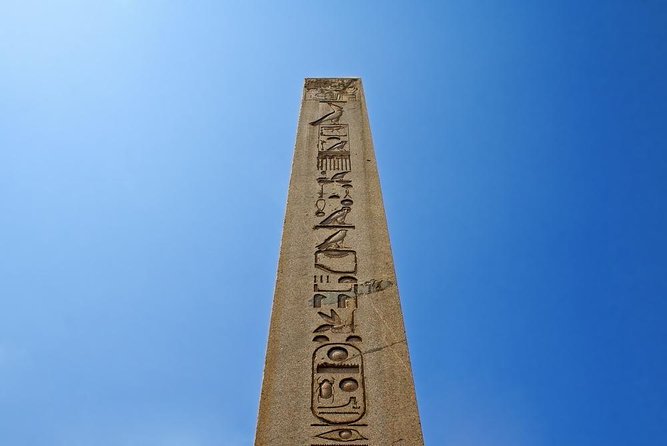
The Egyptian obelisk is the star here. Its story reaches back to Karnak in Egypt in the 15th century BC before it was brought into the Roman world in the 4th century AD. The tour also covers the Serpent Column and the remains beneath the obelisk.
This is a good point for Ibrahim to explain how objects were moved, reused, and given new meaning by later empires. You are not simply looking at an old stone. You are looking at evidence of Egypt, Rome, Byzantium, and Ottoman Istanbul occupying the same urban center.
Because the Hippodrome is outdoors, this portion depends more on weather and crowd conditions than the indoor visits. The tour requires good weather overall, and poor weather can lead to a new date or a full refund under the stated policy.
A few more Istanbul experiences to weigh up
- Istanbul: Bosphorus Dinner Cruise & Show with Private Table
★ 4.8 · 44,561 reviews - Best of Istanbul 1, 2 or 3-Day Private Guided Istanbul Tour
★ 5.0 · 8,922 reviews - Istanbul: Private Turkish Bath, Massage, and Spa in Old City
★ 4.6 · 3,225 reviews - Bosphorus Dinner Cruise with Show and Private Table
★ 4.5 · 2,021 reviews
Lunch near Galeyan Restaurant
The lunch break lasts about an hour and is listed at Galeyan Restaurant or somewhere nearby. Lunch is not included, so you pay for your own meal.
I like the location choice. Staying near the Historic Peninsula keeps the day moving and avoids wasting time on a restaurant far from the monuments. Ibrahim has been praised for giving dining suggestions based on individual needs, including helping a family manage difficult food allergies. That is useful, but you should still explain allergies clearly to both the guide and restaurant staff.
The flexible restaurant wording means you should not assume Galeyan is guaranteed. Ask where the meal will be held and what kind of menu or price range to expect if that matters to your budget.
An hour is enough for a proper break, but the day remains full. If your group eats slowly, has young children, or needs a longer rest, tell Ibrahim at the start. A private tour gives you more room to adjust than a fixed group departure.
Topkapı Palace and the Ottoman court
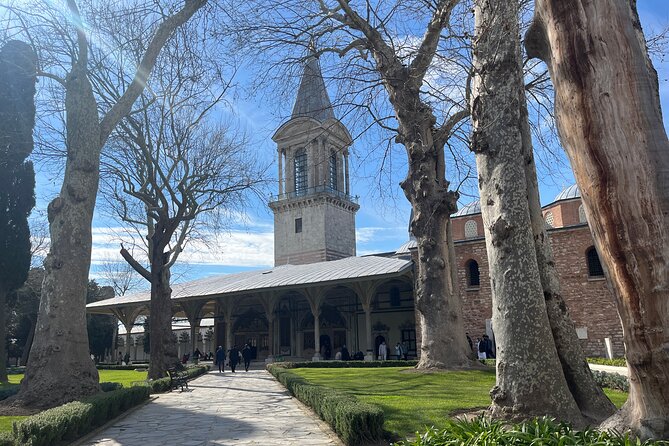
Topkapı Palace receives the longest scheduled visit, about two hours and 30 minutes. That is sensible because the palace is not one single room. It is a series of courtyards and sections connected to the Ottoman imperial household and government.
Here, Ibrahim explains how Ottoman families lived, how the empire was managed, and how ceremonies shaped palace life. The value of a guide is especially clear at Topkapı. Without context, you may see gates, courtyards, rooms, and displays. With context, those spaces become part of a working system of power, family, religion, and administration.
The palace was home to Ottoman rulers and their families for about four centuries. That long span gives the visit a different feel from Hagia Sophia. Hagia Sophia shows architectural transformation, while Topkapı helps you picture the people and institutions behind the empire.
The entrance fee is not included. The supplied price is 2,000 Turkish liras, listed as about $52. Since exchange rates and ticket policies change, treat that figure as a guide rather than a guarantee. Ask whether any special sections or ticket types cost more.
Two and a half hours can be tiring, especially after a morning of walking. I would wear comfortable shoes and bring water. The pace can be adjusted, but the palace is a major part of the tour, not a quick photo stop.
Basilica Cistern below the city
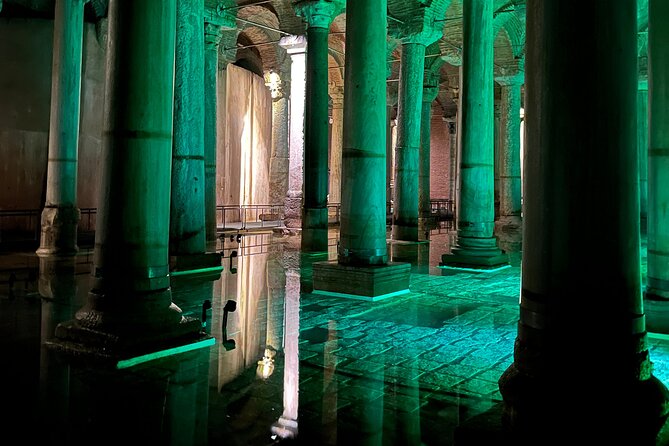
The final major stop is the Basilica Cistern, scheduled for about 30 minutes. This underground reservoir was part of Constantinople’s Roman water supply system, dating from the fifth or sixth century.
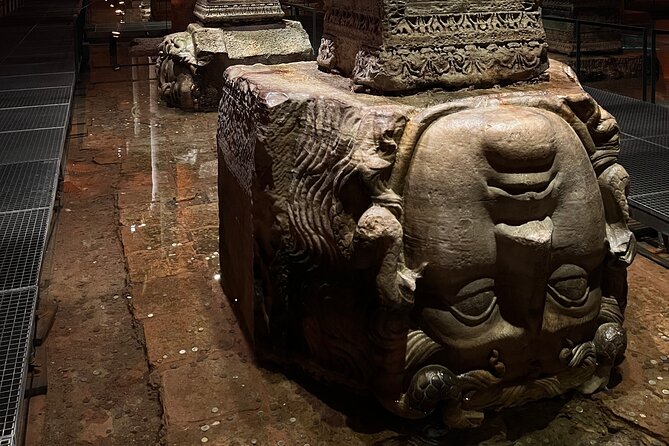
The cool, shadowy space offers a sharp change after the open Hippodrome and large palace grounds. You will hear how Roman water management supported a major imperial city, then see the famous upside-down marble Medusa head, a striking piece associated with the pagan era.
I like ending with the cistern because it turns infrastructure into a memorable story. Water storage is easy to overlook, yet it was essential to life in Constantinople. The Medusa head adds a puzzle: later builders reused an ancient sculptural fragment, and its position has prompted plenty of questions about meaning and practicality.
The visit is short, just 30 minutes, and admission is extra. The stated price is 1,300 Turkish liras, or about $33. This is another figure worth checking before departure.
What Ibrahim adds to the day
The guide is the heart of this experience. Ibrahim is described as fluent in several languages and especially good at answering difficult questions about history, politics, religion, and culture. You can expect more than a memorized route if his guiding style matches the accounts provided.
His approach also appears practical. He has helped families choose restaurants, advised people when something was overpriced or not worth their time, arranged transportation with a driver on longer visits, and pointed out less obvious places around Istanbul. Those extras are not guaranteed as formal parts of this half-day tour, but they show the sort of local advice you can request.
His humor and personal interest in Istanbul are also repeatedly emphasized. That matters on a five-to-six-hour tour because the subject matter is heavy. The best guide knows when to explain, when to answer, and when to let you simply look.
The private format means your group alone participates. Up to four people can share the $182.14 price, making the guide fee far more reasonable for a family or small group than for a solo visitor. A group of one pays the same base rate, so the value changes sharply with group size.
Walking, pickup, and the morning meeting point
The tour starts at the German Fountain on Binbirdirek, near At Meydanı in Fatih, at 8:30 a.m. It ends back at the meeting point.
There is no standard private car service to hotels or cruise ports. The stated plan is to use public transportation or walk, since the guide considers that easier and more convenient for the Old City. Depending on the situation, Ibrahim may meet you at a hotel, ship, or port and then travel with you by public transport or on foot.
Airport transportation is handled separately through messaging. Do not assume it is part of the tour price.
This arrangement suits you if you are comfortable moving through Istanbul on foot and by public transport. It may be less appealing if you want door-to-door driving, have limited mobility, or need a tightly controlled transfer schedule. The activity information says most people can participate, but it does not provide detailed accessibility information, so ask specific questions before booking.
Price, admissions, and real value
At $182.14 for up to four people, the base price is attractive for a private guide. Split four ways, it is about $45.54 per person before tickets, food, and transport. For two people, the guide cost is about $91.07 each, and for a solo visitor it is the full $182.14.
The extra costs are significant:
- Topkapı Palace: 2,000 Turkish liras, listed as about $52
- Basilica Cistern: 1,300 Turkish liras, listed as about $33
- Hagia Sophia: listed separately as 25 euros per person, though another part of the information says admission is free
- Lunch: not included
- Transportation, if used: not included
For four people, the private guiding fee is the strongest part of the deal. You are paying for a tailored route and one guide rather than four separate public tour seats. The value is also better if you want help with questions, food needs, local restaurants, or adjusting the pace.
For one person, the price is harder to justify unless personal guiding is your top priority. You should compare the total cost, not just the headline figure, and confirm every current entrance fee.
Who should book this experience?
I would choose this tour if you have one full morning and want the main Historic Peninsula sights connected by a single story. It is a good fit for families, couples, and small groups who prefer conversation over a fixed script.
It also suits people who care about context. You will get more from the day if you want to understand why a Christian mosaic remains in a mosque, how an Egyptian monument reached Istanbul, or how an Ottoman palace functioned as both home and government center.
Families may appreciate Ibrahim’s reported patience with children and teenagers. Groups with food allergies or special dining concerns should raise them early. People who want an easy car-based tour, long free time at each site, or included meals should consider another option.
Final call: a strong private introduction, with costs to confirm
You should book this tour if you value a personal guide and can share the cost with up to three companions. Ibrahim’s skill with history, religion, politics, family needs, and local food advice gives the route more character than a simple monument checklist.
Before paying, confirm the Hagia Sophia entrance arrangement, current Topkapı and Basilica Cistern prices, the meeting plan, and whether your preferred lunch stop is available. If those details work for your budget, this is a focused and useful first look at Istanbul’s Historic Peninsula.
FAQ
How long does the private Istanbul tour last?
The tour lasts approximately five to six hours.
What time does the tour begin?
The stated start time is 8:30 a.m.
Where does the tour start?
The meeting point is the German Fountain at Binbirdirek, At Meydanı Cd, 34122 Fatih, Istanbul.
Where does the tour end?
The activity ends back at the meeting point.
Is hotel or cruise port pickup included?
There is no standard car service to hotels or cruise ports. Depending on the situation, the guide may meet you there and use public transportation or walk with you. Airport transportation options can be discussed separately.
How many people can join the private tour?
The $182.14 price is for one private group of up to four people.
Are entrance fees included?
No. Topkapı Palace and Basilica Cistern fees are not included. The supplied information also lists a 25-euro Hagia Sophia entrance charge per person, while another section lists the stop as free, so confirm the current policy before booking.
Can I cancel for a full refund?
Yes. You can cancel at least 24 hours before the local start time for a full refund. Cancellations or changes made less than 24 hours before the start are not accepted for a refund, and poor weather may result in a different date or full refund.
Latest additions around Istanbul
- Istanbul: Hagia Sophia Skip-the-Line Ticket with Live Guide★ 3.7 · 3 reviews
- Ephesus Private Tour From Istanbul including transfers & domestic fights★ 5.0 · 3 reviews
- 6 Days Multi City Turkey Tour★ 5.0 · 3 reviews
- Princess Islands Daily Tour from Istanbul★ 5.0 · 3 reviews
- Premium Line : Private Istanbul Tour : All Inclusive Package★ 4.3 · 3 reviews
- Private Istanbul Combo Tour – Classic Old City and Bosphorus Cruise★ 5.0 · 3 reviews
- Private tour: 12-Day Turkish Adventure Package Tour From Istanbul★ 4.5 · 3 reviews
- Istanbul: Hagia Sophia Guided Tour with Optional Ticket★ 3.3 · 3 reviews
Historical Tours, compared.
Istanbul Gedikpasa Historical Turkish Bath with Privacy Option
Read our review →
Acemoglu Historical Turkish Bath w/Private Options
Read our review →
Gedikpasa Historical Hammam with Privacy Add-On
Read our review →
Istanbul Historical Tour with Guide, Lunch and Transfers
Read our review →
All in One Day Istanbul – Historical Tour of Istanbul with Bosphorus Cruise
Read our review →

Browse the lists this tour appears in