
Reviewed · HAGIA SOPHIA TOURS
Private Walking Tour: Hippodrome, Blue Mosque, Hagia Sophia
Istanbul’s greatest monuments sit within an easy walk of one another, and this four-hour tour makes that compact historic center easier to understand. You move from the Roman Hippodrome to the Blue Mosque and then Hagia Sophia, following the city’s story from imperial chariot races to Byzantine Christianity and Ottoman Islam.
I like the private or small-group format, capped at 10 people, because it gives you room to ask questions. I also like the chance to see Hagia Sophia’s mosaics and the Blue Mosque’s tilework in one well-planned morning or afternoon. The main concern is practical: entrance fees are not included, and the Blue Mosque has faced renovation-related restrictions, so interior access should be confirmed before you book.
In This Review
- Key points to know
- Why Sultanahmet works so well for a half-day walk
- The Hippodrome and the old Roman crowd
- The Blue Mosque’s domes, tiles, and six minarets
- Hagia Sophia and 1,500 years of changing use
- What the private guide adds
- Is $117 a fair price?
- The four-hour pace and practical planning
- Who will get the most from this tour?
- My verdict on the Hippodrome, Blue Mosque, and Hagia Sophia walk
- FAQ
- How long does the tour last?
- Which sights are included in the walking route?
- Is an English-speaking guide included?
- Are entrance fees included in the $117 price?
- Is the Blue Mosque interior guaranteed to be open?
- Can I cancel the tour for a refund?
Key points to know
- Three major sights in four hours: The Hippodrome, Blue Mosque, and Hagia Sophia are all in Istanbul’s Sultanahmet district.
- A guide-led history walk: An English-speaking guide explains the monuments instead of leaving you to read signs on your own.
- Blue Mosque access can vary: Renovation work previously limited both exterior and interior views, so the promised experience may change.
- Hagia Sophia is the grand finale: Expect Byzantine mosaics, Christian and Islamic details, and a huge central dome.
- Entrance costs are extra: The $117 price covers the guide, but not attraction entry fees or personal expenses.
- Flexible booking terms: You can cancel up to 24 hours ahead for a full refund and reserve without paying immediately.
Why Sultanahmet works so well for a half-day walk
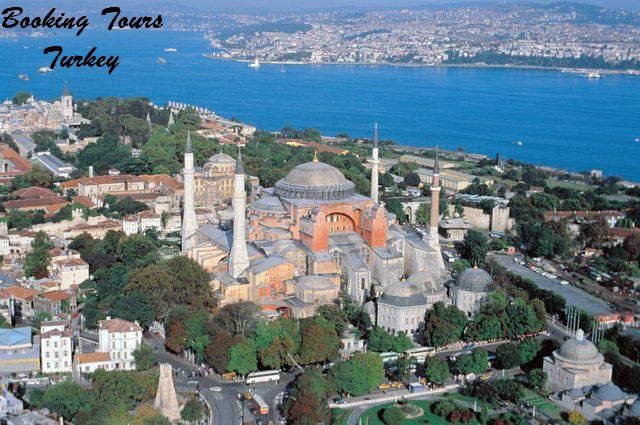
Sultanahmet is Istanbul’s historic core, and its greatest advantage is distance. The three main stops are close enough to connect on foot, so you spend your time looking at monuments rather than sitting in a vehicle.
That matters in Istanbul. The city is spread across both sides of the Bosphorus, but its most important early imperial sights are concentrated here. In a short walk, you can see traces of Roman public life, Ottoman religious architecture, and Byzantine court culture.
I would choose this tour early in a stay if I wanted to get my bearings quickly. It gives you a useful framework for later visits to the Basilica Cistern, Topkapi Palace, or the city’s other historic neighborhoods.
The tour lasts four hours, which is long enough for proper commentary without taking over your entire day. You should still expect a walking-focused experience, with time on your feet at courtyards, squares, and monumental interiors.
More Blue Mosque visits:
- Istanbul: Blue Mosque & Hagia Sophia Guided Tour w/ Tickets
★ 4.8 · 3,600 reviews - Istanbul: Blue Mosque Guided Tour
★ 4.5 · 1,910 reviews - Istanbul: Blue Mosque, Hagia Sophia, & Basilica Cistern Tour
★ 4.7 · 1,806 reviews
The Hippodrome and the old Roman crowd
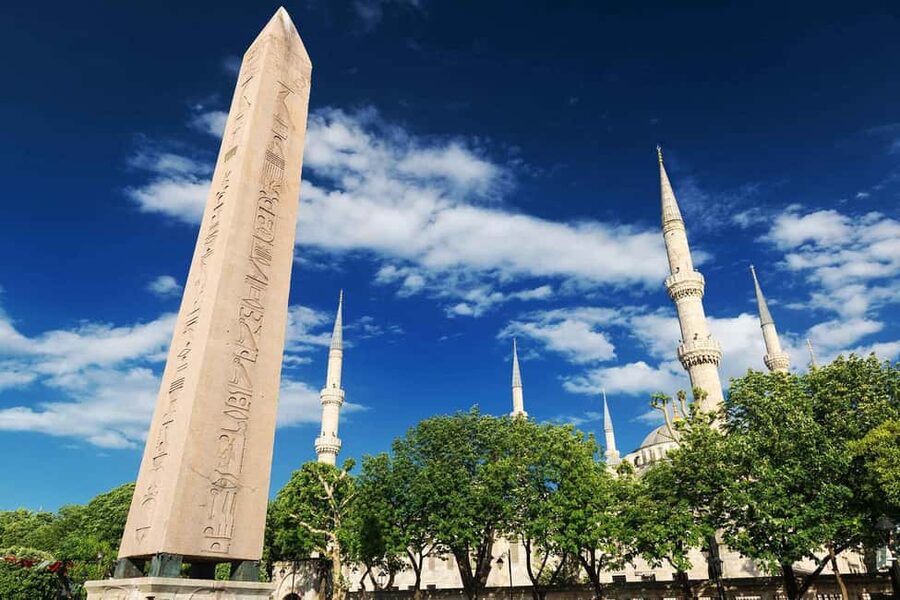
The route includes the Ancient Hippodrome, once the social and sporting center of Constantinople. This was not simply a racetrack. It was a public arena where chariot teams competed, political loyalties formed, and huge crowds gathered for ceremonies and celebrations.
Today, Sultanahmet Square occupies much of the old arena site. The original scale can be difficult to picture because the track itself is no longer intact, which is where a guide earns their keep. As you look across the square, your guide can help you imagine the long racing course and the crowds that once filled it.
Three historic markers are especially important here:
- The Obelisk of Theodosius, brought from Egypt and set up in Constantinople during the Roman period.
- The Serpent Column, an ancient monument linked to the Greek victory over Persia.
- Other surviving traces and monuments that mark the Hippodrome’s former importance.
I like this opening stop because it gives the rest of the walk a political and social setting. The Blue Mosque and Hagia Sophia are not isolated works of art. They occupy the same ceremonial center used by Roman and Byzantine rulers long before the Ottoman period.
Do not expect a complete ancient stadium. Expect an urban square with scattered remains, and listen closely to the guide’s explanation. The story is more impressive than the visible ruins alone.
The Blue Mosque’s domes, tiles, and six minarets
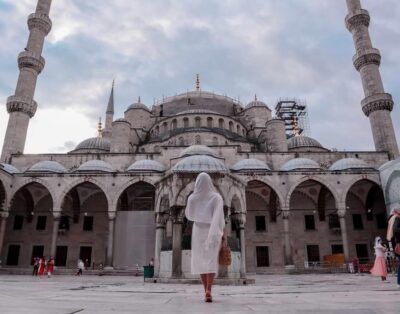
The Blue Mosque, officially the Sultanahmet Mosque, was built in the 17th century during the reign of Sultan Ahmed I. Its six minarets and broad courtyard give it an immediate presence, even before you enter.
The popular name comes from the blue Iznik tiles used inside. These tiles, together with stained-glass windows, calligraphy, and layered domes, create the mosque’s distinctive look. The effect depends on light, so the interior may feel different depending on the time of day and the areas open to the public.
I like the Blue Mosque as a counterpoint to Hagia Sophia. Hagia Sophia feels older and more monumental, while the Blue Mosque presents a later Ottoman vision of imperial mosque design. Seeing both in one walk lets you compare their domes, courtyards, decoration, and religious purpose without needing a separate history lecture.
The exterior is also worth your attention. Take time to look at the arrangement of the minarets and the scale of the courtyard. The mosque is often photographed from outside, but a guide can point out details you might miss while trying to frame the whole building.
The important warning is access. Renovation work previously closed the interior or limited what could be seen, and one booking in April 2023 specifically found the mosque closed until June. Another visit later that year had restricted views inside and out. Conditions can change, so you should not book this tour solely on the assumption that a full interior visit is guaranteed.
If the interior is open, modest clothing and respectful behavior are required at a functioning mosque. The supplied details do not specify a dress code or shoe-storage arrangement, so ask the operator for current entry guidance before your visit.
Hagia Sophia and 1,500 years of changing use
Hagia Sophia is the tour’s most important stop. Emperor Justinian ordered the present building in 537 AD, and for more than a thousand years it was the largest church in the world.
The building’s central dome is the main event. It seems to float above the nave, a visual effect that helped make Hagia Sophia one of the defining works of Byzantine architecture. Even if you are not an architecture specialist, the scale is easy to grasp once you step inside.
The structure has served different religious and political roles. It began as a Byzantine Christian church, became a mosque after the Ottoman conquest of Constantinople in 1453, and contains details from both Christian and Islamic traditions.
That layered identity is what makes the visit so rewarding. Look for Byzantine mosaics, painted decoration, sculptures, Islamic calligraphy, and the architectural forms that belong to later mosque use. These are not separate exhibits placed side by side. They are parts of one building shaped by centuries of change.
I would listen carefully to the guide here rather than rushing to take photographs. A mosaic of an emperor or saint can be easy to overlook when you are focused on the dome, and the guide’s explanation gives those images a place in the story of the building.
The description of this experience promises Byzantine mosaics and paintings, but the exact viewing conditions inside Hagia Sophia can change. Entry rules, open areas, and access arrangements are not detailed here. Since attraction fees are excluded, confirm both the current entrance plan and the cost before departure.
More Hagia Sophia visits:
- Istanbul: Hagia Sophia Skip-the-Line Ticket & Museum Option
★ 3.7 · 4,958 reviews - Istanbul: Hagia Sophia Skip-the-Line Ticket and Audio Guide
★ 4.3 · 2,246 reviews - Istanbul: Basilica Cistern & Hagia Sophia Combo Ticket
★ 4.6 · 1,990 reviews - Istanbul: Hagia Sophia Skip-the-Line Ticket with Audio Tour
★ 4.4 · 1,767 reviews
What the private guide adds
The guide is included, and the group is limited to 10 people. That is a useful middle ground. You get more personal attention than on a large coach tour, while the group remains small enough for questions and conversation.
A good guide can make a major difference at the Hippodrome, where the surviving remains need explanation. The same is true inside Hagia Sophia, where the building’s many layers can be confusing without help.
Past guide names connected with this experience include Josh and Idyll. Josh was described as personable and well informed, while Idyll answered questions and even accompanied one participant toward the Basilica Cistern afterward to help with directions. Those details suggest a guide who can be useful beyond simply reciting dates, although your assigned guide may be different.
The language offered is English. If you have a strong interest in Byzantine art, Ottoman architecture, or ancient history, use the private setting to ask focused questions. I would prepare two or three in advance, such as how the Hippodrome functioned, why the Blue Mosque has six minarets, or which mosaics inside Hagia Sophia are most significant.
The tour is described as private but also as a small group limited to 10 participants. That wording is worth clarifying when you book. If you need a fully exclusive experience, ask whether the reservation is only for your party or whether other participants may join.
Is $117 a fair price?
At $117 per person, this is not the cheapest way to see Sultanahmet. The value depends on how much you want guidance and how many people are in your party.
The price includes the English-speaking guide, but entrance fees and personal expenses are extra. That means your real cost will be higher if the Blue Mosque or Hagia Sophia requires paid entry at the time of your visit. You should set aside money for those fees rather than treating $117 as the complete outing cost.
For a solo visitor or couple, the price can make sense if you want a structured introduction and the ease of asking questions. For a larger group, a private arrangement may spread the guide cost across more people, though the exact group setup needs confirmation.
The strongest value comes from the historical connection between the stops. You are not paying simply to be escorted from one building to another. You are paying for an explanation of why these monuments sit together and how Roman, Byzantine, and Ottoman Istanbul overlap in the same few streets.
If you are comfortable reading guidebooks and handling entry lines on your own, you may prefer to visit independently and spend the money on tickets. If you want context, a timed route, and help making sense of the Hippodrome and Hagia Sophia, the cost is easier to justify.
The four-hour pace and practical planning
Four hours is a sensible length for this route. It gives you enough time to cover the three headline sights while leaving part of the day open for another activity.
I would avoid scheduling something across town immediately afterward. The tour ends after walking through the main historic center, and you may want extra time for photographs, a meal, or an unplanned stop. One guide previously helped with directions to the Basilica Cistern, so that attraction could fit naturally after the walk if you arrange your own admission.
The tour is not available on Monday. Check the starting time when you select a date, since the available schedule is not fixed in the supplied information.
Wear shoes suitable for several hours of city walking. The route is compact, but compact does not mean stationary. You will cross public squares, enter large historic buildings, and pause at several monuments.
The tour does not include transport. That is not a serious weakness here because the itinerary is designed around Sultanahmet’s walkable center. It does mean you need to reach the meeting point independently, and the provided details do not specify the exact meeting location.
Free cancellation is available up to 24 hours before the start for a full refund. You can also reserve and pay later, which is useful if your Istanbul schedule is still shifting.
Who will get the most from this tour?
I would recommend this experience to a first-time Istanbul visitor who wants the main historic sights explained in one sitting. It is also a good fit if you have only half a day in Sultanahmet and do not want to waste time working out the order of visits.
History-minded visitors will appreciate the sequence from Roman public life to Byzantine Christianity and Ottoman architecture. Families and mixed-interest groups may also benefit because the guide can adjust the level of detail and answer questions as they come up.
The tour is less suitable if your priority is a slow, independent visit with long periods inside each monument. Four hours covers a lot, and the group may need to keep moving.
I would also hesitate if your main goal is guaranteed access to the Blue Mosque interior. Renovation restrictions have affected the visit before, and the attraction fees are not included. Confirm current conditions first, then decide if the tour still fits your plans.
My verdict on the Hippodrome, Blue Mosque, and Hagia Sophia walk
I like the basic idea here because the route is strong and the historic connections are unusually clear. The Ancient Hippodrome supplies the Roman setting, the Blue Mosque shows Ottoman ambition, and Hagia Sophia brings together nearly 1,500 years of architecture and worship.
The guide is the main reason to choose it. Past guides Josh and Idyll received specific praise for being helpful, approachable, and able to answer questions. The small group limit should also make the explanations easier to follow than on a large sightseeing circuit.
The weak point is not the walking route. It is uncertainty around access, especially at the Blue Mosque, plus the extra entrance costs. Read the fine print, ask what is open, and budget beyond the $117 headline price.
Book this tour if you want a guided historical overview of Sultanahmet and value a human explanation of the monuments. Skip it if you prefer to explore independently or need guaranteed full access to every interior. For most first visits, it is a practical way to understand Istanbul’s central historic quarter in four hours.
FAQ
How long does the tour last?
The tour lasts four hours.
Which sights are included in the walking route?
The route includes the Ancient Hippodrome, the Blue Mosque, and Hagia Sophia in Istanbul’s Sultanahmet district.
Is an English-speaking guide included?
Yes. The activity includes a live English-speaking guide.
Are entrance fees included in the $117 price?
No. Entrance fees to the attractions and personal expenses are not included.
Is the Blue Mosque interior guaranteed to be open?
No. The Blue Mosque has previously had renovation-related closures and restricted views. Current access should be confirmed before booking.
Can I cancel the tour for a refund?
Yes. You can cancel up to 24 hours in advance for a full refund. You can also reserve now and pay later.
More Walking Tours in Istanbul
- Istanbul: Fener Balat Half-day Guided Walking Tour
★ 4.9 · 1,711 reviews - Istanbul Highlights Small-Group Walking Guided Tour
★ 4.5 · 1,346 reviews - Istanbul: European and Asian Side Guided Foodie Walking Tour
★ 4.9 · 1,038 reviews - Half day Fener-Balat Walking Tour in Turkiye
★ 5.0 · 308 reviews
More Old City walks around Sultanahmet
- Istanbul: Private Turkish Bath, Massage, and Spa in Old City
★ 4.6 · 3,225 reviews - Istanbul Party Pub Crawl with Party Bus in Sultanahmet and Taksim
★ 5.0 · 1,882 reviews - Istanbul: Blue Mosque, Hagia Sophia & Sultanahmet Tour
★ 5.0 · 566 reviews - Istanbul: Public, Private or VIP Hammam & Spa in Old City
★ 4.8 · 387 reviews
Latest additions around Istanbul
- Istanbul: Hagia Sophia Skip-the-Line Ticket with Live Guide★ 3.7 · 3 reviews
- Ephesus Private Tour From Istanbul including transfers & domestic fights★ 5.0 · 3 reviews
- 6 Days Multi City Turkey Tour★ 5.0 · 3 reviews
- Princess Islands Daily Tour from Istanbul★ 5.0 · 3 reviews
- Premium Line : Private Istanbul Tour : All Inclusive Package★ 4.3 · 3 reviews
- Private Istanbul Combo Tour – Classic Old City and Bosphorus Cruise★ 5.0 · 3 reviews
- Private tour: 12-Day Turkish Adventure Package Tour From Istanbul★ 4.5 · 3 reviews
- Istanbul: Hagia Sophia Guided Tour with Optional Ticket★ 3.3 · 3 reviews
Hagia Sophia Tours, compared.

Hagia Sophia Skip-the-Line Ticket & Museum Option
Read our review →
Blue Mosque & Hagia Sophia Guided Tour w/ Tickets
Read our review →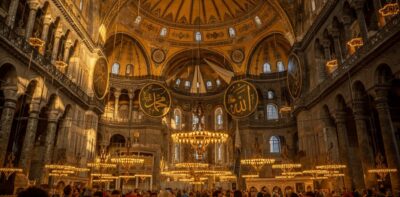
Hagia Sophia Skip-the-Line Ticket and Audio Guide
Read our review →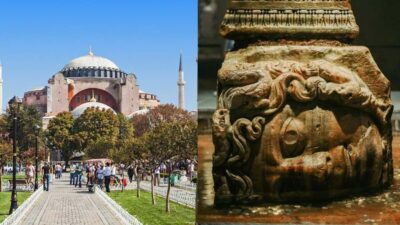
Blue Mosque, Hagia Sophia, & Basilica Cistern Tour
Read our review →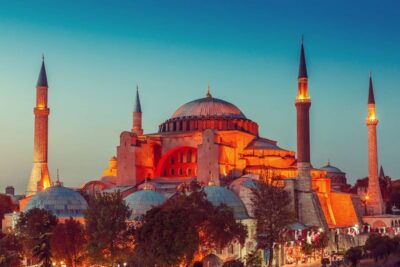
Hagia Sophia Skip-the-Line Ticket with Audio Tour
Read our review →
Blue Mosque, Basilica Cistern, & Hagia Sophia Tour
Read our review →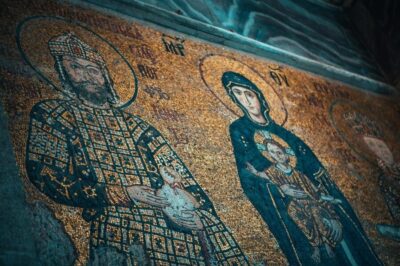
Hagia Sophia Skip-the-Ticket Line & Audio Guide
Read our review →Browse the lists this tour appears in