
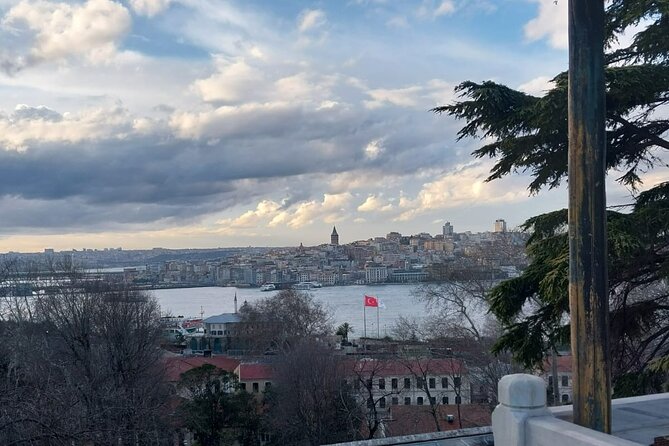
Reviewed · TOPKAPI PALACE TOURS
Topkapi Palace with Harem Walking Tour with Guide
Topkapi Palace is more than a collection of tiled rooms and royal treasures. It was the Ottoman court’s home, school, and government center, and this walking tour takes you through the gates, courtyards, kitchens, council rooms, treasury, and Harem. You also visit Hagia Irene, an old Byzantine church tucked inside the palace grounds.
I like the small group limit of 10, which should make it easier to hear the guide and ask questions. I also like the focus on parts many people rush past, especially the Harem, kitchens, Divan-ı Humayun, and Enderun, the palace’s inner service area. The main drawback is simple but important: admission is not included, and the supplied price details are not fully consistent, so confirm the total before booking.
In This Review
- Key points at a glance
- What this Topkapi Palace tour really covers
- Starting at the Babuhumayun Gate
- Courtyards, kitchens, and the Ottoman court
- The Treasury and Topkapi’s most famous objects
- The Harem is the tour’s strongest reason to book
- Hagia Irene, a quieter Byzantine stop
- Price, admission, and the value question
- Walking demands and who will enjoy it
- Practical advice before you meet the guide
- Should you book this Topkapi Palace walking tour?
- FAQ
- What is included in the tour price?
- How much does the tour cost?
- How long does the experience last?
- Where does the tour meet?
- What time does the tour begin?
- Is Hagia Irene included in the route?
- Is the Harem included?
- How large is the group?
Key points at a glance
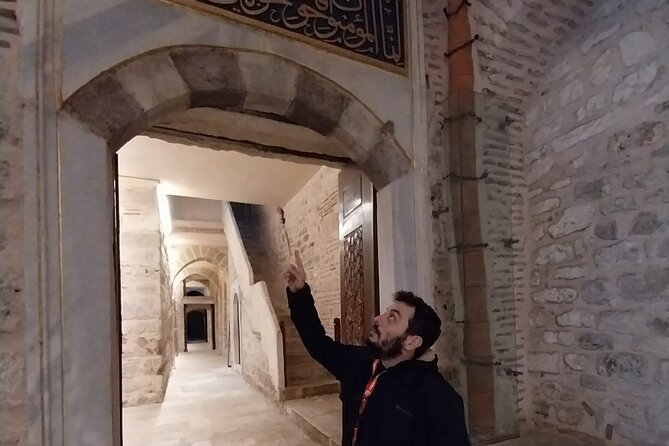
- Three major palace areas in one walk: See Topkapi’s gates, gardens, kitchens, treasury, council rooms, and inner court.
- The Harem is included in the route: This is the most restricted and richly decorated part of the palace, with hundreds of rooms and tiled corridors.
- Hagia Irene adds Byzantine context: The church predates the Ottoman palace and was not converted into a mosque after 1453.
- Guide-only pricing requires care: The tour price is listed as $47.66 per person, while entrance fees are extra.
- A small English-speaking group: The maximum is 10 people, with a 9:30 am start.
- Plan for plenty of walking: The experience lasts about 3 hours and 20 minutes, with little room for a quick look.
What this Topkapi Palace tour really covers
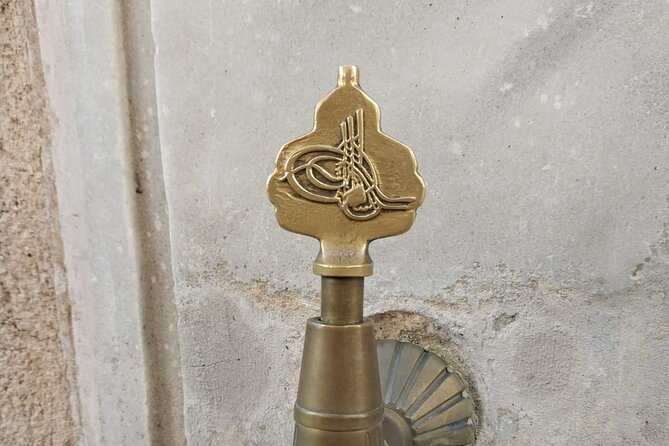
Topkapi Palace can feel confusing if you simply follow the crowds from one room to the next. Its courtyards are large, its buildings serve different purposes, and the royal family’s private world is set apart from the offices of the Ottoman state.
This tour gives you a guide to connect those pieces. You begin at the Babuhumayun, or Imperial Gate, then move through the palace grounds and its principal sections. Along the way, the guide explains how Topkapi functioned as a royal residence, a training center, and a place of administration.
That approach matters. You are not just looking at a gate or a chamber. You are learning why the palace had several layers of access, why the court was arranged around courtyards, and how the sultan’s public duties differed from life inside the Harem.
The advertised duration is about 3 hours and 20 minutes. The palace portion is listed at roughly two hours, Hagia Irene at 20 minutes, and the Harem at about one hour. Those times suggest a thorough visit rather than a quick orientation, so wear comfortable shoes and expect to be on your feet.
More Topkapi Palace visits:
- Istanbul: Topkapi Palace & Harem Museum Ticket & Audio Guide
★ 4.1 · 3,977 reviews - Istanbul: Topkapi Palace and Harem Guided Tour with Ticket
★ 4.8 · 1,726 reviews - Basilica Cistern &Topkapi Palace &Hagia Sophia Combo Tickets
★ 4.6 · 1,306 reviews
Starting at the Babuhumayun Gate
The meeting point is the Fountain of Sultan Ahmed III in Sultanahmet, near Topkapi Palace. The start time is 9:30 am, and the activity returns to the same meeting point at the end.
Beginning at the Imperial Gate gives the visit a useful sense of ceremony. This was not an ordinary entrance. It marked the transition from the city into the sultan’s court, and the tour uses it as the first step in explaining the palace’s layout.
You then move toward the Babusselam, or Gate of Salutation. The succession of gates is one of Topkapi’s most effective features because each one represented a further move into the court. The guide’s job here is especially valuable: without explanation, the gates can look like impressive but separate monuments. With context, they become part of a carefully controlled route into the imperial compound.
The route also includes the Royal Mint and the Fatih open-air museum area. The available information does not give a detailed breakdown of each display, so the exact time spent there may depend on the guide and the day’s conditions. Still, these stops help show that Topkapi was not only a residence. It was tied to money, administration, ceremony, and state power.
Courtyards, kitchens, and the Ottoman court
Topkapi’s courtyards are not filler between the famous rooms. They help you see how the palace worked. Different sections served different groups, and movement through the grounds was linked to rank and duty.
The kitchens are one of the more practical stops. They bring the palace down to earth. Royal life required a huge organization of cooks, servants, supplies, and daily meals, and the kitchen area offers a look at the machinery behind court life.
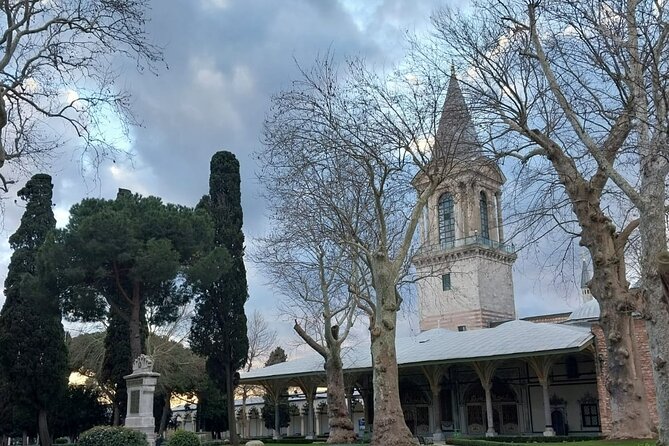
You also visit the Divan-ı Humayun, the imperial council. This is where government business was handled, making it an important contrast to the private quarters of the Harem. The Justice Tower rises above this part of the palace and is one of the landmarks included on the route.
The tower and council rooms make a good pair. One represents authority and oversight, while the other points to the formal work of governing the empire. I appreciate this balance because it keeps the tour from becoming only a parade of luxury objects.
The route continues through the Babussade, or Gate of Felicity, and the Chamber of Petitions. You also see Enderun, the inner service section of the imperial court. These names can blur together during an independent visit, especially when you are trying to keep track of several courtyards and gates. A guide helps you place each one in the palace system.
The Treasury and Topkapi’s most famous objects
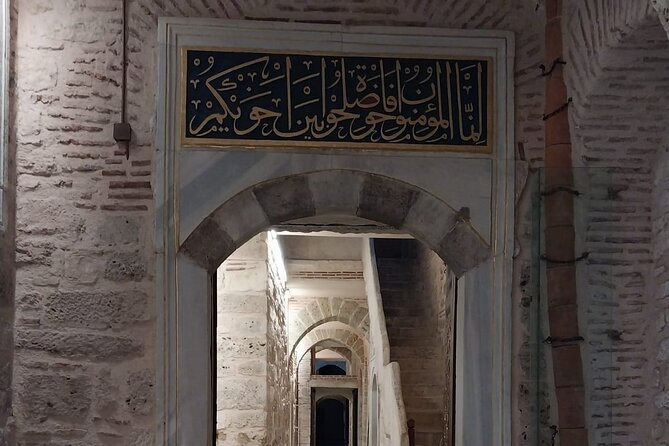
The Treasury is among the tour’s headline areas. Topkapi is known for its royal collections, and the Treasury gives you the chance to see the material side of Ottoman power: precious objects, ceremonial items, and gifts associated with the court.
The supplied information does not identify which specific objects will be on display during your visit. Exhibition rooms can also change, so you should treat the Treasury as a major section rather than expect a fixed list of individual pieces.
The guide adds value here by explaining what you are seeing and why it mattered. A jeweled object has more meaning when you understand whether it was used in a ceremony, presented as a diplomatic gift, or connected to the sultan’s personal authority.
This is also one point where a guided visit can save time. You can focus on the main rooms and stories instead of trying to read every label. The tradeoff is that you may not linger as long as you would on your own. If one display matters especially to you, tell the guide and ask for a moment to look more closely.
More walking tours in Istanbul:
- Istanbul: Fener Balat Half-day Guided Walking Tour
★ 4.9 · 1,711 reviews - Istanbul Highlights Small-Group Walking Guided Tour
★ 4.5 · 1,346 reviews - Istanbul: European and Asian Side Guided Foodie Walking Tour
★ 4.9 · 1,038 reviews - Half day Fener-Balat Walking Tour in Turkiye
★ 5.0 · 308 reviews
The Harem is the tour’s strongest reason to book
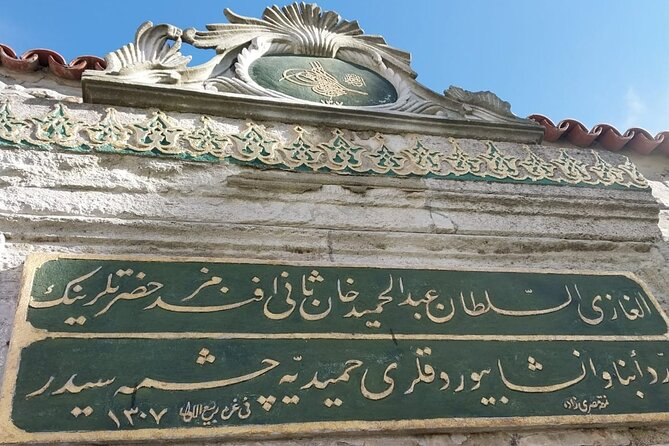
The Harem is the most compelling part of this experience. It is also the area many independent visitors skip, either because they do not realize a separate admission applies or because they run short on time.
The Harem was built out at the end of the 16th century and grew into a maze of roughly 300 tiled rooms, courtyards, and fountain gardens. Descriptions of more than 400 rooms also appear in the supplied material, so you should think of the Harem as a large complex rather than rely on one exact room count.
Its marble passageways, arched doorways, and patterned tiles create a very different mood from the palace’s official council areas. The spaces were private, controlled, and connected by strict routines. A guide can help you understand the difference between the sultan’s household, the women’s quarters, and the officials who served the court.
The Harem’s story also needs careful treatment. Many women brought into the Ottoman court were Christian or Jewish, since Islamic law forbade the enslavement of Muslims. Girls came largely from areas including Circassia, Georgia, and Armenia. Once inside the palace, they were taught to read and write, play instruments, sing, dance, and follow palace customs before taking on court roles.
That background is more useful than the usual lurid stories about palace intrigue. The Harem was not simply a place of luxury. It was a guarded institution, a school, a household, and a political setting. The tiled interiors are beautiful, but the social system behind them is what makes the visit worthwhile.
The tour gives the Harem about an hour, which is generous compared with a rushed add-on. You should still expect narrow routes, frequent stops, and a lot of walking. The Harem is one of the areas where a guide such as Ulan can help turn architectural details into a clear story. Ulan is specifically praised for strong palace knowledge, although guide assignment is not guaranteed.
Hagia Irene, a quieter Byzantine stop
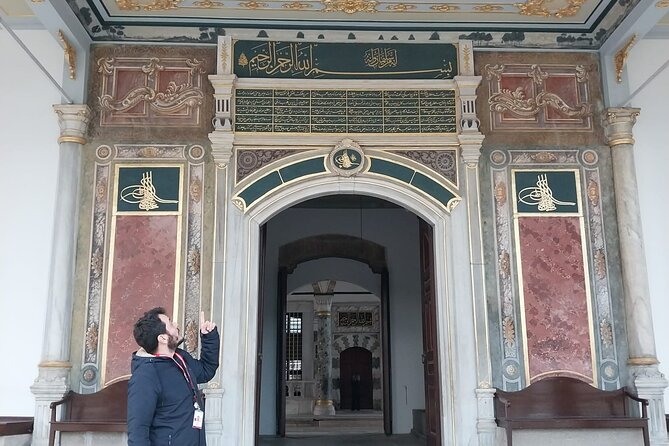
Hagia Irene sits in Topkapi Palace’s outer courtyard. It was originally a Byzantine church built on the site of an older temple in 330, and it was rebuilt after the Nika Revolt of 532, along with Hagia Sophia.
It is often described as the second-largest church in Istanbul after Hagia Sophia. The name means sacred peace, and the building has an important place in the development of Turkish museology.
Hagia Irene also survived the Ottoman conquest without being turned into a mosque. Instead, it was used for a long period as a weapons and military storage depot. That later use gives the church a different story from Hagia Sophia and helps explain why its role changed so sharply over time.
The planned visit lasts about 20 minutes. That is enough for an introduction and a look at the structure, but not a long study session. If Byzantine architecture is your main interest, you may find this stop brief. As part of a palace tour, though, it provides useful context and breaks up the imperial Ottoman material.
Price, admission, and the value question
The listed tour price is $47.66 per person. That price covers the professional English-speaking historian guide, but not admission to the sites.
The supplied admission information lists an entrance fee of €55 per person. It also separately lists an entry ticket for the Harem, Aya Irini Church, and Topkapi Palace Museum at $26. Because those figures do not match neatly, you should verify the current total and currency before paying.
One useful detail is that a guide may be able to help you buy the official admission and skip the line, according to one booking experience. That does not mean you should assume fast entry is guaranteed, but it may make the extra cost easier to accept if queues are long.
The value depends on your priorities. If you are happy to read signs and organize the palace yourself, the guide-only price may feel high once admission is added. If you want the Harem, Treasury, council rooms, and palace layout explained in one continuous visit, the cost can make sense, especially with a maximum group size of 10.
The $47.66 price is not a full sightseeing package. Lunch is not included, transport is not included, and entrance fees are separate. Think of it as a focused guided visit, not a full-day Istanbul tour.
Walking demands and who will enjoy it
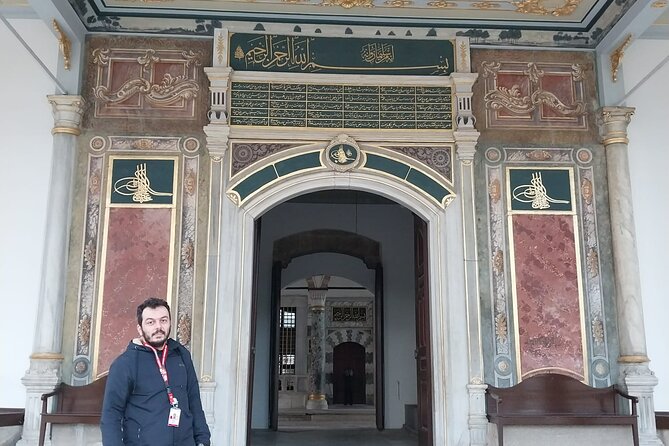
This is a good fit if you want structure, historical explanation, and access to the Harem without having to plan the palace yourself. It is also useful for a first visit to Istanbul, when Topkapi’s courtyards and buildings can be hard to organize in your head.
You should be comfortable walking for several hours. One booking experience specifically warns that the tour takes quite a while and involves a lot of walking, though the effort feels worthwhile if you want a full palace visit.
The experience is offered in English and most people can participate. It is near public transportation, making the Sultanahmet meeting point practical for many visitors. The group maximum of 10 is small enough for questions, but the actual size may vary up to that limit.
Families with young children should consider the length and the number of indoor rooms. Art and architecture fans will likely get the most from the Harem, Treasury, and Hagia Irene. If you mainly want quick photographs of the palace exterior, this tour will probably feel too long.
Practical advice before you meet the guide
Arrive at the Fountain of Sultan Ahmed III with time to spare. The meeting point is in the Sultanahmet area, but the palace grounds are large, and you do not want to begin the morning searching for the group.
Wear shoes suited to extended walking. You will pass through gates, courtyards, kitchens, council spaces, museum rooms, the Harem, and Hagia Irene. The route is not presented as a short highlights walk.
Keep the admission question in writing before the tour begins. Ask exactly what you must pay, which sites the ticket covers, and whether any line-skipping arrangement applies. This is the biggest practical weakness in the booking information, since one person arrived expecting tickets to be included and had to buy them separately.
Bring water and plan lunch after the activity, since no meal is included. The experience ends back at the meeting point, so you can arrange a nearby meal or continue sightseeing in Sultanahmet.
Free cancellation is available if you cancel at least 24 hours before the local start time. Cancellations or changes inside that window are not accepted for a refund.
Should you book this Topkapi Palace walking tour?
Book it if you want Topkapi explained as a working imperial center, not just a line of grand rooms. The Harem, kitchens, Divan-ı Humayun, Treasury, Enderun, and Hagia Irene give you a broad visit, and the small group makes the guide’s explanations more useful.
I would book only after confirming the admission cost. The guide fee is clear enough, but the separate €55 and $26 ticket details create confusion. Once you know the full amount, this is a strong choice for anyone who values context and wants to see the Harem.
Skip it if you prefer to move at your own pace, dislike long walking tours, or only want the palace’s most famous objects. For a serious first look at Topkapi, though, the route is well chosen, and the Harem gives it a clear reason to choose a guide.
FAQ
What is included in the tour price?
The price includes a professional English-speaking historian tour guide. Entrance fees, lunch, and site tickets are not included.
How much does the tour cost?
The listed price is $47.66 per person. Admission is extra, with the supplied information listing both a €55 entrance fee and a $26 ticket covering the Harem, Aya Irini Church, and Topkapi Palace Museum. Confirm the current total before booking.
How long does the experience last?
The tour lasts approximately 3 hours and 20 minutes. The palace visit is listed at about two hours, Hagia Irene at 20 minutes, and the Harem at one hour.
Where does the tour meet?
The meeting point is the Fountain of Sultan Ahmed III in Sultanahmet, near Topkapi Palace, at Sultanahmet Square.
What time does the tour begin?
The start time is 9:30 am.
Is Hagia Irene included in the route?
Yes. The tour includes a visit of about 20 minutes to Hagia Irene Museum in Topkapi Palace’s outer courtyard.
Is the Harem included?
The route includes the Harem Section, but its admission ticket is not included in the tour price.
How large is the group?
The activity has a maximum of 10 participants and is offered in English.
Latest additions around Istanbul
- Istanbul: Hagia Sophia Skip-the-Line Ticket with Live Guide★ 3.7 · 3 reviews
- Ephesus Private Tour From Istanbul including transfers & domestic fights★ 5.0 · 3 reviews
- 6 Days Multi City Turkey Tour★ 5.0 · 3 reviews
- Princess Islands Daily Tour from Istanbul★ 5.0 · 3 reviews
- Premium Line : Private Istanbul Tour : All Inclusive Package★ 4.3 · 3 reviews
- Private Istanbul Combo Tour – Classic Old City and Bosphorus Cruise★ 5.0 · 3 reviews
- Private tour: 12-Day Turkish Adventure Package Tour From Istanbul★ 4.5 · 3 reviews
- Istanbul: Hagia Sophia Guided Tour with Optional Ticket★ 3.3 · 3 reviews
Topkapi Palace Tours, compared.
Topkapi Palace & Harem Museum Ticket & Audio Guide
Read our review →
Topkapi Palace and Harem Guided Tour with Ticket
Read our review →
Basilica Cistern &Topkapi Palace &Hagia Sophia Combo Tickets
Read our review →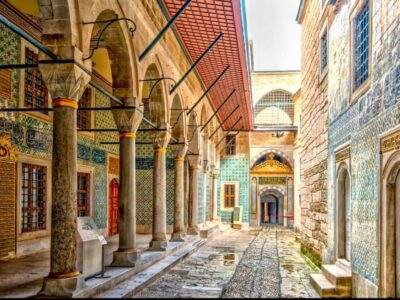
Topkapi Palace & Harem Tour Skip-the-Line Ticket
Read our review →
Dolmabahce Palace & Harem Fast-Track Entry with Audio Guide
Read our review →
Topkapi Palace and Harem Ticket with Audio Guide
Read our review →
Dolmabahce Palace and Harem Skip-the-Line Ticket
Read our review →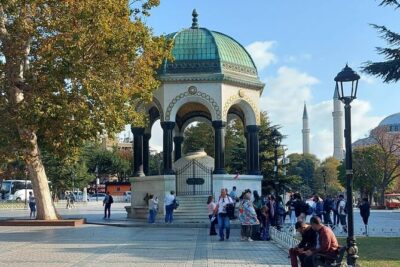
Istanbul Highlights! Blue Mosque, Hagia Sophia, Topkapı and More!
Read our review →Browse the lists this tour appears in