
Reviewed · WORKSHOPS
Turkish Marbling Paper Ebru Art Workshop
The magic of Ebru is that you paint on water, not paper. You drop color onto a thick liquid surface, shape it with a fine tool, then lay paper over the top and lift away a one-of-a-kind pattern. Betül and Ali guide you from simple marks to tulips, hyacinths, carnations, and your own free design.
I like two things especially: you make several finished pieces instead of one nervous attempt, and the class feels personal, with tea, coffee, and a rooftop view over the Bosphorus. The main thing to plan around is drying time. You may need to return the next day for your artwork, so this is not ideal on your final day in Istanbul.
In This Review
- Key points before you book
- What Ebru is, and why it is worth your time
- Arriving at the Sultanahmet atelier
- The first 30 minutes: tools, colors, and simple marks
- Practicing comb and back-and-forth designs
- Tulips, hyacinths, carnations, and free design
- What you take home, and when
- The rooftop pause and the human welcome
- Families, children, and first-time artists
- Timing, language, and group size
- Is $64 a fair price?
- Should you book the Ebru workshop?
- FAQ
- Where is the Turkish Marbling Paper Ebru Art Workshop held?
- How long does the Ebru class last?
- What techniques will I learn?
- Are the materials included?
- Can I take my artwork home?
- Is the workshop accessible for wheelchair users?
Key points before you book
- Paint on water, then lift the design onto paper: Ebru gives you an unusual hands-on way to meet a traditional Turkish art.
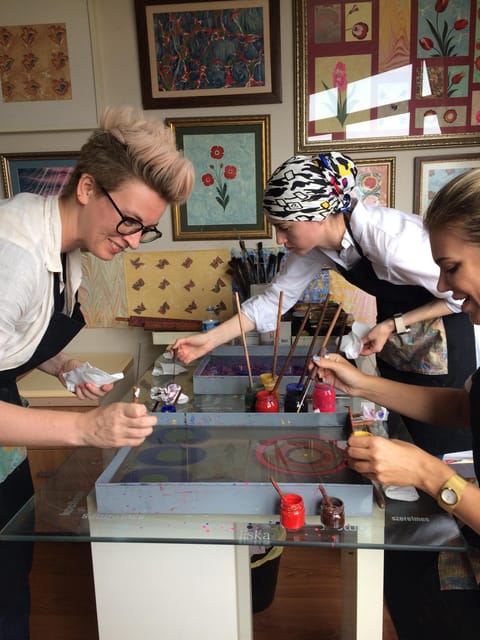
- Learn several classic patterns: The class covers stone, back-and-forth, comb work, and flowers such as tulips, hyacinths, and carnations.
- Make five or six pieces in many cases: You get repeated practice, not just a single souvenir.
- Enjoy a calm Sultanahmet studio: The workshop is two minutes from Topkapi Palace, with a terrace offering wide Bosphorus views.
- Suitable for families and small groups: Up to 10 people can attend, and children as young as six have taken part.
- Plan for stairs and collection time: The studio is on the third floor without an elevator, and paper may need overnight drying.
What Ebru is, and why it is worth your time
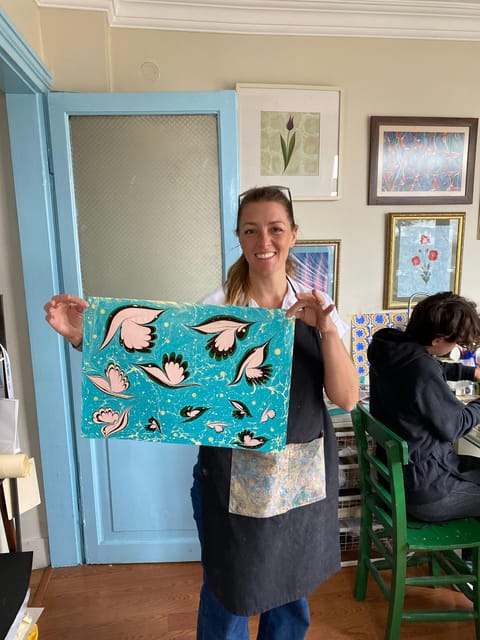
Ebru is the traditional Turkish art of marbling paper. Instead of brushing pigment across a dry sheet, you place floating colors onto a prepared water bath. A pointed tool or comb pulls the colors into lines, waves, petals, and curls. The finished pattern is transferred to paper in one careful movement.
That process gives the class its unusual charm. You can plan a general design, but the water always adds a little surprise. A flower may open differently than expected. A swirl may become the best part of the page. This makes Ebru friendly to beginners, since perfection is neither expected nor really possible.
The art also offers a useful pause from Istanbul’s busy sights. After the crowds around Hagia Sophia, the Blue Mosque, and Topkapi Palace, two hours of quiet concentration can reset your day. You are watching color move, listening to instructions, and making small choices with your hands. The result feels closer to a creative meditation than a standard sightseeing stop.
The class also gives you cultural context. Betül and Ali teach the traditional designs and explain how the tools and methods work, rather than treating the activity as a quick craft project. You leave with something made by you, plus a better sense of one of Turkey’s distinctive artistic traditions.
More marbling and ebru art sessions:
- Turkish Marbling Paper Art Workshop
★ 5.0 · 56 reviews - Once in a lifetime Experience: Turkish Marbling Art
★ 5.0 · 4 reviews - Authentic Turkish Art Marbling – Ebru – with Locals at Home
★ 5.0 · 4 reviews
Arriving at the Sultanahmet atelier
The studio is at Ishakpasa Street No. 6, on the third floor, just two minutes from Topkapi Palace. Its position is useful if you are already exploring Sultanahmet. You can fit the workshop between major sights without arranging a separate ride across the city.
The building has no elevator, and the stairs may be difficult for older people or anyone with limited mobility. The activity is not suitable for wheelchair users. Babies under one year are also not accepted, so check these points before paying.
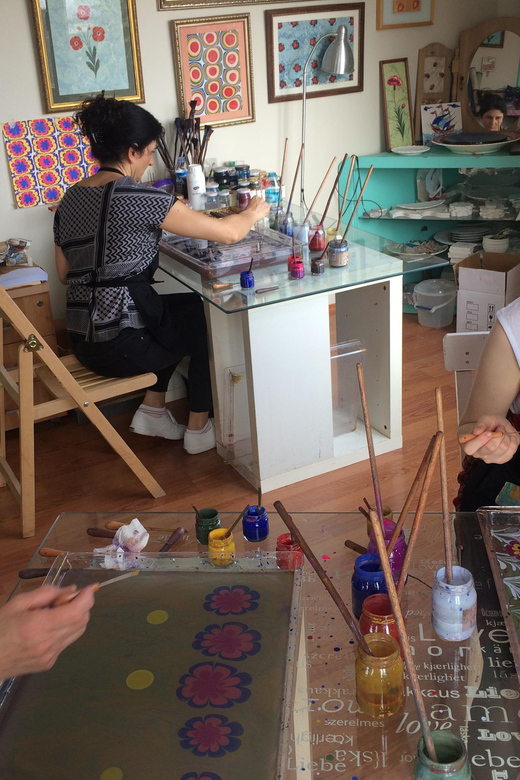
Once upstairs, the setting changes from historic-city foot traffic to a small working art space. The atelier includes artwork, a shop, and access to a rooftop with views toward the Bosphorus. Tea and coffee are provided, and several sessions also include the sort of warm hospitality that makes the class feel less formal.
That welcome matters here. Ebru requires you to make repeated attempts, and a patient teacher helps you enjoy the process rather than worry about getting each design right. Betül is described as calm and clear with beginners, while Ali is also praised for making the technical steps easy to follow. English and Japanese instruction is available.
The first 30 minutes: tools, colors, and simple marks
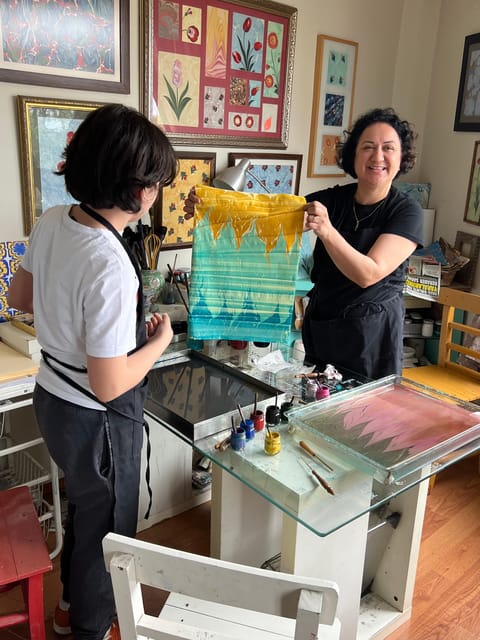
The class begins with an introduction to Ebru and its materials. You learn what the water bath does, how color is placed on its surface, and how the tools change the pattern. The information is practical, so you can quickly move from watching to trying.
The first designs are deliberately simple. Stone patterns, for example, let you see how drops of color spread and sit beside one another. You begin to understand the timing involved: too much color can crowd the surface, while too little may leave a thin pattern.
This opening stage is valuable because the technique looks easier than it is. A small movement can change the whole sheet. Betül and Ali demonstrate patiently, then let you repeat the action. The class structure builds confidence in steps, which works well if you have no art background.
You should not expect a lecture on Turkish art. The focus is on doing. Still, the instruction gives the activity more meaning than a generic painting session. You are learning a traditional method while making a useful souvenir.
Practicing comb and back-and-forth designs
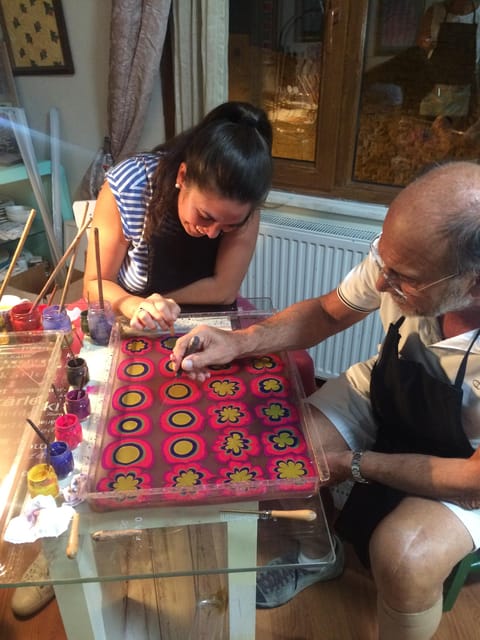
Next, the class moves into patterns made with controlled pulls across the water. Back-and-forth movements create lines and repeated forms, while a comb introduces a more regular rhythm. These designs show how a basic color field can become something decorative with only a few careful passes.
This is often the point when the process starts to feel relaxing. Your attention narrows to the tray, the color, and the direction of the tool. You are not copying a printed template. You are learning a method and seeing what your own hand does with it.
The workshop allows repeated practice. Many people make around five or six pieces, depending on pace and interest, rather than taking home only the final attempt. That makes the $64 price easier to assess. You are paying for two hours of teaching, all supplies, several chances to practice, and multiple handmade keepsakes.
The value is strongest if you enjoy participation. If you only want a finished example made by an artist, buying a piece from the studio shop may be simpler. But if you want to understand how the pattern is formed, the class offers more than a souvenir purchase.
A few more Istanbul experiences to weigh up
- Istanbul:Original Turkish Mosaic Lamp Workshop w/ Snacks
★ 4.9 · 3,077 reviews - Istanbul: Perfume Making Workshop with Bosphorus View
★ 5.0 · 2,985 reviews - Istanbul: Turkish Coffee Making and Fortune Telling Workshop
★ 4.9 · 1,308 reviews - Istanbul: Turkish Mosaic Lamp Workshop with Bosphorus View
★ 4.9 · 1,050 reviews
Tulips, hyacinths, carnations, and free design
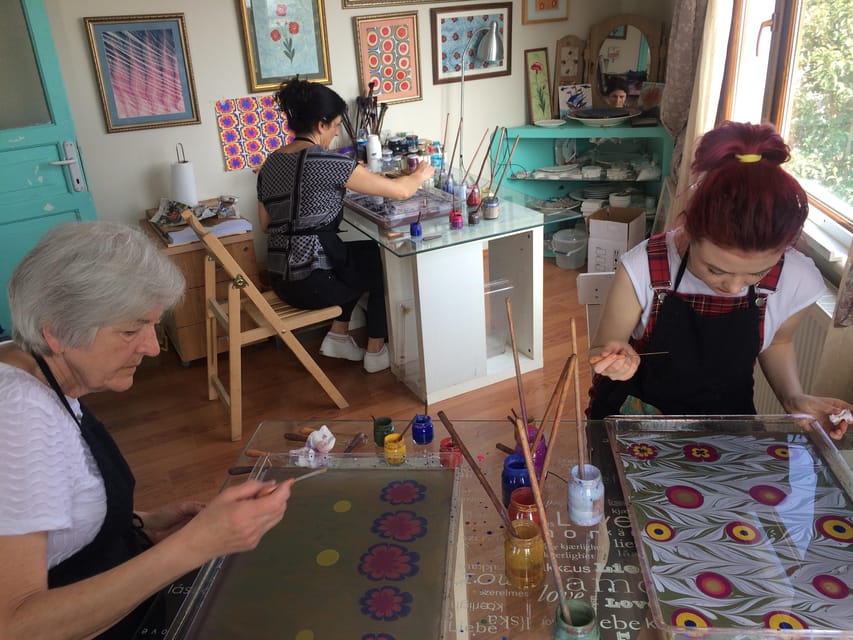
The flower section introduces some of the most recognizable Ebru motifs. With a pointed tool, you learn how floating drops can be pulled into petals and leaves. Tulips, hyacinths, and carnations are specifically included among the designs taught.
These flowers take more control than the early patterns, but the progression helps. You already know how the color behaves and how a tool changes its direction. The instructor can adjust the pace for the group, and the small-group limit of 10 allows room for individual help.
The final stage gives you space to make a design in your own style. Some people may follow a familiar flower pattern. Others may create something more abstract or thematic. A family group once made an under-the-sea version, showing that the class does not force every participant into the same result.
This free-style part is important. It turns the lesson from a demonstration into a personal art session. You finish with a piece that records your own choices, not just your ability to repeat the instructor’s example.
What you take home, and when
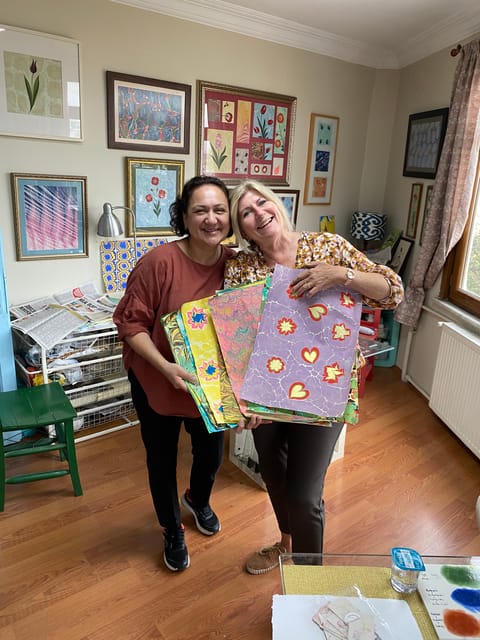
The paper must dry before it can be handled properly. Plan on collecting your work the following day unless the host is able to dry it the same day. One participant specifically received the paintings dried on the day itself, but the safer plan is to allow extra time.
This is the most important practical detail in the booking decision. Do not schedule the class on your last day if you want to take home every piece. Ask the hosts about collection timing when you arrive, especially if your departure plans are tight.
The number of finished papers can vary with your pace and the group. Several people have left with multiple samples, often around five or six pieces. That is a generous result for a two-hour activity, particularly when the materials are supplied.
Pack the artwork carefully for the rest of your trip. The class gives you a handmade memory with more personal value than a mass-produced item, but paper still needs sensible handling. The studio shop may also tempt you with additional work by the family and local artists, so leave a little room in your luggage.
The rooftop pause and the human welcome
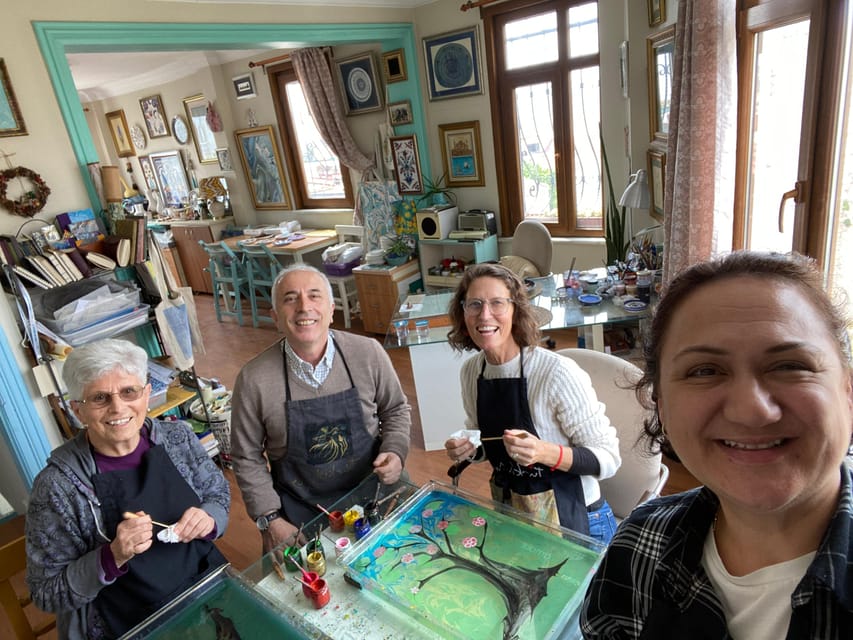
The rooftop is one of the class’s strongest extras. From above the Sultanahmet streets, you can look toward the Bosphorus and take a break after working at the water trays. The view adds a pleasant sense of place without turning the workshop into a sightseeing show.
Tea and coffee are included. The hosts have also offered sweets and further conversation after the lesson, though these additions may vary by session. The consistent point is the generous, home-like hospitality that shapes the visit.
I would not book this class only for the view. Istanbul has many fine terraces, and the weather may affect how much time you spend outside. The terrace works best as a bonus to the art lesson, a place to sit, talk, and let the experience settle.
The friendly atmosphere is particularly useful for solo participants. You can attend alone, or arrange a private-style gathering for family and friends. A group of eight found that filling a class gave everyone enough space to make an individual piece while still sharing the fun.
Families, children, and first-time artists
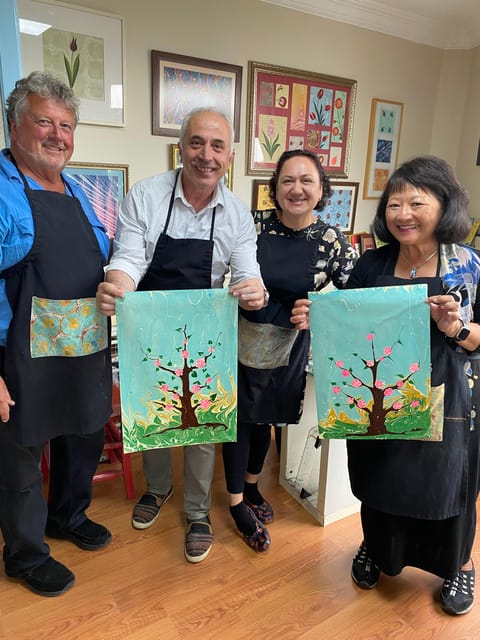
The workshop has worked well for families. Children aged six and eight have taken part successfully, and an 11-year-old joined a parent for a rewarding session. Kids can enjoy the immediate reveal when paper is lifted from the water, while adults often appreciate the slower, more focused pace.
That said, Ebru involves trays, pigments, and careful hand movements. Very young children may not have the patience for the full two hours. Babies under one year are not suitable for the activity, and the stairs create another concern for families with strollers.
You do not need drawing skills. The teacher demonstrates each pattern, and the structure begins with simple figures before moving to more advanced work. If you are an artist, you can treat the lesson as a chance to refine control and explore a traditional process. If you are not artistic, the method still gives you a clear way to produce attractive results.
Groups of colleagues or friends can also make good use of the class. Everyone works at their own tray, so the activity is social without requiring constant conversation. You can compare results at the end, and no two papers will be exactly alike.
Timing, language, and group size
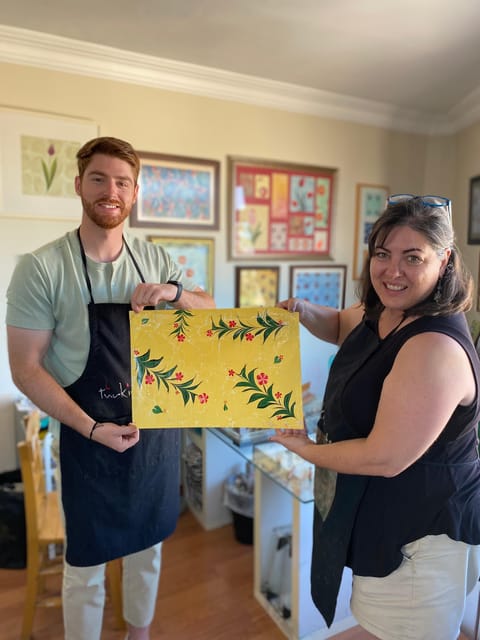
The class lasts two hours, with starting times based on availability. That is long enough to learn the main techniques without taking over your whole day. I would allow additional time for arrival, conversation, and rooftop tea, especially if you enjoy a relaxed pace.
The maximum group size is 10. A smaller class generally means more direct help, while a full session may feel more social. The hosts also accept organized workshops for families and friends, which can make the activity feel more private and coordinated.
Instruction is available in English and Japanese. English-speaking participants have found communication smooth, and the demonstrations make the process easier to follow even when a technique is new. If you have a specific language need, confirm it before booking.
The location works best as part of a Sultanahmet day. You can visit nearby monuments before or after the class, but avoid packing the schedule too tightly. Ebru rewards patience, and rushing away immediately after the final paper is lifted would miss part of the charm.
Is $64 a fair price?
At $64 per person, this is not the cheapest creative activity in Istanbul. The price makes sense if you value instruction, materials, several finished papers, and a personal cultural exchange rather than a quick make-and-take craft.
All class materials are included, as are tea and coffee. You also receive guidance from artists who teach both the traditional forms and the basic techniques behind them. If you produce five or six papers, the cost per keepsake becomes reasonable, especially since each one is handmade by you.
The price is less compelling if you have little interest in making art or if you are mainly searching for a rooftop view. In that case, the studio shop or another terrace may suit you better. The class earns its value through participation and attention from the instructors.
Free cancellation up to 24 hours before the activity and the reserve-now, pay-later option make it easier to fit into a changing Istanbul schedule. Still, the no-elevator access and possible next-day collection are practical limits, not minor footnotes.
Should you book the Ebru workshop?
I would book this class if you want a quiet cultural activity that gives you something personal to take home. It suits couples, families with older children, solo visitors, and groups of friends who would rather make something together than add another monument to the day.
The strongest reasons are the patient instruction from Betül and Ali, the chance to try several designs, and the calm setting near Topkapi Palace. The Bosphorus terrace and Turkish tea make the visit feel generous, but the art itself is the real reason to go.
Skip it if stairs are a serious problem, your schedule ends the same day, or you dislike hands-on activities. For everyone else, this two-hour class offers a thoughtful change of pace and a souvenir with a story attached to it.
FAQ
Where is the Turkish Marbling Paper Ebru Art Workshop held?
The studio is at Ishakpasa Street No. 6 in Sultanahmet, on the third floor. It is about two minutes from Topkapi Palace and convenient for visits to Hagia Sophia and the Blue Mosque.
How long does the Ebru class last?
The workshop lasts two hours. Starting times depend on availability.
What techniques will I learn?
You will learn stone, back-and-forth, comb designs, and flower patterns including tulips, hyacinths, and carnations. The class also allows time for your own free-style design.
Are the materials included?
Yes. All materials needed for the class are provided, and tea and coffee are offered.
Can I take my artwork home?
Yes, you can take your marbled papers home once they are dry. Drying may require returning the following day, so avoid booking on your final day unless the host confirms same-day collection.
Is the workshop accessible for wheelchair users?
No. The studio is on the third floor and has no elevator, so it is not suitable for wheelchair users. Babies under one year are also not accepted.
Latest additions around Istanbul
- Istanbul: Hagia Sophia Skip-the-Line Ticket with Live Guide★ 3.7 · 3 reviews
- Ephesus Private Tour From Istanbul including transfers & domestic fights★ 5.0 · 3 reviews
- 6 Days Multi City Turkey Tour★ 5.0 · 3 reviews
- Princess Islands Daily Tour from Istanbul★ 5.0 · 3 reviews
- Premium Line : Private Istanbul Tour : All Inclusive Package★ 4.3 · 3 reviews
- Private Istanbul Combo Tour – Classic Old City and Bosphorus Cruise★ 5.0 · 3 reviews
- Private tour: 12-Day Turkish Adventure Package Tour From Istanbul★ 4.5 · 3 reviews
- Istanbul: Hagia Sophia Guided Tour with Optional Ticket★ 3.3 · 3 reviews
Workshops, compared.

Original Turkish Mosaic Lamp Workshop w/ Snacks
Read our review →
Turkish Coffee Making and Fortune Telling Workshop
Read our review →
Turkish Mosaic Lamp Workshop with Bosphorus View
Read our review →
Turkish Mosaic Lamp Workshop in Galata – All Included
Read our review →
Turkish Coffee Making and Fortune Telling Workshop
Read our review →
Browse the lists this tour appears in