
Reviewed · ISTANBUL
Ancient Rome Under Istanbul
Istanbul keeps its oldest chapters underfoot. On this small-group walk through Sultanahmet, you may pass from a modern shop or hotel into a Roman wall, Byzantine cistern, or chapel fragment that most visitors would never find alone. The tour also connects these underground remains with Küçük Ayasofya and the old Hippodrome, so you get both archaeology and a sense of the city above it.
I like the chance to see ancient places tucked beneath modern buildings, and I like the guides’ ability to explain how Roman, Byzantine, and Ottoman Istanbul overlap. Ece is especially praised for her warm, clear teaching, while Ege and AJ are also noted for bringing strong historical detail and personality. The main drawback is access: the advertised three to five hours can feel closer to three, and some stops may depend on what is open that day.
In This Review
- Key points to know before you book
- Why ancient Istanbul is easiest to understand below ground
- Meeting at Divan Yolu and setting the Roman scene
- Beneath shops and hotels: the most unusual part of the walk
- Constantine’s Palace and the search for imperial traces
- Küçük Ayasofya, a church turned mosque
- The Hippodrome and the city above ground
- What the guides add to the experience
- Walking time, coffee, and the practical side
- Is $45 a fair price?
- Who should book this underground Istanbul tour?
- Final verdict: book it for the stories beneath the street
- FAQ
- Where does the tour start?
- What time does the tour begin?
- Where does the tour end?
- How long does the experience last?
- What sites are included?
- Is food included?
- How many people can join the tour?
- Can I cancel for a full refund?
Key points to know before you book
- Ancient ruins beneath everyday Istanbul: Explore cisterns, chapels, and Roman remains hidden below shops, hotels, and other modern buildings.
- A history-focused walking tour: Your guide explains how Constantinople developed and why so much of its older fabric ended up below street level.
- Three major settings: Visit the underground remains, Küçük Ayasofya, and the Hippodrome in Sultanahmet.
- Personal guiding: The group is capped at 15 people, and some departures may operate with only one or two participants.
- Guides with different strengths: Ece, Ege, AJ, Erkan, and other guides have led departures, with Ece receiving especially warm praise for her explanations and care.
- Plan for real walking: Comfortable shoes matter, and a Turkish coffee break can be a welcome lift during a long morning.
Why ancient Istanbul is easiest to understand below ground
Modern Istanbul was built over older cities. Roman Constantinople grew, changed, and was rebuilt for centuries. Byzantine churches became Ottoman mosques, streets shifted, and buildings rose over earlier foundations. As the city changed, old floors and structures were sometimes buried beneath the new ones.
That is the central idea of this experience. You are not simply walking from one grand monument to another. You are looking at the small traces left between them: masonry under a hotel, a cistern below a commercial building, or a chapel remnant tucked into an ordinary part of Sultanahmet.
I find this approach useful because Istanbul’s famous monuments can make the city’s past seem polished and separate from modern life. Here, the contrast is the point. You may be standing in a working shop or near a hotel, then looking down at a structure built for a very different city.
The tour is best for you if you enjoy piecing together fragments. It is less suited to someone who wants a long, formal visit inside major museums with clearly labeled displays and a fixed route.
Other Istanbul days travellers pair with this one:
- Istanbul: Bosphorus Dinner Cruise & Show with Private Table
★ 4.8 · 44,561 reviews - Istanbul: Daytime or Sunset Sightseeing Cruise & Audio Guide
★ 4.8 · 14,430 reviews - Istanbul: Bosphorus Dinner Cruise with Turkish Night Show
★ 4.8 · 10,127 reviews
Meeting at Divan Yolu and setting the Roman scene
The tour begins at Binbirdirek, at Divan Yolu Cd. No. 15 in Fatih, at 10:00 a.m. This places you in the historic center, close to the main sights of Sultanahmet. The activity ends back at the same meeting point.
Your guide first gives you the wider story of Istanbul’s Roman and Byzantine past. This opening matters. Without it, a low wall or broken mosaic can look like a stray piece of old stone. With the political and religious background in place, you can begin to see how the city was shaped by imperial building, conquest, worship, and constant rebuilding.
Several guides have been praised for this part of the experience. Ece is described as especially good at explaining difficult history in a friendly, easy way. Ege is noted for strong energy and enthusiasm, while AJ is praised for making the city feel alive. The exact guide is not guaranteed, but the experience depends heavily on the person leading it.
Some departures have been private in practice because only one or two people booked. That can give you more time for questions and a more flexible conversation. It also means you should be clear about the meeting point. Hotel pickup has sometimes been arranged, but it is not included in the listed tour price, and transportation to the old city may cost extra.
Beneath shops and hotels: the most unusual part of the walk
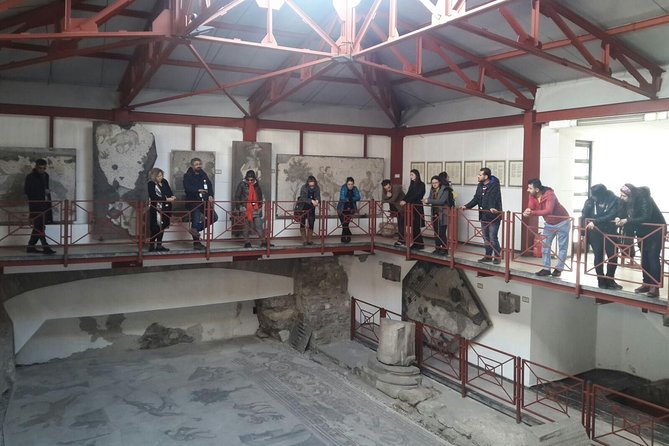
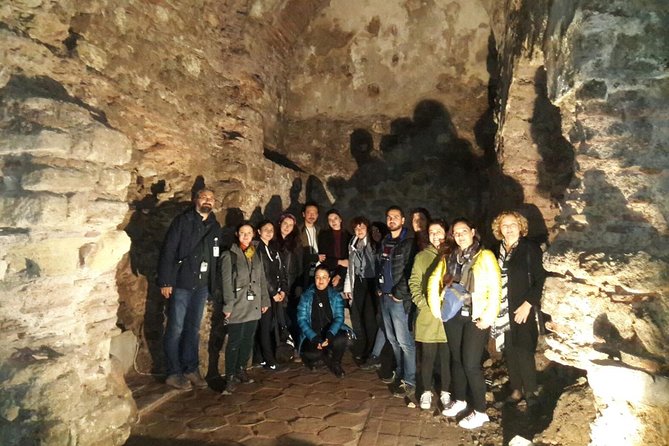
The heart of the tour is a series of Roman and Byzantine remains below the modern buildings of Istanbul. The route is described as taking about three hours through this part of the city, followed by shorter visits to Küçük Ayasofya and the Hippodrome.
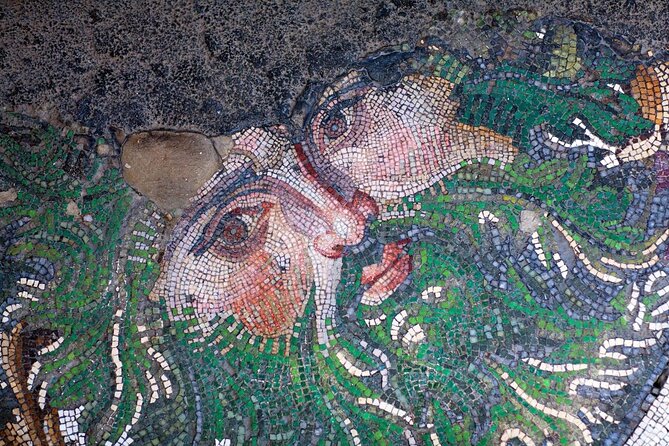
The appeal is not grand scale. These are fragments and enclosed spaces rather than a single vast monument. You may see ancient cisterns, remnants of Byzantine chapels, mosaics, and other traces that are not part of the usual first-day route through Istanbul.
I like the way this turns the city into an archaeological puzzle. A cistern shows how the old city managed water. A chapel remnant points to a religious building that may have been changed or absorbed into later construction. A buried wall reminds you that the street level you see today is not the original ground level.
The setting can also be rough around the edges. These remains may be reached through modern businesses, hotels, or shops rather than through a grand museum entrance. That gives the tour its unusual character, but it can also make the experience feel less polished than a standard sightseeing visit.
Access is an important consideration. One disappointing departure involved places that were expected to be open but were difficult to enter. The operator later stated that the planned sites were visited, but the exchange makes the practical point clear: underground access can vary, and this is not a promise of unrestricted entry to every ruin in every building.
If you want the best experience, ask your guide questions as you go. What was the original purpose of a space? How did the building change under Ottoman rule? Is a wall Roman, Byzantine, or later? The value comes from linking the physical remains to the story.
Constantine’s Palace and the search for imperial traces
Constantine’s Palace is listed among the main sights of the experience. The name points to the imperial world of Constantinople, when the city served as the eastern center of the Roman Empire and later the Byzantine Empire.
Do not expect a complete palace complex presented like a restored royal residence. The attraction here is the remains and the setting. Much of the old imperial city survives only in pieces, and your guide helps explain what those pieces once meant.
This is where a strong guide makes a major difference. Ece, Ege, and other named guides have been praised for explaining who ruled, which groups shaped the city, and how power changed hands. That wider political story can help you understand why an isolated stone or buried foundation matters.
The palace section may appeal most to history and archaeology enthusiasts. If you need a clearly preserved building with a large collection of objects, you may find this stop modest. If you enjoy standing in a modern neighborhood and imagining the imperial city beneath it, the setting is far more rewarding.
Two continents, plenty of other ways to spend a day:
- Best of Istanbul 1, 2 or 3-Day Private Guided Istanbul Tour
★ 5.0 · 8,922 reviews - Istanbul: Basilica Cistern Fast-Track Entry and Audio Guide
★ 4.6 · 7,521 reviews - Istanbul: Hagia Sophia Skip-the-Line Ticket & Museum Option
★ 3.7 · 4,958 reviews - Istanbul: Hodjapasha Whirling Dervishes Show & Exhibition
★ 4.4 · 4,790 reviews
Küçük Ayasofya, a church turned mosque
The second named stop is Küçük Ayasofya, also identified here as the Gazi Süleyman Paşa Mosque. The visit lasts about 20 minutes and has no separate admission charge listed.
The building was originally a church and was later converted into a mosque. It served as a model for the architects who built Hagia Sophia, making it a useful place to discuss early Byzantine architecture without treating Hagia Sophia as an isolated wonder.
Your guide explains the building’s design, its religious changes, and the stories tied to the site. This is a compact visit, so you should think of it as a focused lesson rather than a long architectural study.
I like this stop because it connects the underground remains to a building you can see more clearly. You get a sense of how religious structures changed function as Istanbul moved from Roman rule to Byzantine Christianity and then Ottoman Islam.
As with any active mosque, access and conditions can depend on local arrangements and religious use. The supplied details do not promise a particular interior route, service schedule, or dress guidance, so listen to your guide and follow the rules at the site.
The Hippodrome and the city above ground
The final listed stop is the Hippodrome, now Sultanahmet Square. The visit lasts about 15 minutes.
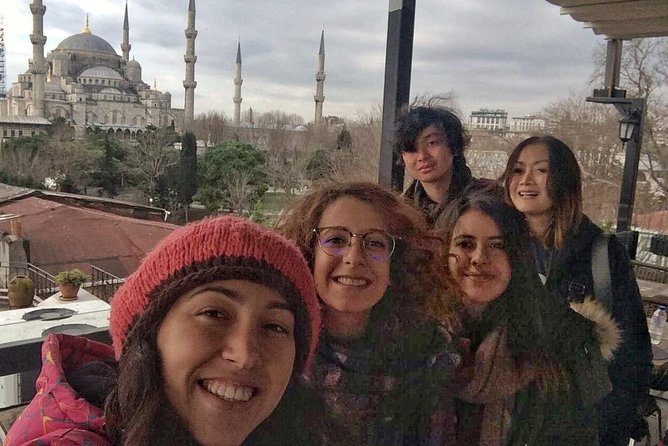
In Roman and Byzantine Constantinople, the Hippodrome was the center of chariot racing, public celebrations, and political life. Today, the square is part of the main sightseeing zone, surrounded by monuments, shops, and the steady movement of modern Istanbul.
This brief stop helps you connect the hidden ruins with the public heart of the old city. Below ground, you are studying fragments. Here, you can picture crowds gathering for races and ceremonies in a huge civic space.
Fifteen minutes is not enough for a detailed study of every monument or event connected with the Hippodrome. Still, the stop works well as a final piece of the story. It shows that the Roman city was not only made of palaces and churches. It also depended on public entertainment, ceremony, and mass gatherings.
If you are already visiting Sultanahmet’s major sights, you may have seen the square. The difference is the historical framing. Your guide points out how the present square relates to the old arena and explains why this ordinary-looking open space was once so important.
What the guides add to the experience
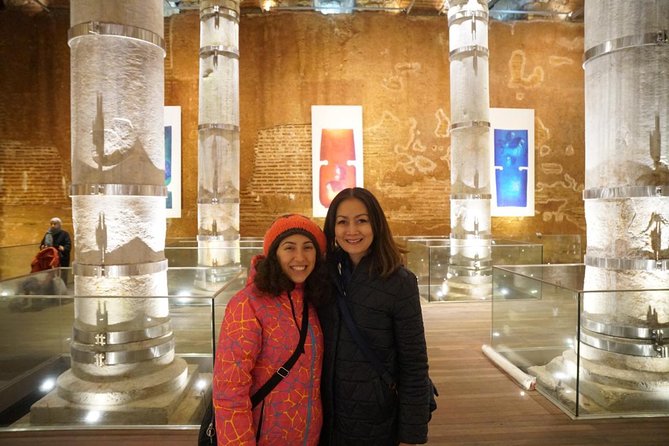
The guiding is the strongest part of this tour. The route includes places that can be difficult to interpret on your own, and the remains are often incomplete. You need someone who can supply context without turning every stop into a lecture.
Ece is frequently singled out for her clear explanations, kindness, and ability to adjust to the group. One account describes her extending the visit during rain and offering useful local advice over tea. Other departures were led by Ege, AJ, Erkan, or Eve, with praise for energy, historical detail, and a welcoming manner.
You should keep expectations realistic. Guide quality can vary, and one departure had serious communication problems according to the customer. The operator disputed that assessment and described the guide as an academic in Istanbul University’s Classics Department who also teaches Ancient Greek. The fair lesson is to confirm the language you need and speak up if an explanation is unclear.
A small group helps. With a maximum of 15 people, you are less likely to be lost in a crowd, and you can usually ask questions. A one-person departure may feel more like a private walk, but it does not guarantee that the route will expand to a full five hours.
Walking time, coffee, and the practical side
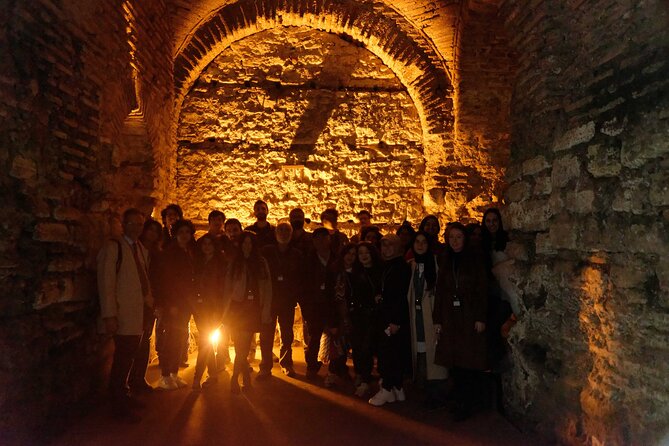
The experience lasts approximately three to five hours. The difference is significant. A small, quick-moving group may finish near the shorter end, while a slower private departure, rain delay, or longer discussion may take more time.
You will be walking through the old city, entering underground spaces, and moving between historical sites. Wear comfortable shoes. The tour does not include food, drinks, or lunch, so plan a snack or meal before or after the activity.
A Turkish coffee or tea break can fit naturally into the day if your guide suggests one, but do not treat it as an included feature. One departure began with time over coffee while the guide explained the city’s historical setting. Another included tea and local advice. These moments can be pleasant, but they may vary by guide and group.
The meeting point is near public transportation, which is useful if you are staying outside Sultanahmet. If you need hotel pickup, ask about the cost before booking. The standard arrangement begins and ends at the stated meeting point.
Service animals are allowed, and most people can participate. The information provided does not give detailed guidance about stairs, narrow passages, low ceilings, or wheelchair access. If you have mobility concerns, ask the operator before paying, since underground ruins often have uneven or restricted access.
Is $45 a fair price?
At $45, the tour can be good value if you care about history and want access to places you would likely miss alone. The professional guide, local taxes, and handling charges are included. Food, drinks, lunch, and any optional transportation are not.
The price makes more sense when you value interpretation rather than admission tickets. Many of the listed stops show no separate admission charge, so you are mainly paying for the guide’s time, route planning, and ability to explain sites that are not obvious from the street.
I would not book this expecting a full day of major-ticket attractions. The tour is about overlooked remains and expert context. If you compare it with a private guide, a small group capped at 15 people may offer a reasonable middle ground. If your main goal is to save money and you are satisfied with Hagia Sophia, the Blue Mosque, and the Hippodrome on your own, the value may feel less clear.
Be wary of confusing this $45 experience with a more expensive private package. One poor account refers to a much higher price, but the advertised rate provided here is $45. Confirm the final amount and any pickup costs at booking.
Who should book this underground Istanbul tour?
I recommend it most strongly to you if you:
- Like Roman, Byzantine, and Ottoman history.
- Enjoy archaeological fragments more than polished museum displays.
- Want to see parts of Sultanahmet beyond the standard landmark route.
- Appreciate a guide who can answer questions and explain layers of change.
- Are comfortable walking for several hours and entering less formal historic spaces.
You may want a different activity if you need guaranteed access to every site, a fixed five-hour schedule, or a fully accessible route. Families and casual sightseers can enjoy it too, but the subject is detailed, and the experience works best when you are curious about old stones, changing religions, and buried city plans.
The 94 percent recommendation rate and 4.8 rating from 35 ratings suggest a strong overall experience, but the small number of ratings and the two serious complaints call for sensible planning. Ask about the day’s access, the guide’s language, the expected duration, and any pickup charge.
Final verdict: book it for the stories beneath the street
Book this tour if you want Istanbul’s past explained through places that are easy to overlook. The combination of underground cisterns, chapel remains, Constantine’s Palace, Küçük Ayasofya, and the Hippodrome gives you a different view of Sultanahmet.
I especially like it for a repeat visit or for a first visit by someone who already plans to see the major mosques and museums. At $45, it offers its best value to curious history fans who want a personal guide and do not mind that the ruins may be modest, scattered, or reached through modern buildings.
Skip it if you want grand interiors, guaranteed access, or a tightly timed five-hour program. For everyone else, bring good shoes, meet at the old city starting point, and let the guide show you how much of Istanbul’s oldest city is still waiting below your feet.
FAQ
Where does the tour start?
It starts at Binbirdirek, Divan Yolu Cd. No. 15, 34122 Fatih, Istanbul.
What time does the tour begin?
The stated start time is 10:00 a.m.
Where does the tour end?
The activity ends back at the meeting point.
How long does the experience last?
The approximate duration is three to five hours.
What sites are included?
The experience includes Roman and Byzantine remains under modern Istanbul buildings, ancient cisterns, Constantine’s Palace, Byzantine chapel remains, Küçük Ayasofya, and the Hippodrome.
Is food included?
No. Food, drinks, and lunch are not included.
How many people can join the tour?
The maximum group size is 15 people.
Can I cancel for a full refund?
Yes. You can cancel at least 24 hours before the local start time for a full refund. Cancellations or changes made within 24 hours are not refunded.
Latest additions around Istanbul
- Istanbul: Hagia Sophia Skip-the-Line Ticket with Live Guide★ 3.7 · 3 reviews
- Ephesus Private Tour From Istanbul including transfers & domestic fights★ 5.0 · 3 reviews
- 6 Days Multi City Turkey Tour★ 5.0 · 3 reviews
- Princess Islands Daily Tour from Istanbul★ 5.0 · 3 reviews
- Private tour: 12-Day Turkish Adventure Package Tour From Istanbul★ 4.5 · 3 reviews
- Premium Line : Private Istanbul Tour : All Inclusive Package★ 4.3 · 3 reviews
- Private Istanbul Combo Tour – Classic Old City and Bosphorus Cruise★ 5.0 · 3 reviews
- Istanbul: Hagia Sophia Guided Tour with Optional Ticket★ 3.3 · 3 reviews