
Reviewed · COOKING CLASSES
Çiğ Köfte Cooking Class/Night with Traditional Music At Home
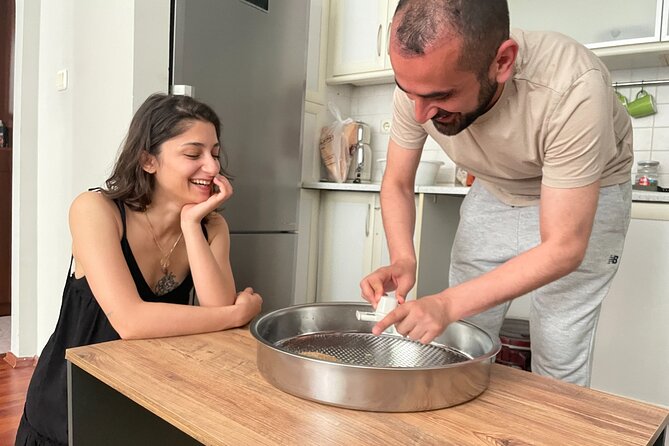
Çiğ köfte is often sold as a quick street-food snack, but this evening shows you its older life as a shared southeastern Turkish tradition. In a home in Kadıköy, you learn the ingredients and spices, then knead the mixture together while traditional music, jokes, and taste tests keep the table lively.
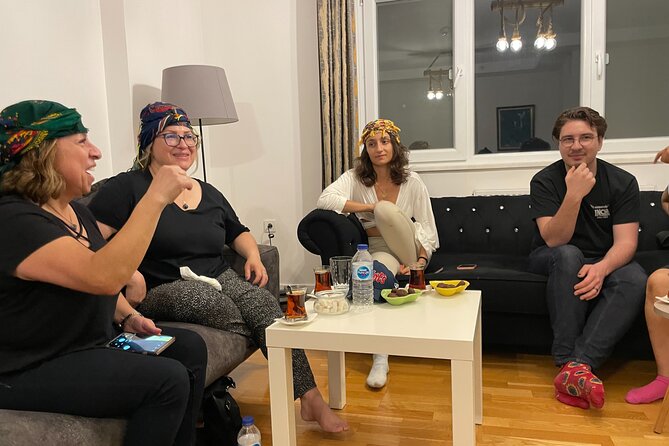
I like two things here. First, the small group limit of eight people gives the evening a personal feel. Second, Bushra, Burak, and Bawer treat the class as a social gathering, not just a recipe lesson. The one thing to consider is that this suits you best if you enjoy participating and talking with hosts, rather than watching a formal cooking demonstration.
In This Review
- Key points to know before booking
- Why çiğ köfte is more than a street-food stop
- Arriving at the Kadıköy home
- Meeting Bushra, Burak, and Bawer
- Learning the ingredients and special spices
- Kneading together, with room to choose your role
- Traditional music gives the meal its character
- A two-and-a-half-hour evening, not a rushed tasting
- Who will enjoy this home cooking experience
- Practical planning for your Istanbul evening
- How this compares with an ordinary food tour
- Should you book the çiğ köfte evening?
- FAQ
- Where does the çiğ köfte cooking experience take place?
- How long does the activity last?
- What food do you prepare?
- Is the activity held in a restaurant?
- Who hosts the evening?
- Is traditional music included?
- Do I have to knead the çiğ köfte?
- How many people can join?
- Is the experience offered in English?
- Can I cancel for a full refund?
Key points to know before booking
- The dish has Urfa roots: You learn about çiğ köfte as a southeastern specialty with an older communal role, not simply as a modern street snack.
- You knead the mixture yourself: Participation is encouraged, but you can join as much as you wish.
- Traditional music is part of the evening: Music and singing recreate the social setting that traditionally accompanied large-group kneading.
- The setting is a local home: This is a personal cultural visit in Kadıköy, rather than a restaurant meal or a large cooking school.
- The group is capped at eight: That keeps conversation and hands-on instruction manageable.
- The price is $60 per person: For two and a half hours of food, instruction, music, and hospitality, the value depends on how much you want a social home experience.
Why çiğ köfte is more than a street-food stop
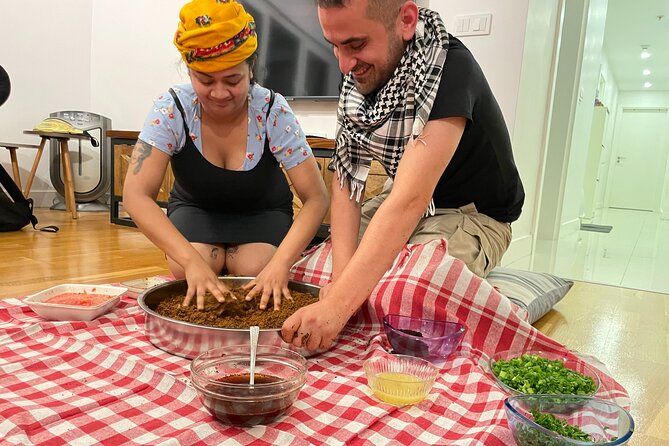
Many visitors first meet çiğ köfte in a shop, wrapped in lettuce or flatbread and served as a quick bite. This experience gives you a different frame. The dish comes from Urfa in southeastern Turkey, where preparing it traditionally involved a group gathered around a large bowl.
Some people kneaded. Others played music and sang behind them. The food was part of a shared evening, with conversation and humor woven into the work. That background matters because it explains why this class is not built around a chef standing apart from you. The point is to bring you into the group.
The recipe lesson gives the evening structure, but the social ritual gives it meaning. You learn what goes into the dish, then see how the ingredients become a communal food through repeated kneading, tasting, and adjustment.
I like this approach for a first visit to Istanbul because it connects food with family and regional culture. You are not just collecting another Turkish recipe. You are learning why the dish was prepared in a particular way and why music belonged in the room.
More cooking classes in Istanbul:
- Private Turkish Cuisine Cooking Class with Local Moms
★ 5.0 · 114 reviews - Traditional Home Cooking with a Local in İstanbul City Center
★ 5.0 · 82 reviews - Istanbul Home Cooking Course – Cook and Eat
★ 4.9 · 52 reviews
Arriving at the Kadıköy home
The meeting point is at 19 Mayıs, Şemsettin Günaltay Cd. no:186, in Kadıköy. The activity begins and ends at this same location, and the address is near public transportation.
That makes the evening fairly simple to plan. You do not need to arrange a separate return point, and you can treat the event as one fixed stop in your Istanbul schedule. Still, check the address carefully before setting out. The experience takes place at a private home, so arriving at the correct building matters more than it would for a clearly marked restaurant.
The class is offered in English. That is useful during the ingredient explanation and when you want to ask about the dish, although the music and shared preparation also carry much of the evening without words.
This is not a sightseeing tour of Kadıköy. You will not be moving from one landmark to another. The value is in spending time with local hosts in their home, so plan your evening around the gathering rather than trying to squeeze in a long list of nearby attractions.
Meeting Bushra, Burak, and Bawer
The hosts named for this experience are Bushra, Burak, and Bawer. Their role is broader than teaching a cooking class. They welcome you, explain the food, guide the kneading, and help create the relaxed mood that makes a home meal feel different from a booked activity.
The evening is designed to warm you up first, so you can settle into the room before the cooking begins. That opening matters. A short explanation followed by immediate hands-on work can feel stiff, especially if you are meeting strangers. Here, the hosts aim to make you feel at home before everyone sits together.
The strongest appeal is the chance to talk with the people hosting you. One evening can never show every side of Turkish culture, but personal conversation often gives you more useful insight than a polished presentation. You might hear more about how the dish is enjoyed, how it is tested, or why the music matters, depending on the flow of the group.
The social tone may not suit everyone. If you prefer a quiet dinner, a precise recipe sheet, or a class focused on technical cooking skills, this may feel loose. If you enjoy humor, questions, and shared food, the format should be a better match.
Learning the ingredients and special spices
The first cooking stage focuses on the ingredients and special spices used in çiğ köfte. The supplied information does not provide a full recipe or ingredient list, so you should not book this expecting a printed formula with exact measurements.
Instead, the instruction centers on understanding the dish before you start working with it. You learn what the mixture contains and how the flavor develops as you knead and taste it. This is a useful way to learn a food that depends on feel as well as ingredients.
The hosts also explain the testing customs and jokes connected with the preparation. These small moments are important because they turn a basic lesson into a cultural activity. Food traditions often survive through habits, teasing, and shared timing, not only through written recipes.
If you want to reproduce the dish at home, pay close attention during this section. Ask questions while the ingredients are being described, since the event is built around conversation and participation. The hands-on part will make the technique easier to remember, but the exact method may depend on what the hosts explain on the night.
A few more Istanbul experiences to weigh up
- Istanbul:Original Turkish Mosaic Lamp Workshop w/ Snacks
★ 4.9 · 3,077 reviews - Istanbul: Perfume Making Workshop with Bosphorus View
★ 5.0 · 2,985 reviews - Istanbul: Turkish Coffee Making and Fortune Telling Workshop
★ 4.9 · 1,308 reviews - Istanbul: Turkish Mosaic Lamp Workshop with Bosphorus View
★ 4.9 · 1,050 reviews
Kneading together, with room to choose your role
After the introduction, you sit together and begin kneading the çiğ köfte. You can participate as much as you wish. That flexibility is helpful for mixed groups, since one person may want to work the mixture while another prefers to listen, watch, and sample.
Kneading is the heart of the experience. It is also the part most likely to make this feel different from a standard cooking class. You work alongside the hosts and other participants, rather than preparing an individual dish at a separate station.
The group tradition from Urfa gives the activity its rhythm. Some people focus on the food while others bring in music and singing. You may find the room shifting between instruction, conversation, and performance instead of following a strict minute-by-minute lesson.
There are also various ways to test the taste and intensity of the çiğ köfte. The hosts plan to explain these during the gathering. That gives you a practical reason to taste as you go, while also showing that judging the dish is part of the tradition.
A possible drawback is that the pace may not be fully predictable. A communal activity naturally changes with the people in the room. Some evenings may be more talkative, musical, or hands-on than others. I see that as part of the bargain, but you should know you are booking a shared social experience rather than a tightly controlled workshop.
Traditional music gives the meal its character
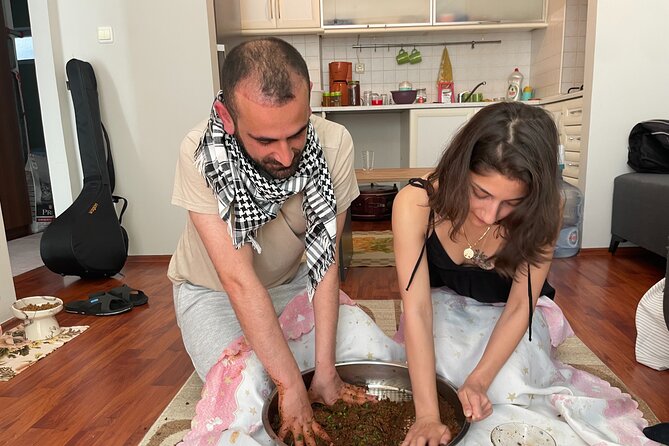
The music is not a short performance added at the end. It belongs to the idea of the çiğ köfte gathering. As the food is kneaded, traditional music and singing help recreate the way large groups in southeastern Turkey once prepared the dish together.
This detail gives the evening a stronger sense of place. You are in Istanbul, but the food and music point to Urfa and the southeast. That regional connection is one of the best reasons to choose this activity over a generic cooking lesson.
The music also keeps the preparation from feeling like work. Kneading can be repetitive, especially when several people are involved. With songs, jokes, and conversation in the room, the repetition becomes a group activity.
You should not expect a concert with a formal stage or a scheduled music program. The information describes music played during the preparation, so think of it as part of the gathering. If you want a polished performance, choose a dedicated music venue instead. If you like local music in a relaxed setting, this format has more charm.
A two-and-a-half-hour evening, not a rushed tasting
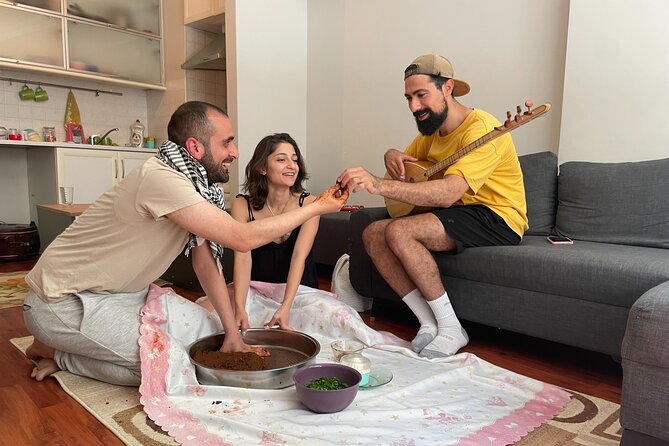
The experience lasts about two hours and 30 minutes. That is enough time for an introduction, ingredient explanation, kneading, music, tasting, and conversation without forcing every part into a quick demonstration.
The length also affects the kind of evening you are booking. At $60 per person, you are paying for more than a serving of çiğ köfte. You are paying for time with the hosts, a small-group setting, guided preparation, and a cultural activity that takes place in a home.
I think the price works best for you if you value contact and participation. A person who only wants to sample the dish can spend far less at a food shop. A person who wants a private cultural moment, with food at the center, gets more from the two-and-a-half-hour format.
Group discounts are available, which may improve the value if you are booking with friends or family. The maximum group size is eight, so the event should not feel like a large bus tour. Still, the exact discount amount is not provided, so check the price shown for your party before committing.
The activity is booked, on average, 26 days ahead. That does not guarantee every date will sell out, but it is a good reason to plan early if this is important to your Istanbul schedule.
Who will enjoy this home cooking experience
This activity fits several kinds of visitors particularly well:
- Food-focused visitors who want to understand how a well-known Turkish dish is prepared.
- Culture-minded visitors who value a local home and regional tradition more than a formal restaurant setting.
- Couples and small groups looking for an evening that encourages conversation.
- Solo visitors who want a ready-made social setting during their time in Istanbul.
- Families with older children, if everyone is comfortable joining a food activity and following the hosts’ lead.
- Repeat Istanbul visitors who have already seen major sights and want a different kind of evening.
It may be less suitable if you need a fast, polished, or highly technical class. The focus is the concept and culture of çiğ köfte, not just professional kitchen technique.
It is also worth thinking about how much you enjoy group energy. The activity can include jokes, music, and conversation with hosts and other participants. That is a major strength for an outgoing person, but a possible strain if you prefer a private meal with little interaction.
Practical planning for your Istanbul evening
The meeting point is in Kadıköy, at the stated Şemsettin Günaltay Cd. address. Public transportation is nearby, and the activity returns to the same meeting point at the end.
Because this is an evening home visit, leave enough time to find the address without rushing. Confirmation is provided when you book, and the activity is available with a mobile ticket. Keep the booking details easy to open on your phone.
The class is offered in English. The maximum is eight participants, and group discounts may be available. These details make it easier to plan with friends, but you should still confirm the final group price and meeting instructions when booking.
Free cancellation is available if you cancel at least 24 hours before the start time. Cancellations made less than 24 hours ahead are not refunded, and changes inside that window are not accepted. The cut-off follows local Istanbul time, so check the clock carefully if your plans are changing.
No separate end transport is listed. Since you finish back at the meeting point, you can make your onward plans from there rather than from an unknown neighborhood.
How this compares with an ordinary food tour
A food tour usually moves you through several businesses and dishes. This activity does the opposite. It stays in one home and builds the whole evening around one food.
That means you give up variety. You will not sample a long list of Turkish specialties during the scheduled activity. The sample menu names çiğ köfte as the main dish, so anyone hoping for a full survey of Istanbul cuisine should choose a broader food walk.
In return, you get depth. You learn why çiğ köfte was once connected with group kneading, music, and singing. You spend time with the hosts instead of moving quickly to the next stop. For me, that makes this a better choice for a personal cultural encounter than for a checklist of dishes.
The small group helps here. With no more than eight people, you have a better chance to ask questions and take part in the kneading. The experience still depends on the mix of people present, but the format gives conversation room to grow.
Should you book the çiğ köfte evening?
Book it if you want a warm, social evening built around one Turkish dish and you like the idea of cooking in a local home. The combination of Urfa tradition, hands-on kneading, traditional music, and a small group gives the activity a clear identity.
At $60, it is not the cheapest way to eat çiğ köfte in Istanbul. It can still be good value if you count the instruction, hospitality, music, and two-and-a-half hours of shared time rather than the food alone.
Skip it if your priority is a formal cooking school, a broad tasting menu, or a quiet restaurant meal. For everyone else, especially visitors who want to meet people and understand the tradition behind a familiar street food, this is a thoughtful choice in Kadıköy.
FAQ
Where does the çiğ köfte cooking experience take place?
It takes place at a home in Kadıköy, Istanbul. The meeting address is 19 Mayıs, Şemsettin Günaltay Cd. no:186, 34738 Kadıköy/İstanbul, Türkiye.
How long does the activity last?
The experience lasts approximately two hours and 30 minutes.
What food do you prepare?
The main food is çiğ köfte, a popular Turkish dish with roots in Urfa in southeastern Turkey.
Is the activity held in a restaurant?
No. The experience takes place in the hosts’ home.
Who hosts the evening?
The hosts named for the experience are Bushra, Burak, and Bawer.
Is traditional music included?
Yes. Traditional music and singing form part of the çiğ köfte preparation and group gathering.
Do I have to knead the çiğ köfte?
You are invited to participate as much as you wish. The activity allows you to choose how actively you take part.
How many people can join?
The activity has a maximum of eight participants.
Is the experience offered in English?
Yes. It is offered in English.
Can I cancel for a full refund?
Yes, if you cancel at least 24 hours before the experience start time. Cancellations made less than 24 hours before the start are not refunded, and changes within that period are not accepted.
More Evening Experiences in Istanbul
- Istanbul: Daytime or Sunset Sightseeing Cruise & Audio Guide
★ 4.8 · 14,430 reviews - Istanbul: Bosphorus Dinner Cruise with Turkish Night Show
★ 4.8 · 10,127 reviews - Istanbul: Sunset or Day Small-Group Yacht Cruise with Snacks
★ 4.9 · 3,774 reviews - Istanbul: Bosphorus Sunset Cruise on Yacht with Live Guide
★ 4.9 · 2,845 reviews
Latest additions around Istanbul
- Istanbul: Hagia Sophia Skip-the-Line Ticket with Live Guide★ 3.7 · 3 reviews
- Ephesus Private Tour From Istanbul including transfers & domestic fights★ 5.0 · 3 reviews
- 6 Days Multi City Turkey Tour★ 5.0 · 3 reviews
- Princess Islands Daily Tour from Istanbul★ 5.0 · 3 reviews
- Premium Line : Private Istanbul Tour : All Inclusive Package★ 4.3 · 3 reviews
- Private Istanbul Combo Tour – Classic Old City and Bosphorus Cruise★ 5.0 · 3 reviews
- Private tour: 12-Day Turkish Adventure Package Tour From Istanbul★ 4.5 · 3 reviews
- Istanbul: Hagia Sophia Guided Tour with Optional Ticket★ 3.3 · 3 reviews
Cooking Classes, compared.
Private Turkish Cuisine Cooking Class with Local Moms
Read our review →
Traditional Home Cooking with a Local in İstanbul City Center
Read our review →

Turkish Tapas – Meze Cooking for Beginners in Istanbul
Read our review →
Cook with a Local: Private Home Cooking Class In Istanbul
Read our review →
Istanbul Vegan/Vegeterian Cooking Class with Locals at Home
Read our review →Browse the lists this tour appears in