
Reviewed · COOKING CLASSES
Istanbul Home Cooking Course – Cook and Eat
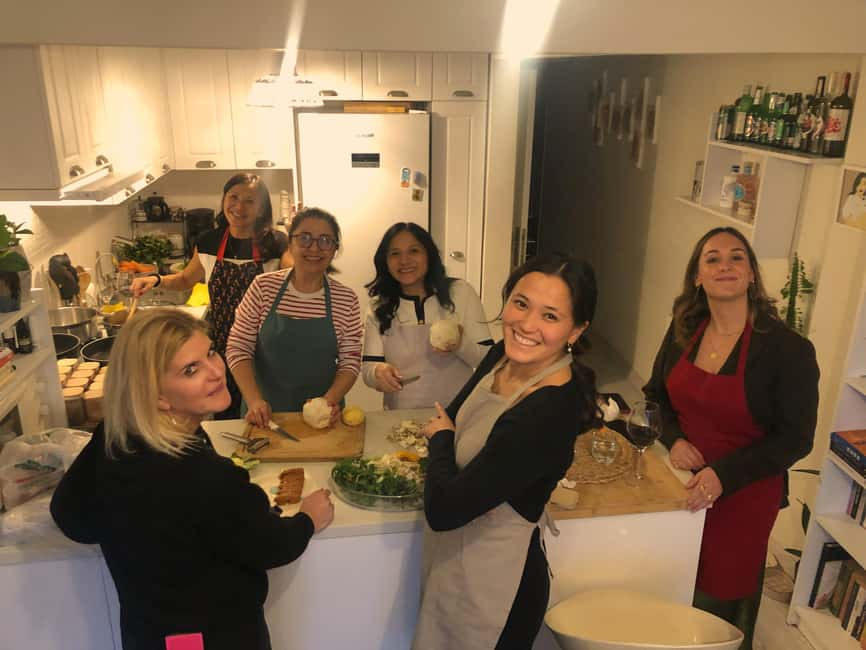
The best part of this Istanbul cooking experience happens before the cooking begins. With Gülşah as your guide, you walk through Kurtuluş, stopping at neighborhood spice shops, bakeries, pickle counters, and charcuterie stores where local families buy everyday ingredients. Then you take those ingredients to her home and turn them into a Turkish meal.
I like the small group of no more than five people, which leaves room for questions and real conversation. I also like the way the meal connects shopping, family cooking, and daily life instead of treating Turkish food as a set of restaurant dishes. The main consideration is that you are entering a private home with a small dog, so this is not the right choice if you have an issue with dogs.
In This Review
- Key points to know
- Why this feels different from a standard Istanbul food tour
- Starting in Kurtuluş, where Istanbul does its everyday shopping
- From market ingredients to a family-style kitchen
- What you may cook and eat
- The value of a $102, four-hour experience
- Why the home setting matters
- Who will enjoy this most
- Practical details that affect your choice
- Is the Istanbul Home Cooking Course worth booking?
- FAQ
- Where does the Istanbul cooking experience begin?
- How do I reach the meeting point from Sultanahmet?
- How do I reach the meeting point from Taksim?
- How long does the activity last?
- What is included in the $102 price?
- Is the activity suitable if I have a problem with dogs?
Key points to know
- Kurtuluş shopping walk: Visit family-run food shops and taste ingredients before cooking.
- Gülşah’s family methods: Learn practical tips passed down from her grandmother.
- Hands-on Turkish dishes: Help prepare home favorites such as börek, dolma, lentil soup, mezes, pilaf, and dessert.
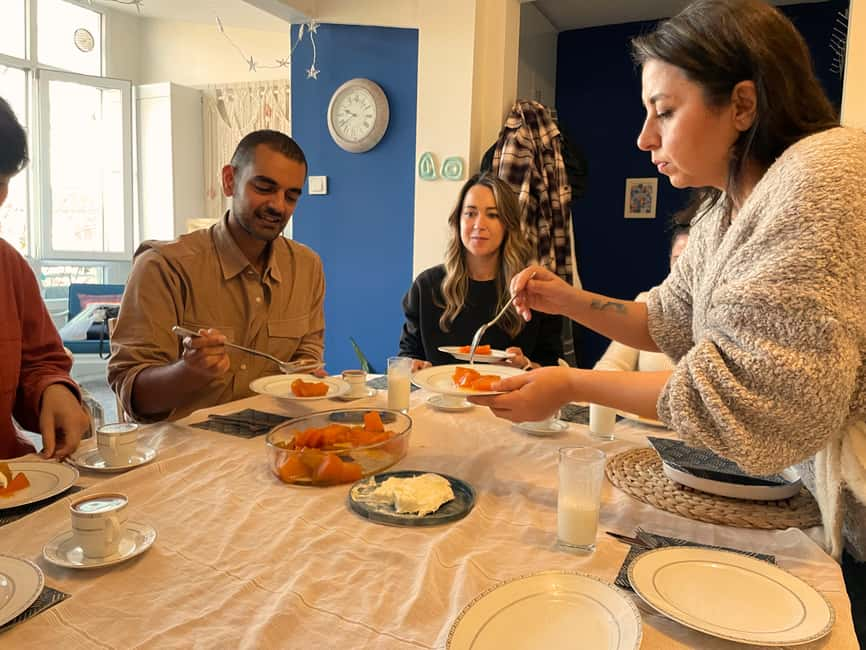
- Dinner in a local home: Sit down to eat the food you helped make, with tea and Turkish coffee included.
- Very small group: The experience is limited to five participants and is conducted in English or Turkish.
- Four hours for $102: The price covers ingredients, cooking materials, the market visit, dinner, drinks, and dessert.
Why this feels different from a standard Istanbul food tour
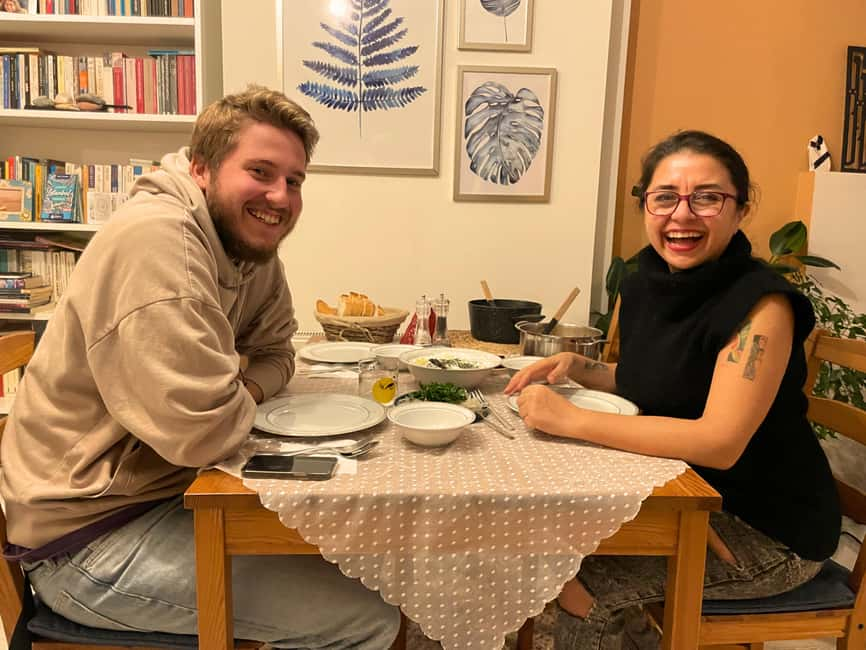
Istanbul has no shortage of food walks, restaurant tastings, and cooking demonstrations. This experience takes a more personal route. You are not simply shown a plate and told its name. You see where the ingredients come from, handle them in a home kitchen, and then eat at the same table as the person who taught you.
That change in setting matters. Turkish food is closely tied to hospitality, family routines, and sharing. A home meal gives you a better sense of how dishes fit together. Soup, a main course, rice, cold vegetables, börek, sweets, yogurt drinks, tea, and coffee all have a place in the rhythm of the meal.
Gülşah is the host and instructor. Her role goes beyond reading out a recipe. She explains how ingredients are used, why a certain shop is worth visiting, and which small steps affect the final taste. If you enjoy asking questions, comparing food customs, or hearing stories about daily life in Istanbul, the format gives you plenty of room to do that.
The tone is social rather than formal. You might arrive as a solo visitor and leave having spent the evening with a small group and a local host. That is one reason this suits people who want cultural contact, not just a cooking lesson.
More cooking classes in Istanbul:
- Private Turkish Cuisine Cooking Class with Local Moms
★ 5.0 · 114 reviews - Traditional Home Cooking with a Local in İstanbul City Center
★ 5.0 · 82 reviews - Cooking Class in Turkey From Istanbul
★ 4.5 · 23 reviews
Starting in Kurtuluş, where Istanbul does its everyday shopping
You meet in front of the Ramada Plaza Hotel near Osmanbey metro station. From Taksim, take the M2 metro directly to Osmanbey. From the Old Town, take the T1 tram to Laleli-İstanbul Üniversitesi, walk to the Vezneciler-İstanbul Üniversitesi M2 station, and continue to Osmanbey.
At Osmanbey, use the Dolapdere or Pangaltı exit. Istanbul traffic can be slow, so public transportation is the sensible choice. Give yourself enough time to find the correct exit and meeting point.
From there, the activity moves into Kurtuluş. This neighborhood visit is more than a quick stop for groceries. You walk with someone who knows the area and is greeted by shopkeepers and people on the street. That personal connection changes the feel of the outing. Instead of passing anonymous counters, you see the food network that supports a local kitchen.
The stops can include a spice shop, charcuterie, bakery, and pickle shop. You learn which ingredients are common in Turkish home cooking and how they are bought and used. At the bakery, you might see the sort of pastry or sesame-covered bread that becomes part of an ordinary Istanbul breakfast or snack.
Pickles are another useful introduction. Turkish pickle shops often offer vegetables and brines that are unfamiliar to visitors. Tasting them gives you a quick lesson in the sharp, salty flavors that can accompany a home meal.
You also have time to purchase items for yourself. Those personal purchases are not included in the price, so bring some Turkish lira if you want to take home pastries, spices, or other food. The tour’s cooking ingredients are covered, but your extra shopping is separate.
From market ingredients to a family-style kitchen
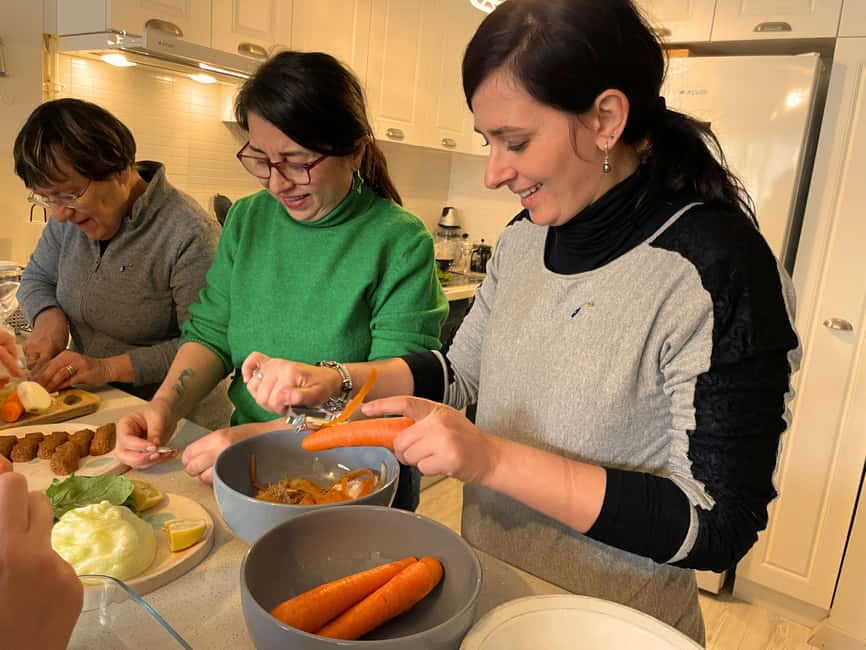
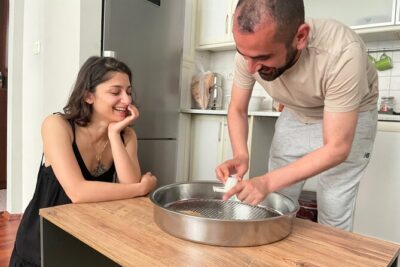
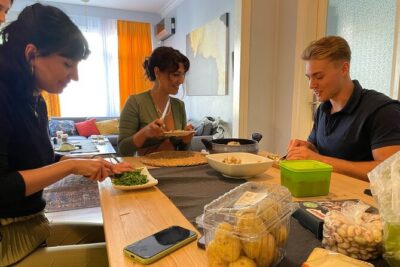
Once the shopping is finished, you go to Gülşah’s home. The kitchen is described as cozy and welcoming, and the meal is prepared with the group rather than in front of the group.
The exact menu can vary, but the food examples show the broad range of Turkish home cooking. You might roll dolma, shape börek, prepare mezes, or work on lentil soup. Other meals have included rice pilaf, chicken or meat with red sauce and eggplant, potato and carrot dishes, onion salad, and desserts made with semolina, figs, or pumpkin.
That variety is a strength. You are not spending four hours making one complicated dish. Several people can work on different parts of a meal, and you get to taste contrasting textures and flavors at the table.
Gülşah focuses on the small details that home cooks care about. Her tips come from her grandmother, which means the lesson is likely to include technique as well as ingredients. The most useful points may be simple ones: how to handle pastry, how to season a soup, how to prepare Turkish coffee, or how to balance several dishes on one table.
This is a good class for beginners because the dishes described are approachable and practical. Several participants have found the recipes simple enough to repeat at home. You do not need to be an experienced cook to take part, though the class will be more rewarding if you are willing to chop, roll, stir, taste, and ask questions.
What you may cook and eat
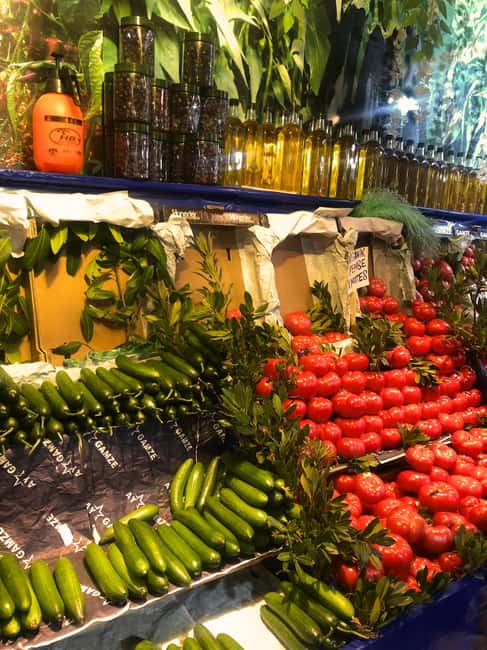
The meal is presented as authentic home cooking rather than a fixed restaurant menu. That means you should expect traditional Turkish dishes, but you should not book this expecting a precise menu to be guaranteed in advance.
Possible dishes include:
- Lentil soup with yogurt drink
- Börek made with pastry
- Dolma
- Mezes and cold vegetable dishes
- Rice pilaf
- Eggplant with meat or chicken in a red sauce
- Onion salad
- Potato, carrot, or celeriac dishes
- Semolina, fig, or pumpkin dessert
- Turkish tea and Turkish coffee
The menu examples show why this is useful for anyone trying to understand Turkish cuisine. You get more than the familiar kebab-and-baklava image. Lentils, eggplant, yogurt, pastry, rice, vegetables, pickles, and coffee all appear in the wider home table.
Dessert is included, as are tea and Turkish coffee. The coffee lesson can be a nice final touch because it turns a familiar drink into a small cultural ritual. Alcohol is not included, and alcoholic beverages are not part of the stated package.
The meal is served after you finish cooking. You are not rushing through a tasting counter. You sit down and share the food, which gives the class its strongest social element. Conversation can turn toward Turkish customs, family life, music, travel, and the differences between home cooking in Turkey and your own country.
More food tours in Istanbul:
- Istanbul: European and Asian Side Guided Foodie Walking Tour
★ 4.9 · 1,038 reviews - Turkish Food Night and Rooftop Experience Istanbul
★ 5.0 · 666 reviews - Istanbul: Guided Food Tour with Ferry Ride and Tastings
★ 4.9 · 600 reviews - Istanbul: Turkish Food Night and Rooftop Experience
★ 5.0 · 569 reviews
The value of a $102, four-hour experience
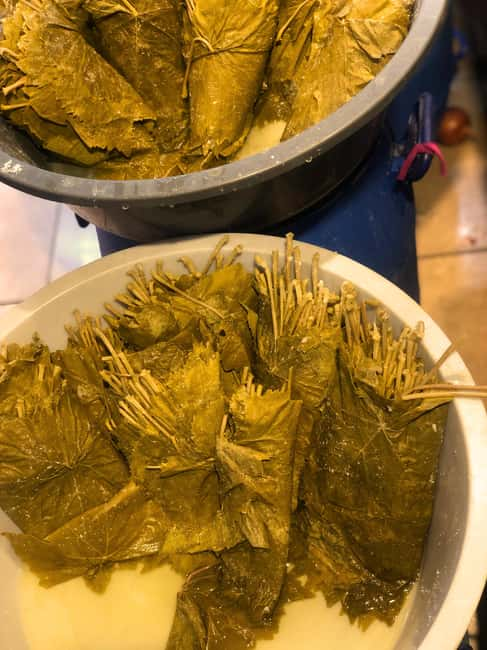
At $102 per person, this is more expensive than a basic market walk or a short cooking demonstration. It is also more than the cost of an ordinary Turkish lunch. The value comes from the combination of services: a neighborhood food tour, ingredients, cooking instruction, a full dinner, tea, Turkish coffee, dessert, and time in a local home.
The group limit helps justify the price. With no more than five participants, the host can give you direct guidance instead of leaving you to watch from the back of a large class. You also get more opportunity to talk with the other participants and ask about recipes.
For a solo visitor, the price includes a social evening that can otherwise be hard to arrange. For a couple or family, it offers a shared activity that does not feel like a staged show. The meal is part of the class, not an extra charge at the end.
The value is less clear if your main goal is to master advanced cooking skills. This is a cultural food experience first. You will learn useful recipes and techniques, but the neighborhood walk and conversation are just as important as the cooking.
The flexible booking terms also reduce some risk. You can reserve and pay later, and cancellation is free up to 24 hours in advance for a full refund. Check the current starting time when booking, since the activity lasts four hours and available start times can vary.
Why the home setting matters
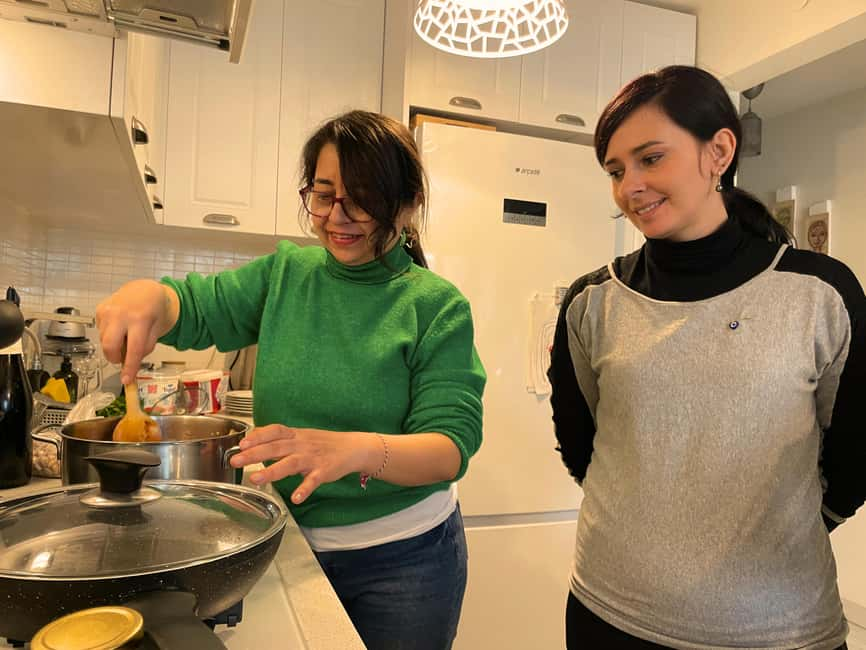
A private home offers something a restaurant kitchen cannot. You see the setting in which the meal is normally prepared, and you learn how dishes are served in a less formal environment.
The host’s dog is part of the experience. The dog is described as small, friendly, and calm, but you should tell the provider in advance if you have any concerns. This is a practical point, not a minor footnote. Anyone with a fear of dogs, an allergy, or a strong dislike of animals should consider another activity.
The home setting also means you should bring a cooperative attitude. This is not a polished studio with a separate workstation for every person. The appeal is the shared kitchen, the family-style meal, and the chance to talk as you cook.
The experience is conducted in English and Turkish. Gülşah has been able to explain ingredients, recipes, and cultural points in English, making the class suitable for English-speaking visitors. As with any small-group activity, the amount of conversation may depend on the mix of participants.
Who will enjoy this most
I would choose this experience for you if you want to see a less tourist-focused side of Istanbul and connect food with ordinary neighborhood life. It is especially well suited to:
- Solo visitors who want a friendly evening activity
- Couples looking for a meal they prepare together
- Families who enjoy cooking and cultural exchange
- Beginners who want recipes that can be repeated at home
- Food lovers interested in Turkish ingredients beyond restaurant staples
- Visitors who like small groups and personal conversation
It may be less suitable if you want a highly structured professional cooking school, a guaranteed menu, or a large sightseeing route through Istanbul. The market walk is local and focused, not a substitute for a full city tour.
I would also consider the timing of your booking. Taking this class early in your Istanbul stay could be useful because Gülşah can share suggestions for other places to eat and visit. The experience itself does not include a full city orientation, but local advice can help shape the rest of your trip.
Practical details that affect your choice
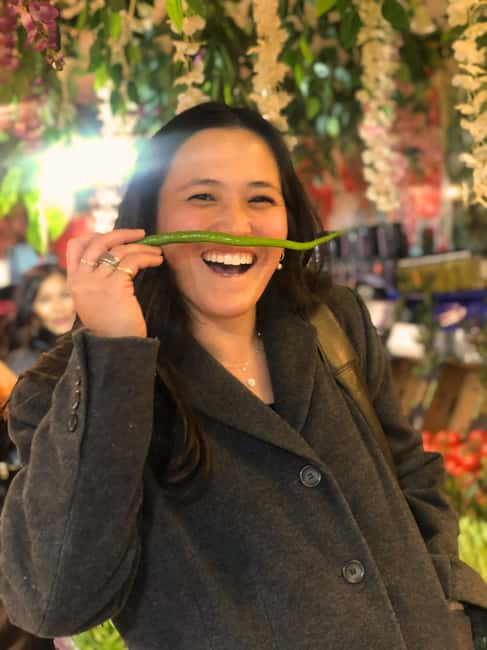
Plan on four hours from the meeting point back to the same location. Wear comfortable shoes because the experience begins with a neighborhood walk and shopping stops.
The meeting point is in front of the Ramada Plaza Hotel by Osmanbey. If you come from Sultanahmet, allow time for the tram, the walk to the M2 line, and the metro ride. Istanbul traffic can be difficult, so a taxi may not be the easiest option at busy times.
Cooking materials and ingredients are included. Dinner, tea, Turkish coffee, and Turkish dessert are also included. Items you decide to buy for yourself during the market walk are not included, and alcohol is not included.
The class is limited to five participants, with instruction in English or Turkish. The activity ends at the meeting point, so you can plan your next stop from Osmanbey without arranging a separate return transfer.
Is the Istanbul Home Cooking Course worth booking?
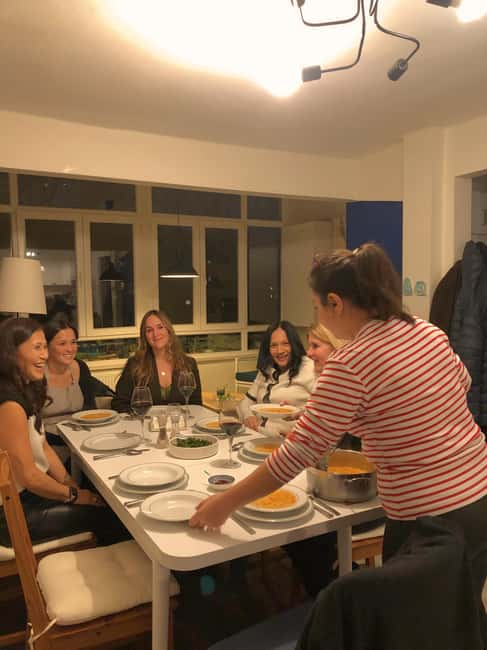
I would book it if you want an evening built around local food, conversation, and hospitality, rather than a quick cooking lesson. The Kurtuluş shopping walk gives the experience a strong sense of place, while the home meal makes the food feel personal and useful.
At $102, it is not the cheapest way to eat in Istanbul. But it is good value if you count the market visit, ingredients, instruction, dinner, drinks, dessert, and small group together. Choose it early in your stay if you want local food advice, and avoid it only if the dog or private-home setting is a concern.
FAQ
Where does the Istanbul cooking experience begin?
It begins in front of the Ramada Plaza Hotel near Osmanbey metro station. If you use the metro, get off at Osmanbey and take the Dolapdere or Pangaltı exit.
How do I reach the meeting point from Sultanahmet?
Take the T1 tram to Laleli-İstanbul Üniversitesi. Walk to the Vezneciler-İstanbul Üniversitesi M2 station, then take the M2 metro to Osmanbey.
How do I reach the meeting point from Taksim?
Take the M2 metro directly to Osmanbey. Use the Dolapdere or Pangaltı exit when leaving the station.
How long does the activity last?
The experience lasts four hours. It begins and ends at the meeting point near Osmanbey.
What is included in the $102 price?
The price includes cooking materials and ingredients, the local market tour, dinner, home cooking, tea, Turkish coffee, and Turkish dessert. Personal purchases from the shops and alcoholic beverages are not included.
Is the activity suitable if I have a problem with dogs?
The host has a small dog that will be present during the experience. Contact the provider before booking if you have an allergy, fear, or other issue with dogs.
Latest additions around Istanbul
- Ephesus Private Tour From Istanbul including transfers & domestic fights★ 5.0 · 3 reviews
- Istanbul: Hagia Sophia Skip-the-Line Ticket with Live Guide★ 3.7 · 3 reviews
- 6 Days Multi City Turkey Tour★ 5.0 · 3 reviews
- Princess Islands Daily Tour from Istanbul★ 5.0 · 3 reviews
- Premium Line : Private Istanbul Tour : All Inclusive Package★ 4.3 · 3 reviews
- Private Istanbul Combo Tour – Classic Old City and Bosphorus Cruise★ 5.0 · 3 reviews
- Private tour: 12-Day Turkish Adventure Package Tour From Istanbul★ 4.5 · 3 reviews
- Istanbul: Hagia Sophia Guided Tour with Optional Ticket★ 3.3 · 3 reviews
Cooking Classes, compared.
Private Turkish Cuisine Cooking Class with Local Moms
Read our review →
Traditional Home Cooking with a Local in İstanbul City Center
Read our review →
Çiğ Köfte Cooking Class/Night with Traditional Music At Home
Read our review →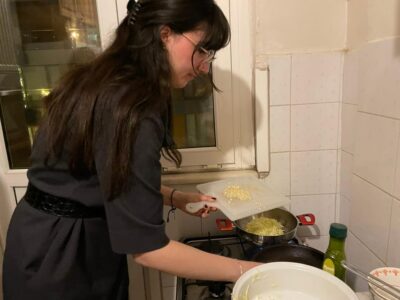
Turkish Tapas – Meze Cooking for Beginners in Istanbul
Read our review →
Cook with a Local: Private Home Cooking Class In Istanbul
Read our review →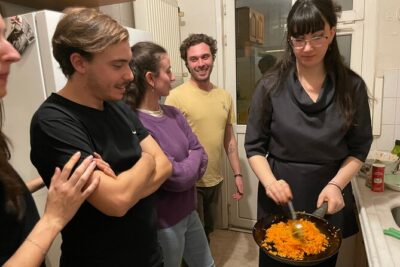
Istanbul Vegan/Vegeterian Cooking Class with Locals at Home
Read our review →Browse the lists this tour appears in