Reviewed · TOURS
Flying Carpet 15-Day Tour from Istanbul
Turkey packs an astonishing amount into this 15-day circuit: Ottoman Istanbul, Roman ruins, Mediterranean coast, and Cappadocia’s fairy chimneys all fit into one carefully planned loop. I especially like the small maximum of 12 people and the way the route mixes major sights with human-scale stops such as Şirince, Kayakoy, a pottery workshop, and a carpet village.
I also like that the price includes 14 nights of accommodation, entrance fees, airport transfers, breakfast, and a professional English-speaking guide. The tradeoff is real: several days run for eight to eleven hours, and the route covers a great deal of ground. You gain range, but you give up lazy mornings and long stays in any one place.
In This Review
- Key points to know before booking
- Why this route works for a first trip to Turkey
- Istanbul begins with two continents
- Gallipoli brings a solemn change of mood
- Troy and Pergamon connect legend with power
- Ephesus delivers the classic ancient-city moment
- Aphrodisias and Pamukkale show two sides of Roman Turkey
- Pamukkale and Salda Lake add water and open space
- Fethiye gives you breathing room
- Kayakoy and Antalya shift from village ruins to Roman theaters
- Konya and Çatalhöyük widen the historical frame
- Cappadocia is the visual high point
- Ankara closes the circle before Istanbul
- What the $3,915.35 price really covers
- Who should book this Turkish circuit
- Final verdict: a strong choice for maximum coverage
- FAQ
- How long is the Flying Carpet tour from Istanbul?
- What is included in the tour price?
- Are dinners included?
- What is the maximum group size?
- Where does the tour start?
- Where does the tour finish?
- Are optional activities included?
- Is the tour refundable if I cancel?
Key points to know before booking
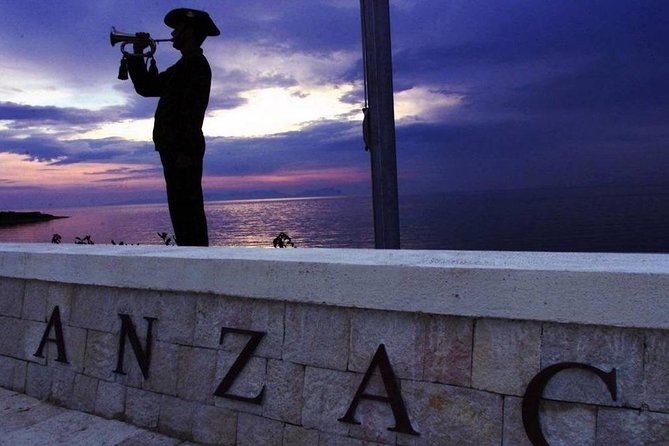
- Gallipoli gets serious attention: Visit ANZAC Cove, Lone Pine, Chunuk Bair, The Nek, trenches, tunnels, and memorials on an approximately 11-hour day.
- The group is capped at 12 people: This makes hotel help, menu advice, and questions for the guide easier than on a large coach tour.
- The route links Turkey’s biggest archaeological sites: Troy, Pergamon, Ephesus, Aphrodisias, Perge, Aspendos, Hierapolis, and Çatalhöyük all appear.
- You get both coast and inland scenery: Fethiye provides free time, while Salda Lake, Antalya, Cappadocia, and the Mediterranean add variety.
- The package covers many expensive basics: Accommodation, breakfasts, transport, entrance fees, and Istanbul transfers are included, but guide and driver tips, insurance, dinners, and optional activities are extra.
- The final return is a long push: Day 14 visits Ankara before continuing to Istanbul, so plan your onward flight for after the included airport transfer on Day 15.
Why this route works for a first trip to Turkey
The Flying Carpet itinerary is built for you if Turkey’s ancient sites are a main reason for going. It begins with imperial Istanbul, follows the Aegean coast south, reaches the Mediterranean, turns inland through Konya and Cappadocia, then returns through Ankara.
That shape gives you a useful sense of the country. You are not simply shuttled between two famous cities. You see battlefields, abandoned villages, religious centers, Roman theaters, coastal towns, mountain lakes, and prehistoric settlements.
The route also has a good rhythm of subject matter. One day may focus on the First World War, the next on Bronze Age Troy, then Roman sculpture, Ottoman and Islamic culture, or the geology of Pamukkale. That variety helps prevent the ruins from blending into one long parade of columns.
Still, this is not a slow cultural stay. Driving is part of the experience, not just a way to get from one attraction to another. You should be comfortable stepping into the vehicle early, walking around archaeological sites, and packing and unpacking during the trip.
Other Istanbul days travellers pair with this one:
- Istanbul: Bosphorus Dinner Cruise & Show with Private Table
★ 4.8 · 44,561 reviews - Istanbul: Daytime or Sunset Sightseeing Cruise & Audio Guide
★ 4.8 · 14,430 reviews - Istanbul: Bosphorus Dinner Cruise with Turkish Night Show
★ 4.8 · 10,127 reviews
Istanbul begins with two continents
Your first day is deliberately light. An included transfer takes you from Istanbul to the Port Bosphorus Hotel, and the rest of the day is open for getting your bearings.
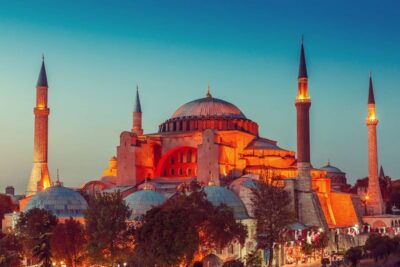
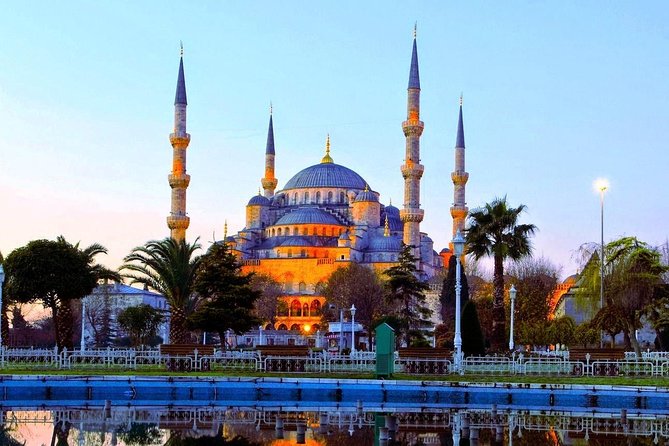
On Day 2, the guided city tour takes you to the Blue Mosque, Hagia Sophia, Topkapi Palace, and the Hippodrome. These are not minor stops. Together they explain how Istanbul moved through Byzantine and Ottoman eras while remaining a city tied to both Europe and Asia.
The optional afternoon Bosphorus cruise adds a different view. The waterway is the city’s great dividing line, and cruising between the two continents gives you a clean visual sense of Istanbul’s setting. Since it is optional, check how it fits with your energy and budget before departure.
Your hotel location in Beyoğlu is useful for the opening and closing transfers. The tour ends back in Istanbul, with airport transportation provided on Day 15 after breakfast.
Gallipoli brings a solemn change of mood
Day 3 is one of the longest days, at about 11 hours, but it reaches one of the trip’s most meaningful places. Gallipoli is not treated as a quick photo stop. You visit ANZAC Cove, Lone Pine, Chunuk Bair, The Nek, Johnston’s Jolly, memorials, and original trenches and tunnels.
The site matters for its human story as much as its military history. A good guide can connect the ground beneath your feet with the campaign, the soldiers who fought there, and the lasting place Gallipoli holds in Australian, New Zealand, Turkish, and wider First World War memory.
Past departures have been especially praised for guides such as Fatih Karci and Tamer, whose explanations helped make the sites easier to understand. Guide assignments can change, so treat those names as examples of the sort of guide experience associated with the tour, not a guarantee for your departure.
The length of the day is the main concern. Gallipoli requires time, and the onward journey adds to the hours. If this is a priority for you, the long day is worthwhile. If you want an easy-paced holiday, it will feel demanding.
Troy and Pergamon connect legend with power
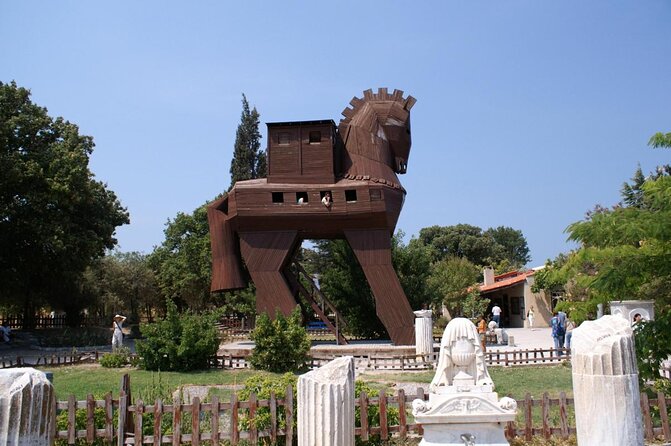
Day 4 starts at Troy, the ancient city linked to Homer’s Iliad. The ruins themselves require imagination, since the site represents many layers of settlement, but the new Troy Museum helps place the discoveries and stories in context.
The tour then continues to Bergama and the Acropolis of Pergamon. Pergamon was a major center of politics and culture, known for its temples and library. Its elevated setting also gives the visit a strong sense of place, with wide views across the surrounding countryside.
This is a full archaeological day, but it is a rewarding pairing. Troy brings myth and Bronze Age history, while Pergamon shows the scale and ambition of the Hellenistic world. Entrance to Troy and the museum is included, which matters because site fees can add up quickly on a route with this many ruins.
Two continents, plenty of other ways to spend a day:
- Best of Istanbul 1, 2 or 3-Day Private Guided Istanbul Tour
★ 5.0 · 8,922 reviews - Istanbul: Basilica Cistern Fast-Track Entry and Audio Guide
★ 4.6 · 7,521 reviews - Istanbul: Hagia Sophia Skip-the-Line Ticket & Museum Option
★ 3.7 · 4,958 reviews - Istanbul: Hodjapasha Whirling Dervishes Show & Exhibition
★ 4.4 · 4,790 reviews
Ephesus delivers the classic ancient-city moment
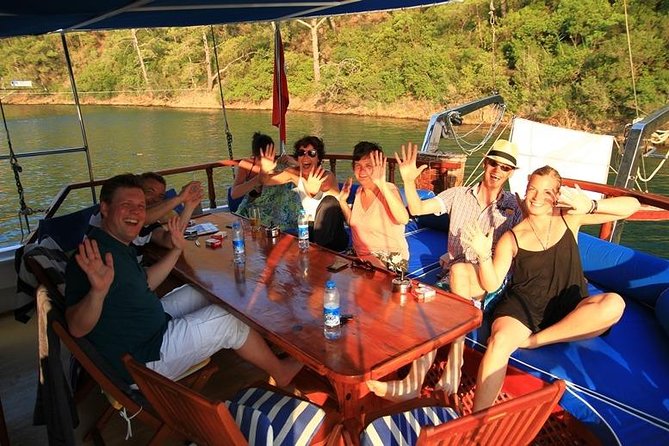
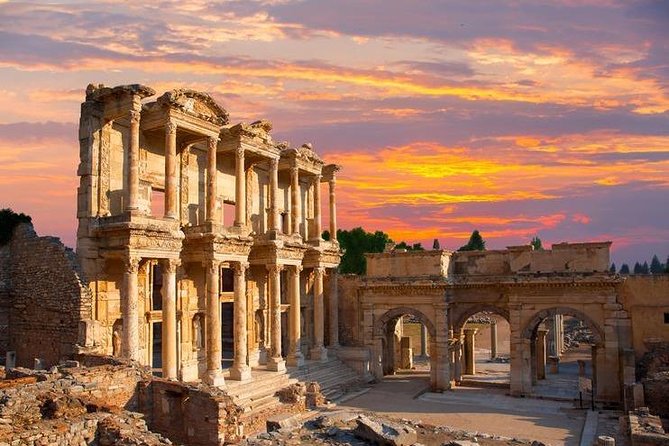
Ephesus is one of the tour’s headline stops, and rightly so. The Library of Celsus, grand theater, streets, and religious sites make it easier to picture a functioning city rather than a scattered ruin.
The day also includes the Ephesus Archaeology Museum, where objects from the ancient city add detail to what you see outdoors. That pairing is valuable. Ruins show architecture, while museum pieces help explain daily life, worship, and craftsmanship.
The itinerary includes a visit to a carpet village, where you learn how Turkish carpets are made by hand and how their value is assessed. This is a cultural stop with a commercial edge, so you should feel free to treat it as a demonstration and conversation rather than a shopping obligation.
In Şirince, a wine tasting adds a lighter finish. The village gives the day a more local feel after the scale of Ephesus. At about four hours, this is also one of the shorter touring days, though the full schedule includes transfers and stops beyond the headline visit.
Aphrodisias and Pamukkale show two sides of Roman Turkey
On Day 6, a leather shop visit comes before Aphrodisias. As with the carpet stop, the shopping element will appeal to some people and feel less essential to others. Knowing that in advance helps you keep your expectations in check.
Aphrodisias was dedicated to Aphrodite and became famous for its school of sculpture. The stadium is a major attraction because it is among the best-preserved in Anatolia, while the Temple of Aphrodite, Tetrapylon, theater, and museum fill out the picture.
This site often feels different from Ephesus. It is less about one famous facade and more about the artistic life of an ancient city. The museum is especially useful if you want to understand why sculpture was central to Aphrodisias.
You continue to Pamukkale, preparing for the next morning’s terraces and Hierapolis. The eight-hour day is another reminder that this tour favors coverage over lingering.
Pamukkale and Salda Lake add water and open space
Pamukkale’s white calcium terraces are among Turkey’s most recognizable sights. Their bright appearance comes from mineral-rich water flowing over the hillside, creating pools and steps that look almost unreal.
You also explore Hierapolis, the ancient city above the terraces. Its Roman remains show why people came here long ago, and the hot springs were valued for their therapeutic qualities. The chance to bathe among ancient columns is unusual, but follow the guide’s instructions and local rules because access conditions can vary.
The stop at Salda Lake changes the mood again. Known by the nickname Turkish Maldives, it is a mountain lake surrounded by high terrain. You get a scenic break before continuing south toward Fethiye.
The day lasts about seven hours. That is manageable, though walking on the terraces and around Hierapolis can be tiring in strong sun. Good footwear, sun protection, and a swimsuit are sensible choices.
Fethiye gives you breathing room
Day 8 is intentionally free. After a week of ruins and road time, you can explore Fethiye at your own pace rather than follow another packed sightseeing schedule.
Optional choices include a 12-island boat trip and a Saklikent Gorge tour. They are not included, and availability or conditions may affect what you can do. The important point is that the day gives you control: rest, wander, swim, or add another activity.
This pause improves the whole itinerary. Without it, the first half could feel like a hard march through archaeological sites. Fethiye is your chance to slow down and enjoy the coast on your own terms.
Kayakoy and Antalya shift from village ruins to Roman theaters
Kayakoy is a deserted Greek village with empty buildings spread across a hillside. The setting is striking, especially when the light is good for photography, but the place also carries a sad sense of departure and abandonment.
After Kayakoy, the route continues to Antalya. The Antalya Necropol Museum introduces ancient burial customs and objects from different periods. It is a useful bridge between the village visit and the major classical sites that follow.
Day 10 begins at Perge, another important ancient city. Going early helps you see the ruins before the day’s heat becomes too strong, though the schedule still runs about eight hours.
Aspendos follows, with one of Turkey’s best-preserved second-century amphitheaters. Its scale and condition make it one of the clearest places on the itinerary for understanding Roman public entertainment and engineering. You return to Antalya in the afternoon, leaving the rest of the day free.
Konya and Çatalhöyük widen the historical frame
The journey inland to Konya introduces Mevlana Celaleddin Rumi, the 13th-century Sufi mystic and poet. His mausoleum and museum include an adorned tomb, manuscripts, and displays about Whirling Dervish traditions.
This visit adds spiritual and literary depth to a route otherwise heavy on stones and battlefields. You should dress and behave respectfully in this religious setting, and give yourself time to take in the quieter atmosphere.
The day also includes the Çatalhöyük Museum. The settlement it presents is one of the world’s oldest and most advanced Neolithic communities. This is a powerful reminder that Turkey’s story reaches much further back than the classical cities most people associate with the country.
Day 11 lasts about eight hours. It is a long transfer day, but the two stops give the drive a clear purpose.
Cappadocia is the visual high point
On Day 12, you travel toward Cappadocia along the old Silk Road. Sultanhani Caravansary offers a look at the facilities that once supported merchants crossing this route.
You also explore an underground city with multiple levels. The confined passages can be memorable, but they are not ideal for anyone who dislikes enclosed spaces. Ask your guide about the route before entering if you have concerns.
Day 13 is devoted to Cappadocia’s unusual rock formations. The Göreme Valley Open Air Museum and fairy chimneys provide the famous images, while Pigeon Valley and Red Valley show the wider setting.
The route continues through Çavuşin village and Avanos, where you learn about handmade pottery. This craft visit gives the region a human focus after the geological sights. Cappadocia is not only about rocks and photographs; it is also about settlement, faith, and skilled local work.
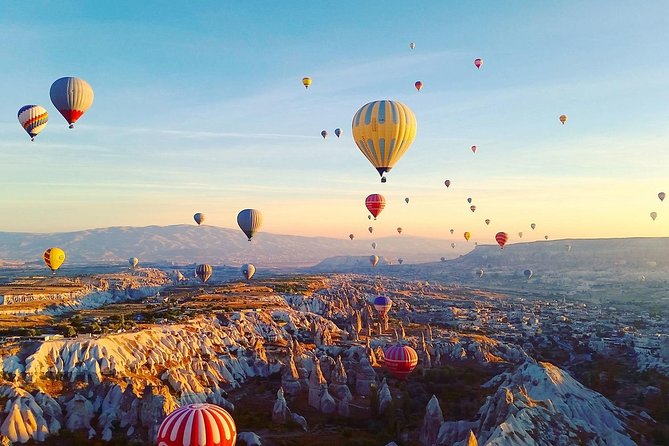
A hot-air balloon flight is not listed as an included or optional activity in the supplied details, so do not assume it is part of this package. The two-day Cappadocia program already provides substantial sightseeing on the ground.
Ankara closes the circle before Istanbul
Day 14 begins early with the drive to Ankara, Turkey’s capital. The main visit is Anıtkabir, the mausoleum of Mustafa Kemal Atatürk, founder of the modern Turkish republic.
The site gives the final full day a modern national focus after so much ancient history. From Ankara, you continue to Istanbul, making this a roughly 10-hour day.
That return is efficient but tiring. I would not schedule an important evening event in Istanbul unless you have plenty of flexibility. Day 15 is simple: breakfast, farewells, and the included transfer to the airport for your onward flight.
What the $3,915.35 price really covers
At $3,915.35 per person, this is not a budget independent trip. The value comes from the amount bundled into the fee: 14 nights of accommodation, transport in an air-conditioned, non-smoking vehicle, an English-speaking guide throughout, entrance fees, inbound and outbound Istanbul transfers, and breakfasts.
Tips for the guide and driver are extra, as are compulsory travel insurance, suggested activities, and the listed optional dinners. The package description also presents dinner as optional, so you should budget for evening meals unless your specific booking includes them.
The price makes more sense if you would otherwise pay separately for intercity transport, hotels, site admissions, and a private guide. It is less attractive if you prefer choosing inexpensive lodging, using public transport, or spending several nights in one town.
Group discounts are offered, and the group maximum is 12. That is a meaningful advantage over a large coach, particularly at museums and hotels where a guide can help with check-in, local questions, or menu explanations.
Who should book this Turkish circuit
I would choose this tour if you want a structured first look at Turkey and care more about seeing a broad range of places than controlling every hour. It suits people who enjoy archaeology, military history, religious culture, scenery, food, and local craft demonstrations in roughly equal measure.
It also works well if you value support on the road. Past guide teams have included Fatih Karci, Tamer, Halil Esen, Goksu, and Cengizhan, with praise focused on clear history explanations, flexibility, help at hotels, and assistance with menus and requests. Your assigned guide may differ, but the small-group format is designed for that kind of personal help.
I would hesitate if you need a slow holiday, dislike long drives, or want full control over meals and optional activities. The non-refundable booking terms are another serious consideration: cancellation or amendments do not produce a refund, except when the operator cancels because of poor weather or insufficient numbers and offers a new date, another experience, or a full refund.
Final verdict: a strong choice for maximum coverage
Book the Flying Carpet tour if your wish list includes Istanbul, Gallipoli, Troy, Ephesus, Pamukkale, Antalya, Cappadocia, and Ankara, and you want one company to handle the complicated overland movement between them.
Skip it if your ideal Turkey trip means lingering in Fethiye, spending several quiet days in Cappadocia, or exploring Istanbul independently. For the right pace, the tour offers impressive value and a remarkably broad education in Turkey, with the small group and strong guide support helping make the long route manageable.
FAQ
How long is the Flying Carpet tour from Istanbul?
The tour lasts approximately 15 days and starts and ends in Istanbul.
What is included in the tour price?
The price includes Istanbul inbound and outbound transfers, 14 nights of accommodation, transport in a fully air-conditioned non-smoking vehicle, a professional English-speaking guide, entrance fees, breakfast, and tips except for the driver and guide.
Are dinners included?
Dinner is listed as optional. The tour information specifies optional dinner arrangements for seven evenings, so check your booking details and budget for additional evening meals.
What is the maximum group size?
The tour has a maximum of 12 participants.
Where does the tour start?
The starting point is the Port Bosphorus Hotel at Kılıçali Paşa, Meclis-i Mebusan Cd. No:13, in Beyoğlu, Istanbul.
Where does the tour finish?
The activity ends back at the meeting point in Istanbul, followed by a transfer to the airport on Day 15 for your onward flight.
Are optional activities included?
No. Suggested optional activities, including the Bosphorus cruise, Fethiye’s 12-island boat trip, and Saklikent Gorge tour, are not included in the tour price.
Is the tour refundable if I cancel?
No. The experience is non-refundable and cannot be changed for any reason. If the operator cancels because of poor weather or because the minimum number of participants is not reached, you will be offered another date or experience, or a full refund.
Latest additions around Istanbul
- Istanbul: Hagia Sophia Skip-the-Line Ticket with Live Guide★ 3.7 · 3 reviews
- Ephesus Private Tour From Istanbul including transfers & domestic fights★ 5.0 · 3 reviews
- Princess Islands Daily Tour from Istanbul★ 5.0 · 3 reviews
- 6 Days Multi City Turkey Tour★ 5.0 · 3 reviews
- Premium Line : Private Istanbul Tour : All Inclusive Package★ 4.3 · 3 reviews
- Private Istanbul Combo Tour – Classic Old City and Bosphorus Cruise★ 5.0 · 3 reviews
- Private tour: 12-Day Turkish Adventure Package Tour From Istanbul★ 4.5 · 3 reviews
- Istanbul: Hagia Sophia Guided Tour with Optional Ticket★ 3.3 · 3 reviews
Tours, compared.
Best of Istanbul 1, 2 or 3-Day Private Guided Istanbul Tour
Read our review →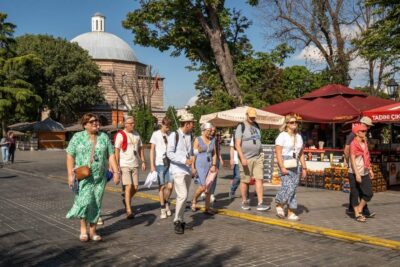
Blue Mosque & Hagia Sophia Guided Tour w/ Tickets
Read our review →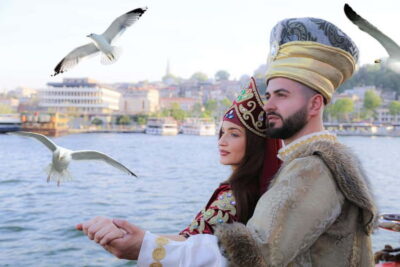
Bosphorus Sightseeing Cruise Tour with Audio Guide
Read our review →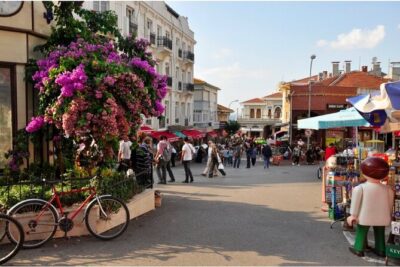
Princes Islands Tour with Heybeliada and Buyukada
Read our review →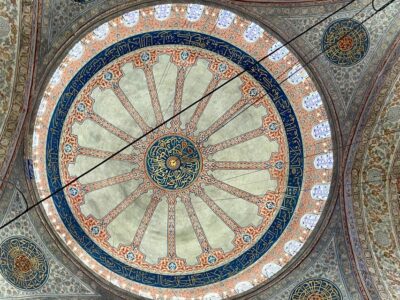
Bursa & Uludag Tour with Lunch & Cable Car Option
Read our review →
Blue Mosque, Hagia Sophia, & Basilica Cistern Tour
Read our review →