
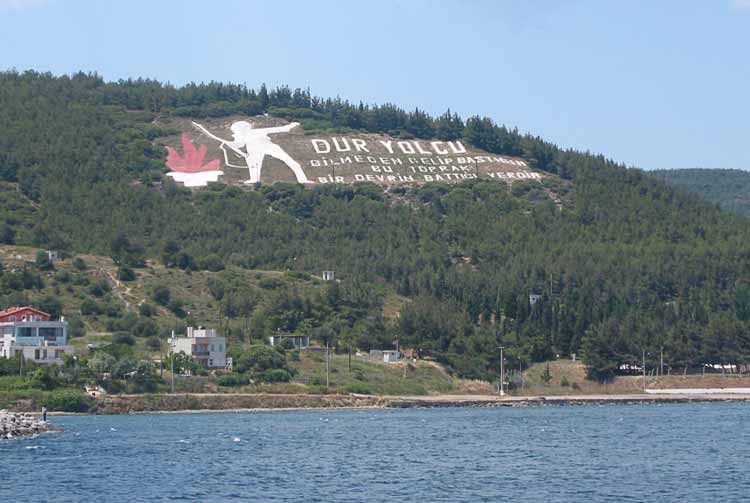
Reviewed · TROY & GALLIPOLI TOURS
From Istanbul: Troy and Gallipoli 2-Day Trip
Gallipoli and Troy make an unusually powerful pair: one is a modern battlefield marked by cemeteries and memorials, while the other reaches back through myth, archaeology, and several thousand years of settlement. This two-day trip from Istanbul links both without requiring you to arrange buses, ferries, hotels, and local guides yourself.
I like the carefully planned Gallipoli route, especially the stops at ANZAC Cove and Lone Pine, and I like having a night in Çanakkale rather than making the whole journey in one exhausting day. The drawback is the pace. Day one begins very early and involves a long road trip, while the Troy visit can feel hurried if your guide keeps a close eye on the clock.
In This Review
- Key points to know before booking
- Why Gallipoli and Troy belong together
- The early road from Istanbul to Eceabat
- Gallipoli’s battlefield route from Brighton Beach to Chunuk Bair
- Brighton Beach and Beach Cemetery
- ANZAC Cove and Ariburnu Cemetery
- The ANZAC Commemorative Site and the Respect to Mehmetcik Statue
- Lone Pine and Johnston’s Jolly
- The 57th Regiment Turkish Memorial and The Nek
- Chunuk Bair New Zealand Memorial
- A night in Çanakkale with dinner included
- Troy from the wooden horse to Troy IX
- Sacrificial altars and the ancient city walls
- Houses of Troy I
- The Bouleuterium and Odeon
- Ongoing excavation and the Troy layers
- How the $886 price works for value
- The long-day reality and what to pack
- Who should book this two-day trip
- Should you book the Gallipoli and Troy combination?
- FAQ
- How long is the trip from Istanbul?
- Where does hotel pickup take place?
- Is the tour conducted in English?
- What sites are visited at Gallipoli?
- What will I see at Troy?
- Is food included?
- Are museum entrance fees included?
Key points to know before booking
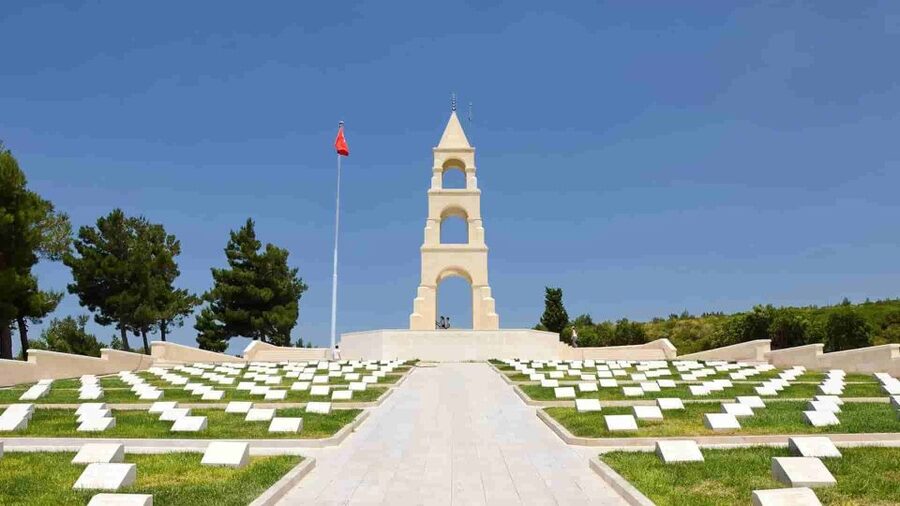
- Gallipoli is the stronger half of the trip, with ANZAC Cove, battlefield cemeteries, trenches, memorials, and the Chunuk Bair viewpoint.
- The first day starts around 6:00, depending on your Istanbul hotel and pickup area, so expect a full travel day.
- The overnight stay is in a central four-star hotel in Çanakkale, with dinner included.
- Troy is more archaeological than dramatic, and you will get a useful overview of Troy I through Troy IX, but not unlimited time at every ruin.
- English-speaking guides make the difference, with recent departures led by guides including Burak, Charles, and Cindy.
- The $886 price is for a private group of up to one person, so check the booking setup carefully if you are traveling with others.
Why Gallipoli and Troy belong together
At first, the two sites seem like an odd match. Gallipoli concerns the First World War, military strategy, national memory, and the personal cost of battle. Troy concerns Homer, the Trojan War, ancient cities built one above another, and the challenge of separating legend from archaeology.
The connection is geographic. Both lie around the Dardanelles, the narrow waterway linking the Aegean Sea with the Sea of Marmara. This passage has mattered to armies and sailors for thousands of years. A guided trip helps you see the region as more than two disconnected stops.
I especially like this format if you have limited time in Turkey. You can leave Istanbul, cross the Dardanelles by ferry, spend an afternoon at Gallipoli, sleep in Çanakkale, and visit Troy the next day. You do not need to book separate transport or work out how to reach the remote memorials on the peninsula.
The trade-off is that this is not a slow archaeological holiday. You are covering a large area in two days. If you want long stretches of quiet time at every cemetery and trench, or several hours to study Troy’s excavation layers, you may find the schedule tight.
More Troy and Gallipoli trips:
- Istanbul to Gallipoli Full Day Tour with Lunch and Transfers
★ 5.0 · 567 reviews - Gallipoli Full-Day Tour from Istanbul
★ 4.9 · 468 reviews - From Istanbul: Gallipoli and Anzac Full-Day Tour
★ 4.9 · 345 reviews
The early road from Istanbul to Eceabat
Pickup begins in the Taksim area at about 6:00, followed by Sultanahmet pickups around 6:30 to 7:00. The vehicle is described as non-smoking, air-conditioned transportation, a welcome detail for a long road journey.
You should have your hotel name ready when booking. Hotels that cannot accommodate the vehicle may receive an alternative meeting point, and that change can be announced close to departure. One practical lesson from recent departures is to confirm the vehicle name, meeting place, and driver details carefully. Gray Line Turkey is associated with the trip, but the bus may carry a different local operator name.
The route takes you toward Eceabat, where lunch is served at a local restaurant at about noon. The meal is included and portions have been described as generous enough, though you should treat it as practical tour food rather than a major culinary stop. Drinks are not included.
The long transfer is not wasted time. It lets you move from Istanbul’s imperial center to the Dardanelles region, but you should be realistic about energy levels. Wear comfortable shoes, carry sunglasses, and keep your passport or identity card with you. Oversize luggage is not allowed, so bring only what you need for one night.
Gallipoli’s battlefield route from Brighton Beach to Chunuk Bair
After lunch, the guided Gallipoli tour begins at about 1:00. The route covers both Australian and New Zealand memorial sites and Turkish monuments, giving you more than one national viewpoint.
Brighton Beach and Beach Cemetery
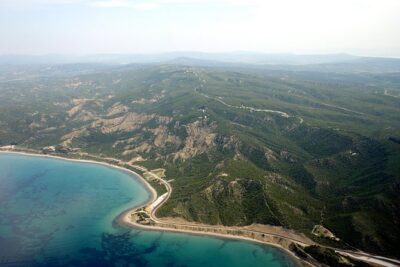
Brighton Beach was intended as a landing area during the Gallipoli campaign. Beach Cemetery, close by, contains graves connected with the fighting. These first stops set the tone: the shore looks peaceful, but the significance comes from understanding what troops faced when they landed.
Your guide’s explanation matters here. The sites themselves can be quiet and simple, with grass, headstones, and sea views. Without context, you might move through quickly. With a good guide, the terrain begins to explain the military problem.
A few more Istanbul experiences to weigh up
- From Istanbul: Sapanca and Masukiye Day Trip with Lunch
★ 4.0 · 1,036 reviews - All in One Day Istanbul – Historical Tour of Istanbul with Bosphorus Cruise
★ 5.0 · 489 reviews - Istanbul: Bursa & Uludag Mountain Day Trip w/ Opt. Cable Car
★ 3.7 · 447 reviews - Istanbul Shore Excursion: Istanbul in One Day Sightseeing Tour
★ 4.0 · 273 reviews
ANZAC Cove and Ariburnu Cemetery
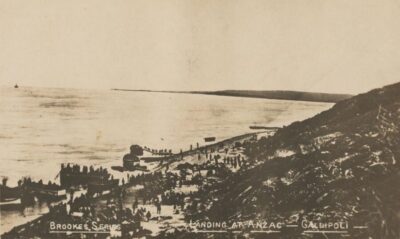
ANZAC Cove is the emotional center of the route for many visitors from Australia and New Zealand. The cove is not a giant monument. Its power comes from the narrow coastal setting and the knowledge that this small area became tied to national memory.
Ariburnu Cemetery adds a more personal scale. Rows of graves make the campaign less abstract. You can expect short visits at many stops, often around 10 to 15 minutes, so use the time well. Listen to the guide first, then take photographs only after you have taken in the place itself.
The ANZAC Commemorative Site and the Respect to Mehmetcik Statue
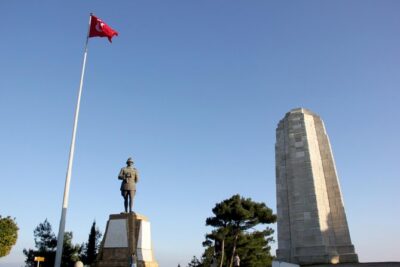
The ANZAC Commemorative Site presents the campaign from the ANZAC side, while the Respect to Mehmetcik Statue recognizes the Turkish soldier. Together, these stops help prevent a one-sided reading of Gallipoli.
I appreciate that the route includes both Allied and Turkish memorials. Gallipoli is still closely tied to Turkish national identity, and the battlefield should not be presented only as an Australian or New Zealand story. The guide’s job is to explain the opposing experiences without turning the visit into a simple victory narrative.
Lone Pine and Johnston’s Jolly
The Lone Pine Australian Memorial is one of the best-known stops on the peninsula. It commemorates Australian forces and gives the campaign a clear human focus. Expect a cemetery and memorial setting rather than a preserved battlefield frozen in time.
At Johnston’s Jolly, you see Turkish and Allied trenches and tunnels. This is one of the most useful stops for understanding how close the opposing forces were and how difficult the fighting became. The remains are not a polished museum display. Uneven ground and outdoor walking are part of the experience, so good shoes are essential.
The 57th Regiment Turkish Memorial and The Nek
The 57th Regiment Turkish Memorial honors a regiment associated with some of the heaviest fighting. The Nek is linked with the Australian assault made famous in accounts of the campaign. Visiting both sites gives you a sharper sense of how the battle is remembered on each side.
These stops can feel brief because the tour covers so much ground. I would rather have this broad route than see only one or two memorials, but you should not expect extended private reflection at every location.
Chunuk Bair New Zealand Memorial
Chunuk Bair is the final major stop listed for the afternoon and an important New Zealand memorial site. By the time you reach it, the day has already included beaches, cemeteries, trenches, and monuments. The location helps tie the campaign together geographically.
The tour returns to Eceabat around 6:00. That makes day one a long but focused introduction to Gallipoli. Recent guide names have included Burak, Barkut, and Charles, and the strongest departures have benefited from guides who combine military detail with a more personal, engaging delivery. Guide quality is especially important here, since the meaning of each site is not always obvious from what you see.
A night in Çanakkale with dinner included
The accommodation is a four-star hotel in Çanakkale, with dinner and breakfast included. The hotel has been described as central and comfortable, which is useful after a day spent on the road and at outdoor sites.
Dinner is included, but the meal arrangement is limited. Some dishes may be set as part of the package, and alcoholic drinks are not included. If you want more choice or a drink with dinner, you may prefer to eat elsewhere and pay directly. The included meal is convenient, not necessarily the highlight of the evening.
Çanakkale is also a practical overnight base because it sits across the Dardanelles from Eceabat and close to Troy. The ferry tickets for the Kilitbahir, Eceabat, and Çanakkale crossings are included, so you do not need to handle that part of the route yourself.
The free morning on day two gives you some breathing room. You can rest after the early start, walk around the central area, or simply enjoy a slower breakfast before the Troy tour departs at about 1:30.
Troy from the wooden horse to Troy IX
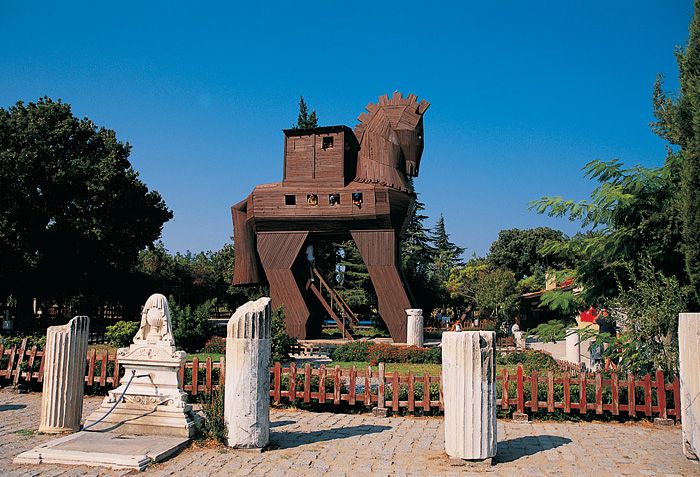
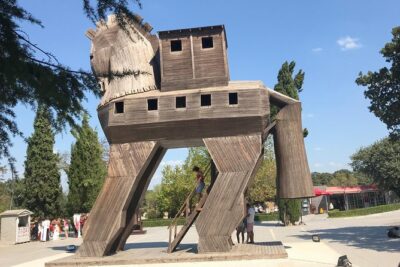
The Troy tour begins after lunch, with the return from Troy scheduled around 5:30. The famous wooden Trojan Horse is the obvious opening image, but it is only the gateway to the archaeological site.
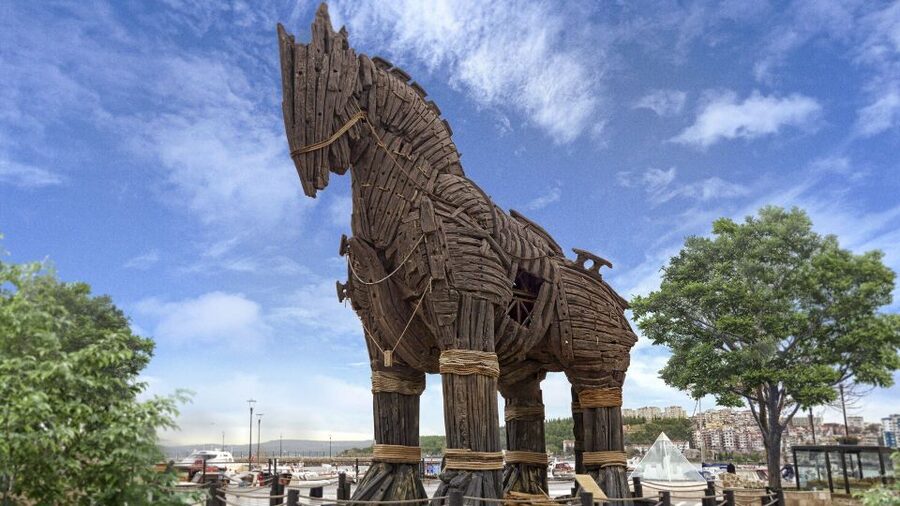
The horse is a modern reconstruction and a useful photo stop. The archaeological value lies beyond it, in the layers of city remains spread across the hill. Your guide will help you understand that Troy was not one single city. The site includes settlements identified as Troy I through Troy IX, built and rebuilt over a very long period.
Sacrificial altars and the ancient city walls
The sacrificial altars introduce the religious side of the settlement. The 3,700-year-old city walls show the defensive strength of one ancient phase and help you picture Troy as a functioning settlement rather than just the setting for a famous poem.
The ruins can be hard to read on your own. Walls, foundations, and partial outlines do not always announce what they were used for. This is where an English-speaking guide adds real value, translating scattered stones into a sequence of homes, public spaces, defenses, and religious areas.
Houses of Troy I
The houses associated with Troy I date from about 3000 to 2500 BC. These remains are among the oldest layers you see on the tour and are important because they show how early the settlement began.
Do not expect towering monuments. The appeal is archaeological rather than visual grandeur. You are looking at plans and foundations, often with active excavation nearby. If you enjoy reconstructing ancient life from modest remains, this section can be fascinating. If you mainly want intact temples and columns, Troy may seem underwhelming.
The Bouleuterium and Odeon
The Bouleuterium, or senate building, and the Odeon, or concert hall, belong to the more public and civic side of Troy’s later phases. They show that the site developed beyond a fortified settlement into a place with political and cultural buildings.
These features help explain why the Troy visit is worth adding to Gallipoli. Gallipoli is about a sharply defined military campaign. Troy asks you to think across centuries, changing cities, shifting power, and the gap between epic literature and physical evidence.
Ongoing excavation and the Troy layers
Current excavations are still in progress, so parts of the site may look unfinished or difficult to interpret. That is not a flaw, but it does mean you should arrive with patience. Troy is a work of archaeology, not a fully reconstructed ancient city.
The scheduled return at 5:30 leaves roughly four hours for the afternoon tour and transfers, and the visit can feel rushed. Recent departures have included an excellent Troy guide named Cindy, while other guide experiences have been less relaxed because the group was moved along quickly. Keep expectations practical: you will see the main elements and receive an overview, but you may not have time to linger at every layer.
How the $886 price works for value
The listed price is $886 per group of up to one person. That wording matters. If you are booking alone, the cost covers a two-day package with private-group pricing, transportation, one night at a four-star hotel, dinner, first-day lunch, two guided tours, and ferry tickets.
The value is strongest if you place a high price on convenience. Organizing Istanbul to Gallipoli, local battlefield transport, Çanakkale accommodation, the ferry, and Troy independently takes time and involves several separate bookings. Here, the main route is arranged for you.
The value is weaker if you are comfortable traveling independently or if you are sharing the cost with friends but the booking system still treats the price as a group of up to one. Check the exact group arrangement before paying. Museum entrance fees are not included, and neither are drinks or lunch on day two, so budget for those extras.
Free cancellation up to 24 hours before the start and the reserve-now, pay-later option add useful flexibility. Still, the key financial question is not simply the headline price. Ask yourself how much you value a guide at every battlefield stop, included ferry crossings, a central hotel, and not having to solve the transport puzzle.
The long-day reality and what to pack
This is an active two-day outing, though it is not described as a strenuous hike. You will walk around cemeteries, memorials, trenches, and archaeological ruins. Comfortable shoes are essential, especially at Johnston’s Jolly and Troy.
Bring:
- Passport or identity card
- Sunglasses
- Comfortable walking shoes
- A small overnight bag, since oversize luggage is not allowed
Smoking and pets are not allowed. Drinks are extra, and lunch on the second day is your responsibility. Since the first day begins early and ends after the Gallipoli route, keeping your luggage light and your morning routine simple will make the trip easier.
Pickup is available from centrally located hotels in Istanbul, especially the Taksim and Sultanahmet areas. If your hotel is difficult for the vehicle to reach, the supplier may give you another meeting point. Confirm that point the day before and watch for a bus or operator name that may differ from Gray Line Turkey.
Who should book this two-day trip
I would choose this tour if you want Gallipoli explained properly and also want to add Troy without spending time arranging regional transport. It is a good fit for visitors with a strong Australian, New Zealand, Turkish, or First World War interest, as well as anyone who wants to see more of the Marmara Region than Istanbul alone.
It also suits solo visitors who would rather not manage the route alone. The trip removes much of the planning burden and gives you an English-speaking guide at places where the remains can be difficult to interpret.
I would hesitate if you dislike early starts, long road transfers, or fixed schedules. I would also think twice if Troy is your main reason for going and you want a slow archaeological study. The Troy section covers important ground, but its pace may not satisfy someone hoping to linger over every city layer.
Should you book the Gallipoli and Troy combination?
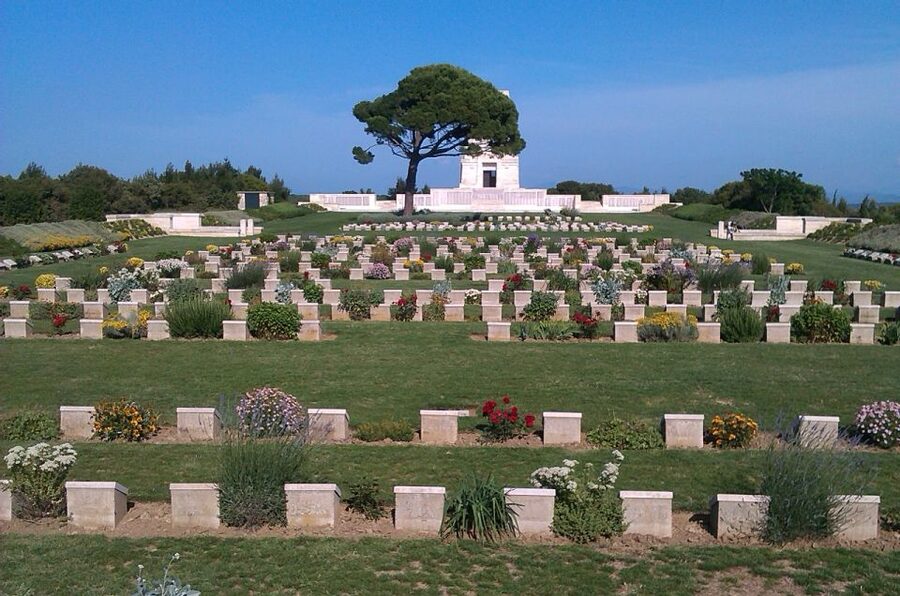
Book it if you want a practical, history-focused route with excellent battlefield coverage, a hotel night, and guides who can give emotional and military context to Gallipoli. The best part is the sequence of ANZAC Cove, Lone Pine, Johnston’s Jolly, The Nek, and Chunuk Bair, supported by Turkish memorials that keep the story balanced.
Go with realistic expectations about the schedule. You are buying access, transport, and interpretation more than leisure time. Confirm the pickup details, check how the $886 group price applies to your party, bring light luggage, and plan to buy a second-day lunch and any museum tickets yourself.
FAQ
How long is the trip from Istanbul?
The experience lasts two days. Day one begins with early hotel pickup in Istanbul, reaches Eceabat around noon, and returns to Eceabat after the Gallipoli tour at about 6:00. Day two returns to Istanbul around 11:00 at night.
Where does hotel pickup take place?
Pickup is offered from centrally located Istanbul hotels. The schedule lists Taksim pickups at about 6:00 and Sultanahmet pickups between 6:30 and 7:00. Hotels that cannot be reached by the vehicle may receive an alternative meeting point.
Is the tour conducted in English?
Yes. The tour includes a live English-speaking guide. Recent departures have included guides named Burak, Barkut, Charles, and Cindy.
What sites are visited at Gallipoli?
The route includes Brighton Beach, Beach Cemetery, ANZAC Cove, Ariburnu Cemetery, the ANZAC Commemorative Site, the Respect to Mehmetcik Statue, Lone Pine Australian Memorial, Johnston’s Jolly, the 57th Regiment Turkish Memorial, The Nek, and the Chunuk Bair New Zealand Memorial.
What will I see at Troy?
The Troy visit includes the Trojan Horse, sacrificial altars, 3,700-year-old city walls, the houses of Troy I, the Bouleuterium, the Odeon, current excavations, and remains from Troy I through Troy IX.
Is food included?
Lunch in Eceabat on day one, dinner at the hotel, and breakfast are included. Drinks are not included, and lunch on the second day is also excluded.
Are museum entrance fees included?
No. Entrance fees for the Archaeological and Naval museums are not included in the tour price.
More 2-Day Experiences in Istanbul
- Istanbul: 1 or 2-Day Hop-On-Hop-Off Bus Tour Ticket
★ 4.1 · 863 reviews - Istanbul: 1 or 2-Day Private Guided Tour with Hotel Transfer
★ 4.7 · 438 reviews - 2 Day All Inclusive Cappadocia Tour from Istanbul with Optional Balloon Flight
★ 5.0 · 429 reviews - From Istanbul: 2-Day All-Inclusive Cappadocia Guided Trip
★ 4.9 · 380 reviews
Latest additions around Istanbul
- Istanbul: Hagia Sophia Skip-the-Line Ticket with Live Guide★ 3.7 · 3 reviews
- Ephesus Private Tour From Istanbul including transfers & domestic fights★ 5.0 · 3 reviews
- 6 Days Multi City Turkey Tour★ 5.0 · 3 reviews
- Princess Islands Daily Tour from Istanbul★ 5.0 · 3 reviews
- Premium Line : Private Istanbul Tour : All Inclusive Package★ 4.3 · 3 reviews
- Private Istanbul Combo Tour – Classic Old City and Bosphorus Cruise★ 5.0 · 3 reviews
- Private tour: 12-Day Turkish Adventure Package Tour From Istanbul★ 4.5 · 3 reviews
- Istanbul: Hagia Sophia Guided Tour with Optional Ticket★ 3.3 · 3 reviews
Troy & Gallipoli Tours, compared.
Istanbul to Gallipoli Full Day Tour with Lunch and Transfers
Read our review →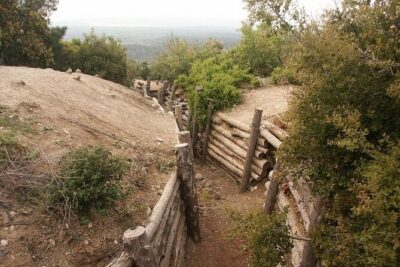
Istanbul to Gallipoli, Canakkale and Troy. 2 Day Tour with Hotel
Read our review →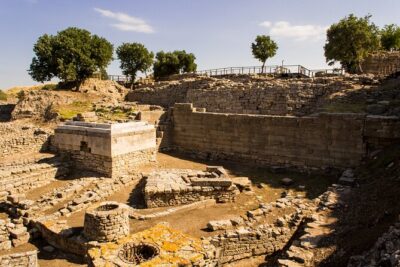
Istanbul to Truva Troy Guided Day Tour with Lunch and Transfers
Read our review →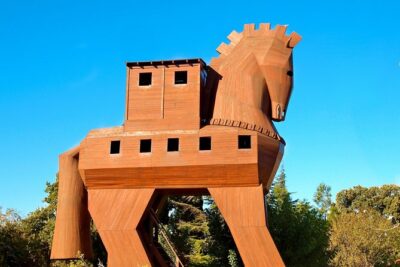
Troy Full-Day Guided Tour incl. Transfer, Ferry Tickets w/Lunch
Read our review →Browse the lists this tour appears in