Reviewed · TOURS
Grand Turkey Tour
Turkey packs several civilizations, coastlines, mountain valleys, and extraordinary ruins into one long trip. This 14-day private route takes you from Istanbul’s imperial mosques to Cappadocia’s caves, Pamukkale’s white terraces, Ephesus, Troy, Gallipoli, and Bursa without asking you to manage every hotel, transfer, or entrance ticket yourself.
I like the sheer range here, and I like the private format. You get major sights such as Topkapi Palace and Ephesus, but also smaller stops such as Koza Han, Pierre Loti Hill, and the Lycian rock tombs. Guides and drivers named in past arrangements include Ibrahim and Muhammet, and it is worth asking if either is available for your dates.
The main drawback is the pace. Turkey is large, and this itinerary covers a great deal of ground. Several days include long transfers and many stops, while the schedule does not spell out every intercity journey or internal flight. Confirm those details, along with the exact hotel list and meals beyond breakfast, before paying $6,250 per person.
In This Review
- Key points to know before booking
- Istanbul begins with palaces, mosques, and the Bosphorus
- Cappadocia brings caves, valleys, and underground cities
- Konya adds a quieter spiritual chapter
- Antalya combines Roman ruins with a Mediterranean city
- The Lycian coast delivers the trip’s best scenery
- Pamukkale and Hierapolis make a powerful pairing
- Ephesus is the archaeological centerpiece
- Pergamum, Troy, and Çanakkale link different eras
- Gallipoli is quiet, serious, and different
- Bursa closes the circle with Ottoman foundations
- What $6,250 per person really buys
- Who will enjoy this route most
- Practical details that matter
- Should you book the Grand Turkey Tour?
- FAQ
- How long is the Grand Turkey Tour?
- Is this a private tour?
- Is airport pickup included?
- Are breakfasts included?
- Is a Cappadocia hot-air-balloon ride included?
- What is the cancellation policy?
Key points to know before booking
- Seven distinct regions in one trip: Istanbul, Cappadocia, Konya, Antalya, the Lycian coast, Pamukkale, the Aegean, the Dardanelles, and Bursa all appear on the route.
- Private touring changes the rhythm: Your group travels alone, so you can ask for help with restaurants, language, photography stops, and the pace of visits.
- Cappadocia gets two full sightseeing days: You see the Goreme area, valleys, underground cities, Ihlara, and Sultanhanı Caravanserai.
- The archaeology is unusually broad: Ephesus, Pergamum, Troy, Hierapolis, Perge, Aspendos, and the Temple of Artemis all fit into the journey.
- Breakfast is included: This removes one daily expense, but the supplied details do not say that lunch, dinner, or drinks are included.
- A balloon flight is not included automatically: You can watch balloons from a hotel terrace or Goreme View terrace, but a balloon ride must be arranged ahead of time.
Istanbul begins with palaces, mosques, and the Bosphorus
Your arrival day is intentionally light. You are met at Istanbul Airport or Sabiha Gokcen Airport, then taken to a four or five-star hotel. The listed welcome program centers on Taksim Square, with a possible Taksim and Ortakoy city tour if you arrive early enough.
That first day matters after a long flight. You get a soft landing rather than being pushed straight into a museum marathon. If your arrival is late, the plan appears to remain simple: transfer, check in, and rest.
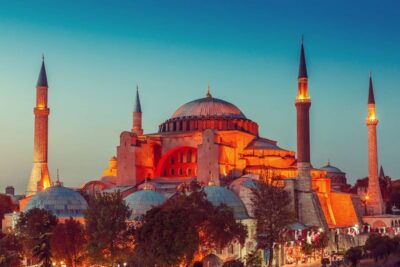
Day two is the grand historical sweep. Topkapi Palace gives you the former Ottoman court, while Hagia Sophia and the Blue Mosque show two of Istanbul’s most important religious landmarks. Hagia Sophia is now a mosque, so dress respectfully and expect the visit to follow current prayer and access arrangements.
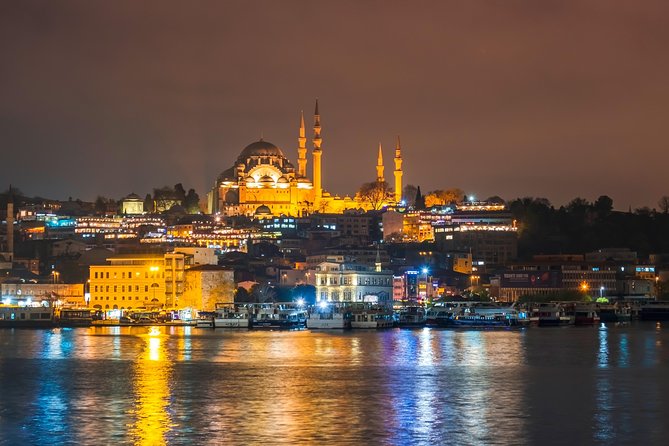
The Blue Mosque is free to enter, and Suleymaniye Mosque offers a quieter hilltop setting with broad city views. The Grand Bazaar gets two hours, enough time to browse carpets, leather, jewelry, ceramics, and the usual collection of determined shopkeepers. You do not need to buy anything, but you should allow time to wander beyond the first bright aisle.
The afternoon moves toward Eyup Sultan Mosque and Pierre Loti Hill. Pierre Loti is a useful place to see the Golden Horn from above, and it gives the day a change of pace after enclosed courtyards and crowded streets.
Day three shifts from monuments to water. A two-hour Bosphorus boat tour lets you see Istanbul from the channel separating Europe and Asia. The visit to the Princes’ Islands adds another contrast, followed by Taksim Square and a walk along Istiklal Street.
This is a strong opening because Istanbul is not treated as only a museum city. You see its imperial core, its religious life, its shopping streets, and its waterfront. The weakness is that the first two sightseeing days are busy, so use your private format to request short pauses when needed.
Other Istanbul days travellers pair with this one:
- Istanbul: Bosphorus Dinner Cruise & Show with Private Table
★ 4.8 · 44,561 reviews - Istanbul: Daytime or Sunset Sightseeing Cruise & Audio Guide
★ 4.8 · 14,430 reviews - Istanbul: Bosphorus Dinner Cruise with Turkish Night Show
★ 4.8 · 10,127 reviews
Cappadocia brings caves, valleys, and underground cities
The route reaches Cappadocia for Day four, although the supplied schedule does not explain the transfer from Istanbul. Ask specifically how you move between the two destinations and how much time is spent in transit.
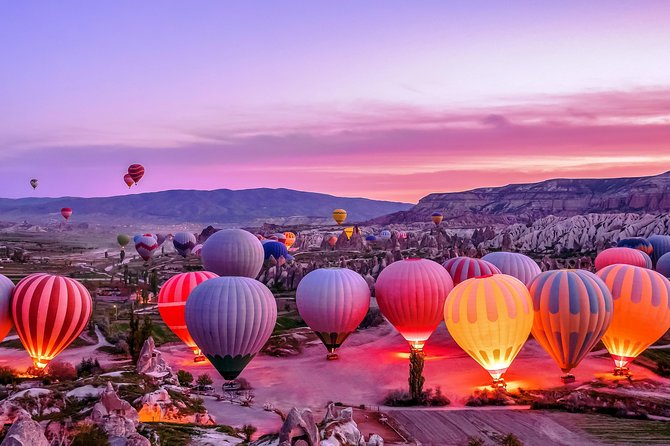
Cappadocia begins with balloon viewing rather than a balloon ride. You can watch the balloons from your hotel terrace or a Goreme View terrace. The ride itself requires advance arrangement, and it is not part of the automatic sightseeing plan. If flying is important to you, raise the request at booking, not after arrival.
The Goreme Open-Air Museum is the main cultural stop. From there, the route moves through Paşabağ Valley, Devrent Valley, Uçhisar Castle, and Pigeon Valley. Each stop has a different feel: carved religious spaces at Goreme, unusual rock formations at Devrent, a high viewpoint at Uçhisar, and broad valley scenery at Pigeon Valley.
Day five goes underground. Kaymakli and Derinkuyu are both included, followed by Ihlara Valley and Sultanhanı Caravanserai. Seeing two underground cities in a single day gives you a useful comparison, but it may feel repetitive if you dislike tight passageways or stairs.
Ihlara provides a welcome outdoor break. Sultanhanı, a former roadside caravan stop, helps explain how journeys across central Anatolia were supported long before modern roads and hotels. This is one of the itinerary’s best combinations because it pairs the famous rock formations with less familiar pieces of regional life.
You should ask about walking requirements. The program includes valleys, underground sites, and ruins, and the itinerary does not provide a detailed mobility rating. Most people can participate, but good walking shoes and comfort with uneven surfaces will help.
Konya adds a quieter spiritual chapter
Day six is devoted to Konya. The Mevlana Museum is the key stop, followed by the Ince Minare Museum, Karatay Medrese Museum, Konya Archaeological Museum, and Alaaddin Hill.
This day is less about postcard scenery and more about ideas, faith, art, and Seljuk architecture. The Mevlana Museum connects the city with Jalal al-Din Rumi and the Mevlevi tradition. The smaller museums help fill out the picture with carved stonework, tiles, and archaeological objects.
I like this pause in the route. After Cappadocia’s dramatic valleys, Konya offers a slower look at central Turkey. The list includes five stops, but their short visit times suggest that you should expect an overview rather than an exhaustive museum study.
Antalya combines Roman ruins with a Mediterranean city
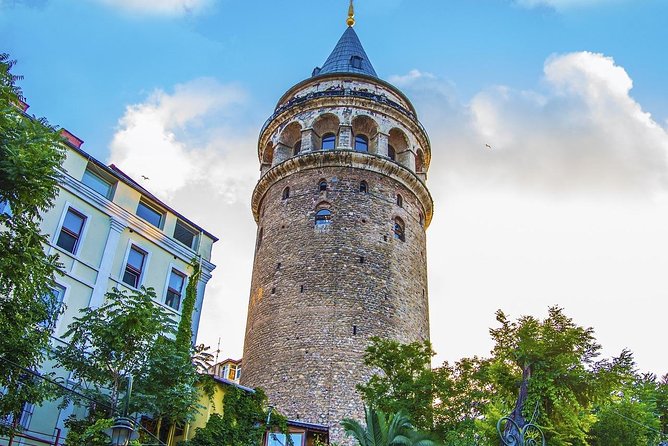
Day seven opens with Aspendos and Perge. Aspendos is known for its ancient theater, and Perge gives you a larger archaeological site with enough room to appreciate the scale of the old city. The schedule allows one hour at Aspendos and 90 minutes at Perge, so the stops are focused but useful.
The Lower Duden Waterfalls then provide a short natural break before Kaleici, Antalya’s old quarter. Hadrian’s Gate and the Yivliminare Mosque complete the city visit.
This day works well because it does not isolate ruins from modern Turkey. You see Roman remains, a waterfall, old streets, a monumental gate, and a mosque in one sequence. The tradeoff is time. Perge deserves a careful walk, and the listed 90 minutes may feel brief if you stop often for photographs or prefer reading every sign.
Two continents, plenty of other ways to spend a day:
- Best of Istanbul 1, 2 or 3-Day Private Guided Istanbul Tour
★ 5.0 · 8,922 reviews - Istanbul: Basilica Cistern Fast-Track Entry and Audio Guide
★ 4.6 · 7,521 reviews - Istanbul: Hagia Sophia Skip-the-Line Ticket & Museum Option
★ 3.7 · 4,958 reviews - Istanbul: Hodjapasha Whirling Dervishes Show & Exhibition
★ 4.4 · 4,790 reviews
The Lycian coast delivers the trip’s best scenery
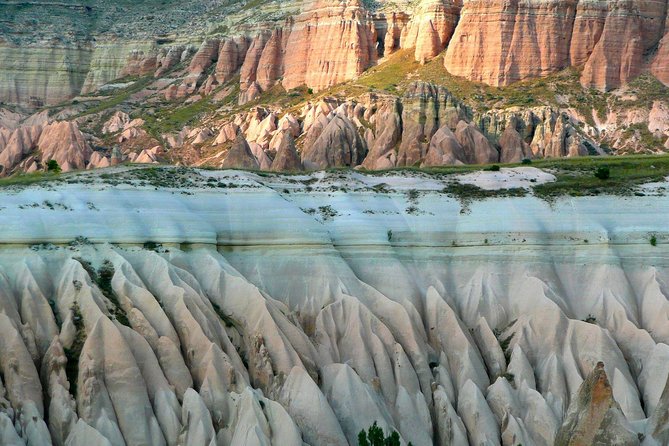
Day eight is one of the most varied days. Kas brings a harbor and coastal views, followed by Kaputas Beach and Kalkan. Saklikent National Park adds a dramatic natural setting, and Oludeniz brings the famous blue lagoon.
The day ends with Lycian rock tombs. These tombs are not merely another photo stop. They connect the coastal scenery with the ancient Lycian culture that shaped this part of southern Turkey.
The timing is tight, with several stops receiving only 30 to 60 minutes. That is enough for a look, a walk, and photographs, but not for a full beach day. Pack swimwear only if you are comfortable with a quick stop, and do not expect long, unstructured time at Kaputas or Oludeniz.
For me, this is where the private vehicle is most useful. A group traveling alone can make the day more comfortable and ask the guide to adjust stops within reason. Guides in this company’s wider tour arrangements have also helped with restaurant language, which can be useful on a route crossing many regions.
Pamukkale and Hierapolis make a powerful pairing
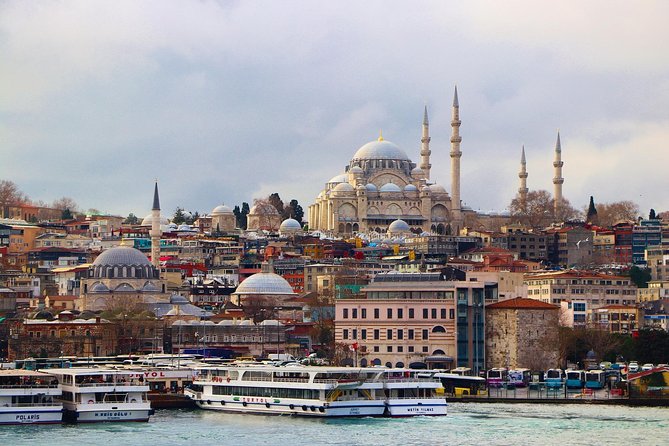
Day nine is built around Pamukkale’s travertine terraces. The white mineral pools are the visual headline, but Hierapolis gives the visit greater substance. The ancient city includes the theater, and the plan also includes a look at Cleopatra Pools.
The terraces can be bright, slippery, and exposed. Bring sun protection, water, and footwear suited to walking. The exact rules for entering or walking near the pools can change, so follow local instructions rather than treating the area like an ordinary swimming stop.
Two hours at Hierapolis is a sensible amount of time for a guided overview. The additional half hour at the theater gives you a chance to appreciate its scale without turning the day into an archaeology seminar. Cleopatra Pools receive only 20 minutes, so think of that as a viewing stop unless your guide confirms otherwise.
Ephesus is the archaeological centerpiece
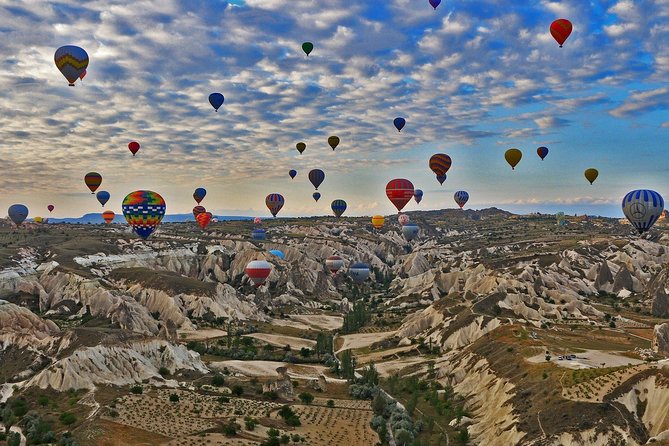
Day ten may be the strongest archaeology day of the tour. It begins at Kusadasi Castle and the marina, then heads to Meryemana, known as the House of the Virgin Mary.
The main event is ancient Ephesus, with two hours scheduled. The marble streets, monumental buildings, and public spaces make this one of the places where a guide’s explanation adds real value. You can better understand what you are seeing when the columns and foundations are connected to daily life, commerce, worship, and public power.
The Temple of Artemis follows, though only a small portion survives. The Ephesus Museum then provides objects found in and around the site, helping you see details that ruins alone cannot show. The Cave of the Seven Sleepers rounds out the day.
This is a packed sequence, and the heat can make it tiring. Ephesus has limited shade in many areas, so wear a hat and carry water. The private arrangement is valuable here because you can ask for context and manage your pace instead of simply following a large group from one landmark to the next.
Pergamum, Troy, and Çanakkale link different eras
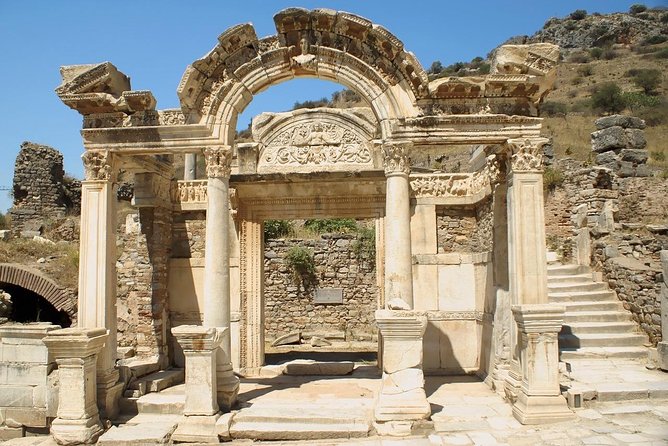
Day eleven takes you north to Pergamum, the Troy Museum, and ancient Troy. Pergamum gets one hour, while Troy receives 40 minutes after the museum.
Those short times mean you should arrive with realistic expectations. You will see the major points and gain an outline of each site, but the itinerary is not designed for a specialist’s close study. The Troy Museum is particularly useful before the ruins because it gives you objects and explanations to connect with the site itself.
The Çanakkale city center stop is listed at only one minute, so treat it as a brief pass through rather than a proper city visit. This is also another day when the missing transport details matter. Ask how long the road journey will be and what time you should expect at the hotel.
Gallipoli is quiet, serious, and different
Day twelve focuses on Gallipoli National Park and ANZAC Cove. Three hours at the battlefield and one hour at ANZAC Cove give this subject more time than several of the archaeological stops receive.
You should approach this day as a memorial visit, not a standard sightseeing outing. The sites relate to the First World War and carry importance for many families and national memories. A good guide can provide the setting and explain why particular locations matter.
This is a valuable change in tone. After ancient theaters, temples, and carved tombs, Gallipoli brings you into the modern era and asks for a different kind of attention. Plan for an emotionally weightier day.
Bursa closes the circle with Ottoman foundations
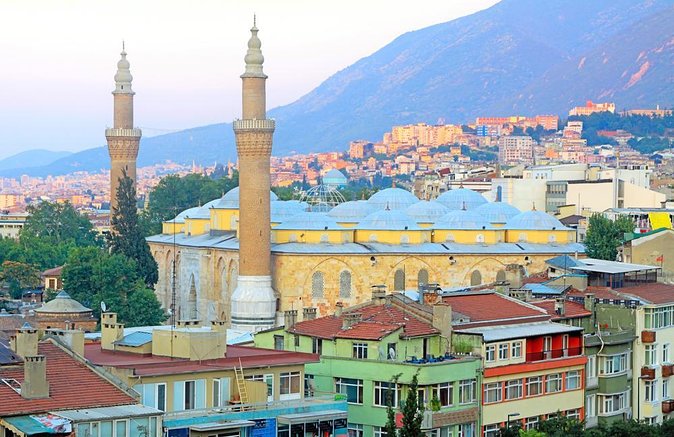
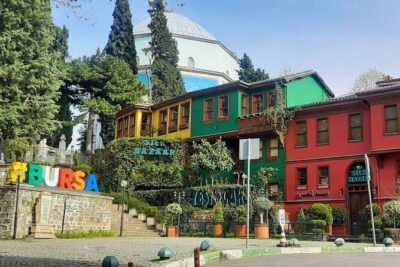
Day thirteen visits Bursa’s Great Mosque, the Green Mosque, the tombs of Osman and Orhan, and Koza Han. Bursa was an early Ottoman capital, and these stops give the final full day a clear historical focus.
The Great Mosque and Green Mosque show different expressions of Ottoman religious design. The tombs of Osman and Orhan connect the city to the early Ottoman dynasty, while Koza Han adds a commercial setting and a chance to browse or sit for a break.
This is a compact day, with 30 minutes at each stop. It works as a final taste of Bursa rather than a full exploration. If you want time for local shopping or an extended meal, ask if the schedule can be adjusted.
What $6,250 per person really buys
At $6,250 per person, this is not a budget tour. Its value depends on what is included beyond the published sightseeing. You are paying for a private 14-day framework, airport pickup, transportation, hotel stays in four or five-star properties, breakfasts, and a long list of included admissions.
The price is easier to justify if you value convenience and personal service. Turkey’s sights are spread over a large area, and organizing this route independently would require repeated hotel bookings, transport planning, entrance tickets, and coordination between different guides and drivers.
Still, ask for a written list of inclusions. The information provided does not clearly state if domestic flights, ferry tickets, lunches, dinners, drinks, tips, or the Cappadocia balloon flight are included. The phrase all-inclusive transportation is helpful, but it does not answer every transfer question.
The tour has a 97 percent recommendation rate and a 4.8 rating from 33 published ratings. The strongest praise centers on attentive organization, guides such as Ibrahim and Muhammet, help with restaurant language, comfortable hotels, good food, and the ability to adapt plans for groups and special occasions.
That points to the tour’s real strength: human support. If you need a guide who can explain Turkey’s history, help across language gaps, and keep a complicated route moving, the format may be worth the premium.
Who will enjoy this route most
I would choose this tour if you want a broad first visit and dislike handling logistics. It suits couples, families, and private groups who want major archaeological sites alongside coast, cities, and religious landmarks.
It also fits people who enjoy history but do not want a trip made only of ruins. Istanbul, Cappadocia, Konya, Antalya, the Lycian coast, Pamukkale, Kusadasi, Gallipoli, and Bursa provide plenty of variety.
I would be more cautious if you prefer slow travel. The schedule has many one-hour visits and several days with multiple stops. You may want to request extra time in Istanbul, Cappadocia, Ephesus, or along the coast, even if that means removing a minor stop.
The tour is private, but private does not always mean unhurried. It means the schedule can be discussed with your own party rather than dictated by a large coach group.
Practical details that matter
Pickup is offered from Istanbul Airport and Sabiha Gokcen Airport. Confirmation is issued within 48 hours of booking, subject to availability, and the tour requires a minimum number of participants even though only your group takes part once confirmed.
Most people can participate, and the route is near public transportation in relevant areas. The itinerary includes uneven ruins, valleys, underground cities, and extended sightseeing, so ask about walking demands if anyone in your party has mobility concerns.
Breakfasts are complimentary. The tour can be canceled for poor weather, in which case you are offered another date or a full refund. For a normal cancellation, you must cancel at least three full days before the start time for a full refund. Changes made inside that period are not accepted.
Should you book the Grand Turkey Tour?
Book it if you want Turkey’s greatest hits plus several worthwhile secondary stops, and you place a high value on having one company arrange the moving parts. The private setup, broad route, included admissions, breakfasts, and guide support make this a practical choice for a first major visit.
Do not book it without asking for the full cost sheet. Confirm transport between each region, the hotel names, the number of private vehicle days, meals, and the price of a Cappadocia balloon ride. If you want a slower holiday, ask to trim the itinerary before you commit.
For an energetic history-and-scenery trip, this is an ambitious and appealing route. For a relaxed coastal break, it is simply too full.
FAQ
How long is the Grand Turkey Tour?
The tour lasts approximately 14 days, beginning with arrival in Istanbul and ending with an airport transfer on Day 14.
Is this a private tour?
Yes. Only your group participates in the private tour or activity.
Is airport pickup included?
Pickup is offered from Istanbul Airport, also called IST, or Istanbul Sabiha Gokcen Airport, also called SAW.
Are breakfasts included?
Yes. Complimentary breakfasts are included during the tour.
Is a Cappadocia hot-air-balloon ride included?
No. The itinerary includes balloon viewing from a hotel terrace or Goreme View terrace. A balloon ride must be arranged earlier if you want one.
What is the cancellation policy?
You can receive a full refund if you cancel at least three full days before the experience start time. Cancellations and changes made less than three full days in advance are not accepted, and weather or minimum-participant cancellations may result in another date or a full refund.
Latest additions around Istanbul
- Istanbul: Hagia Sophia Skip-the-Line Ticket with Live Guide★ 3.7 · 3 reviews
- Ephesus Private Tour From Istanbul including transfers & domestic fights★ 5.0 · 3 reviews
- 6 Days Multi City Turkey Tour★ 5.0 · 3 reviews
- Princess Islands Daily Tour from Istanbul★ 5.0 · 3 reviews
- Premium Line : Private Istanbul Tour : All Inclusive Package★ 4.3 · 3 reviews
- Private Istanbul Combo Tour – Classic Old City and Bosphorus Cruise★ 5.0 · 3 reviews
- Private tour: 12-Day Turkish Adventure Package Tour From Istanbul★ 4.5 · 3 reviews
- Istanbul: Hagia Sophia Guided Tour with Optional Ticket★ 3.3 · 3 reviews
Tours, compared.
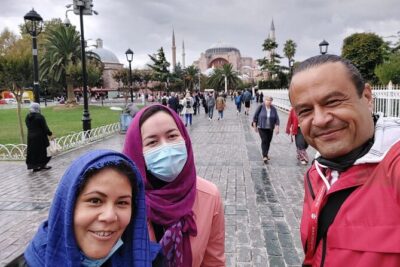
Best of Istanbul 1, 2 or 3-Day Private Guided Istanbul Tour
Read our review →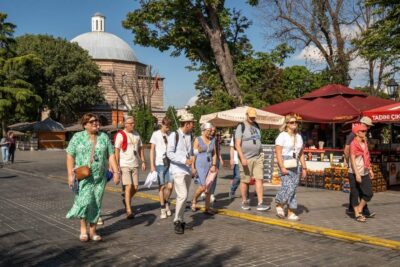
Blue Mosque & Hagia Sophia Guided Tour w/ Tickets
Read our review →
Bosphorus Sightseeing Cruise Tour with Audio Guide
Read our review →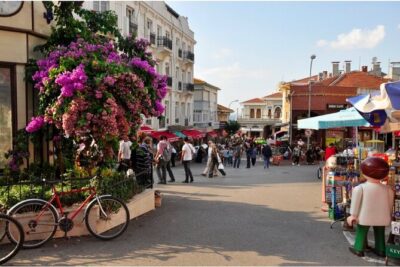
Princes Islands Tour with Heybeliada and Buyukada
Read our review →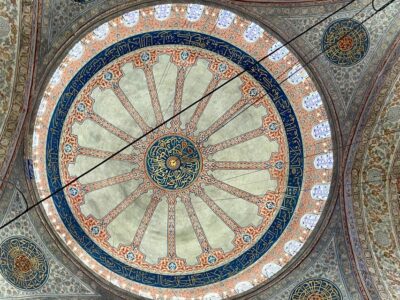
Bursa & Uludag Tour with Lunch & Cable Car Option
Read our review →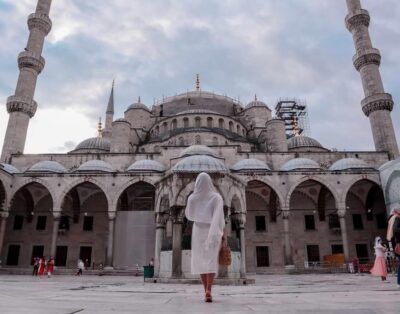
Blue Mosque, Hagia Sophia, & Basilica Cistern Tour
Read our review →