
Reviewed · ISTANBUL
Highlights of Turkey – 12 Days
Turkey packs several civilizations and some wild scenery into one trip. This route takes you from Istanbul’s imperial monuments to Ephesus, Pamukkale, the Mediterranean coast, and Cappadocia’s cave country without asking you to arrange every hotel, transfer, and domestic flight yourself. I especially like the Bosphorus cruise and the chance to swim from a smaller boat in Fethiye’s clear bays.
I also like the small maximum group size of 12, central special-class hotels, and the active WhatsApp support described by guests who worked with Kerem and Seda. The main caution is simple: this is a very full 12 days. Long transfers, early departures, several flights, and sightseeing almost every day can leave you tired, while entrance fees and some optional costs add to the advertised price.
In This Review
- Key details before you book
- What $2,250 buys you across Turkey
- Istanbul’s imperial center in two busy days
- Ephesus and the ancient spa at Pamukkale
- Fethiye’s long day on the water
- Antalya’s cable car, waterfall, and old town
- Konya and the long road to Cappadocia
- Cappadocia’s churches, valleys, and fairy chimneys
- Hotels, meals, and the human side of the trip
- Who should book this 12-day route?
- FAQ
- Are domestic flights included in the $2,250 price?
- How many nights of accommodation are included?
- Are historical-site entrance fees included?
- Is a hot-air balloon flight included in Cappadocia?
- What meals are included?
- How large is the group?
- Should you book Highlights of Turkey?
Key details before you book
- Istanbul opens the trip with Hagia Sophia, Topkapı Palace, the Blue Mosque, and a Bosphorus cruise.
- Cappadocia receives two full sightseeing days, including Göreme, fairy chimneys, an underground city, and Uchisar Castle.
- Eight lunches and 11 breakfasts are included, but drinks, personal spending, and historical-site entrance fees are extra.
- The advertised price is $2,250 per person, with domestic flights included only if you choose that booking option.
- The 12-Island boat day in Fethiye includes swimming stops, a barbecue lunch, sunbeds, shade, toilets, and showers.
- This suits active first-time visitors who value structure, but not anyone seeking a slow, unhurried holiday.
What $2,250 buys you across Turkey
At $2,250 per person, this is not a bare-bones bus trip. The package includes 11 nights of accommodation: three nights in Istanbul, two in Kusadasi, two in Fethiye, two in Antalya, and two in Cappadocia. It also covers airport transfers, air-conditioned land transport, 11 breakfasts, eight lunches, and domestic flights if you select the included-flight option.
That bundle has real value in Turkey, where arranging several one-way flights, intercity buses, drivers, hotels, and site visits on your own takes time. You also avoid the usual confusion of getting from an airport to a hotel in a new city late at night. A driver meets you at each arrival point, and the next transfer is generally already organized.
Still, read the price carefully. Historical-site entrance fees are listed at €265 per person, and the flight option matters. If you choose the excluded-flight package, you must buy the required domestic tickets yourself. Drinks, personal expenses, and extras such as a Cappadocia hot-air balloon flight are not included.
The small-group format is another reason the price can make sense. The maximum is 12 people, and the operator describes the hotels as central, characteristic properties rather than large hotels used for big coach groups. That can make evenings much more useful. You may finish a tour day with enough time to walk through the old town or find your own dinner.
Other Istanbul days travellers pair with this one:
- Istanbul: Bosphorus Dinner Cruise & Show with Private Table
★ 4.8 · 44,561 reviews - Istanbul: Daytime or Sunset Sightseeing Cruise & Audio Guide
★ 4.8 · 14,430 reviews - Istanbul: Bosphorus Dinner Cruise with Turkish Night Show
★ 4.8 · 10,127 reviews
Istanbul’s imperial center in two busy days
Your first day is mostly arrival and check-in. Pickup is available from Istanbul Airport or Sabiha Gökçen Airport, known as SAW, but you need to provide flight details when booking. The first night is a soft landing rather than a sightseeing day.
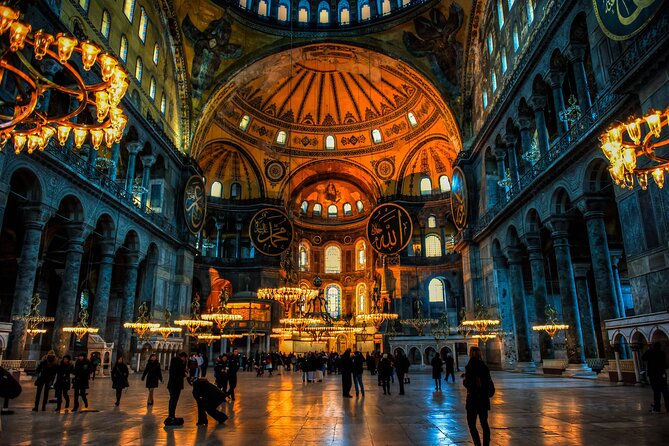
Day two brings the essential old-city sights. Hagia Sophia is the right place to begin because it compresses much of Istanbul’s story into one building. It served as the religious center of Byzantine Constantinople and was once among the world’s largest buildings. Today it functions as a mosque, so dress respectfully and check current visiting arrangements before you go. Admission is not included.
Topkapı Palace takes about two hours and deserves the larger share of your attention. This was the Ottoman sultans’ residence and government center for nearly four centuries. Courtyards, imperial rooms, and collections help explain how the Ottoman court operated, but palace admission is also extra.
The Hippodrome is a quick outdoor stop, yet it gives you a sense of old Constantinople as a public center that once held huge crowds. The Blue Mosque follows, with its six minarets and broad dome. Entry is free, but it is an active place of worship, so visiting hours can be restricted around prayer times. Women may need to cover their heads, and all visitors should wear clothing that covers shoulders and knees.
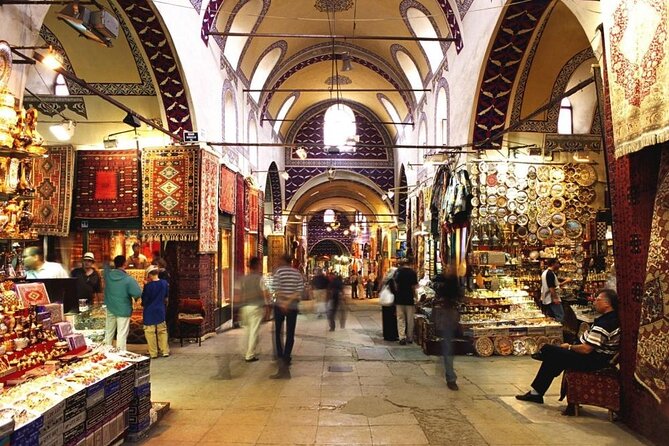
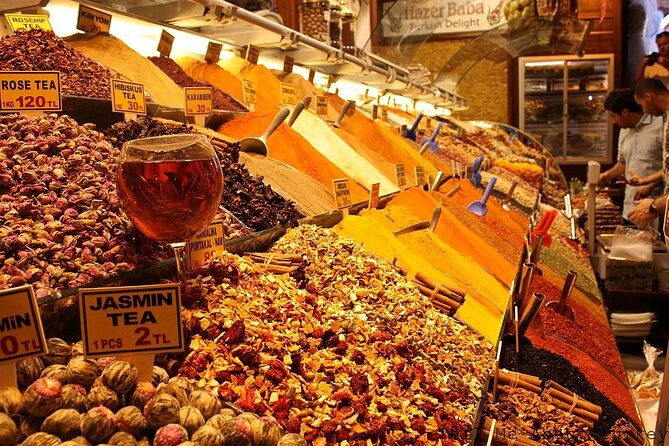
Day three starts at the Spice Bazaar, where herbs and spices once arrived through Egypt and Asia. It is colorful and easy to browse, though the sales pitch can be strong. I would treat this as a place to look, smell, and sample rather than a mandatory shopping stop.
The two-hour Bosphorus cruise is one of the trip’s best uses of time. From the water, you see the strait’s wooden villas, marble palaces, fortresses, fishing villages, parks, and imperial pavilions. The route includes views of Dolmabahçe Palace, the Rüstem Pasha Mosque, Rumeli Fortress, and Yıldız Palace. It is a welcome change from indoor monuments and gives you the basic geography of Istanbul, a city split between Europe and Asia.
That same day includes a transfer back to the airport, a roughly one-hour-15-minute domestic flight to Izmir, and a drive to your Kusadasi-area hotel. It is efficient, but not restful. Keep your luggage light and your airport routine organized.
Ephesus and the ancient spa at Pamukkale
Day four is devoted to the Selçuk area. The House of the Virgin Mary sits above Ephesus and is presented by the church as the place where Mary spent her final days. The current church dates to the sixth century and rests on foundations connected with an earlier house. It is a quiet, devotional stop, but admission is not included.
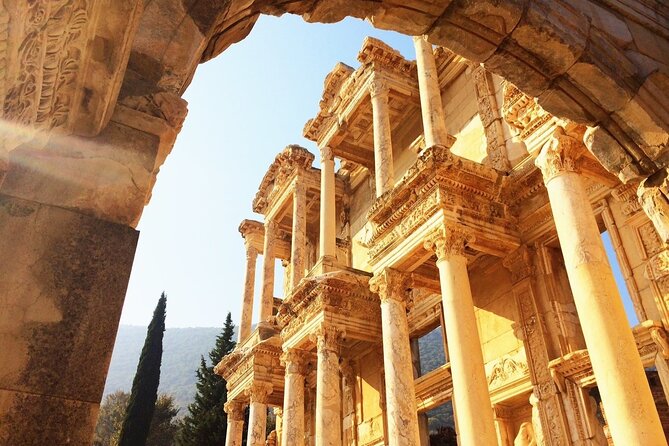
Ephesus is the day’s main event. This is one of the best-preserved classical cities in the eastern Mediterranean, and two hours gives you enough time to see major monuments without turning the visit into an all-day march. Walk its ancient streets toward the Library of Celsus and the large Roman theater. The scale helps you picture Ephesus as a major city rather than a scatter of broken stones.
The Temple of Artemis is a short historical pause. One of the Seven Wonders of the Ancient World once occupied this site, but little remains beyond the location and a few fragments. I like it as a lesson in how fame and physical survival do not always match.
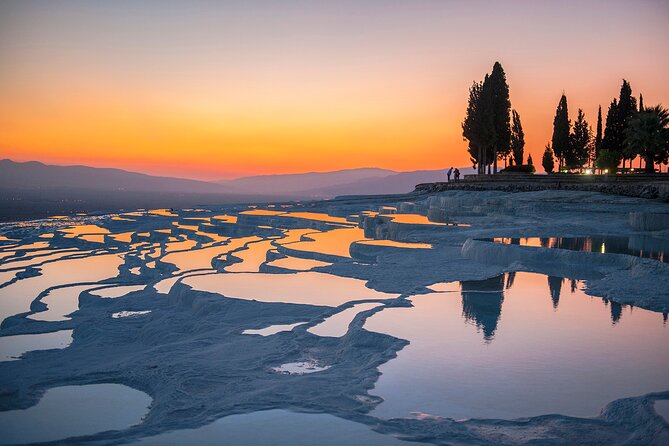
Day five moves to Pamukkale, famous for its white calcium terraces formed by warm spring water. The pools were created by water around 35 degrees Celsius carrying calcium bicarbonate. The result looks almost snowy from a distance, but you should follow current rules about where you may walk and bathe. The main entrance fee is extra.
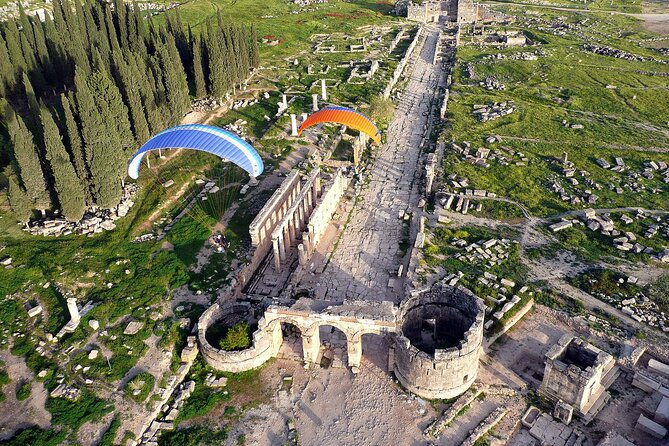
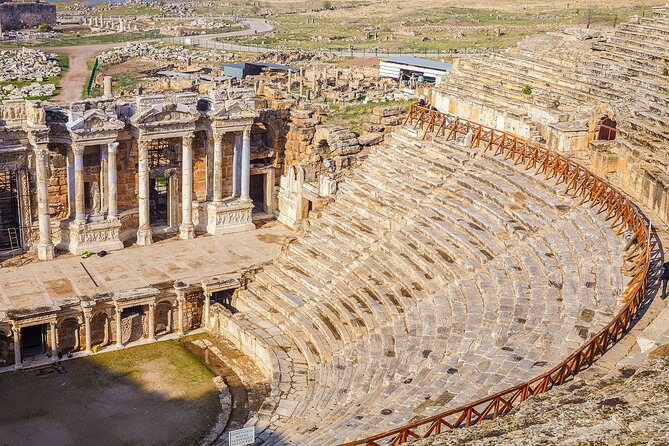
Above the terraces, Hierapolis adds Roman streets, tombs, and the huge necropolis, said to contain about 1,200 gravestones. The Sacred Pool is another highlight, with shallow thermal water flowing over ancient ruins. The contrast is what makes Pamukkale work: bright mineral terraces below, a substantial ancient city above.
The day ends with a long transfer to Fethiye and hotel check-in. The listed three-hour Fethiye segment is part of this movement, so do not expect a free afternoon after Pamukkale.
Fethiye’s long day on the water
The seven-hour Fethiye boat trip is the itinerary’s most relaxed outdoor day. You cruise among bays and islands along the Mediterranean, stopping to swim, walk ashore, sunbathe, and eat a barbecue lunch on board.
The boat is described as having plenty of legroom, fewer passengers, quiet conditions, clean toilets, showers, a bar, sunbeds, and shaded areas. Life jackets and flotation equipment are available for non-swimmers and beginners. That makes the day approachable even if you are not confident in the water.
I would pack swimwear, a towel, sun protection, and a dry bag for your phone. The water is the attraction, but the boat is also your base for most of the day, so comfort matters. One piece of practical caution comes from the service experience: the 12-Island cruise crew was described as less welcoming than the rest of the operation. Go for the bays and swimming, and keep expectations about onboard hospitality measured.
Two continents, plenty of other ways to spend a day:
- Best of Istanbul 1, 2 or 3-Day Private Guided Istanbul Tour
★ 5.0 · 8,922 reviews - Istanbul: Basilica Cistern Fast-Track Entry and Audio Guide
★ 4.6 · 7,521 reviews - Istanbul: Hagia Sophia Skip-the-Line Ticket & Museum Option
★ 3.7 · 4,958 reviews - Istanbul: Hodjapasha Whirling Dervishes Show & Exhibition
★ 4.4 · 4,790 reviews
Antalya’s cable car, waterfall, and old town
Day seven is mostly transport. After checking out, you are driven to Fethiye bus station for a public bus ride of about four hours to Antalya, followed by a hotel transfer. The bus journey is a sensible way to connect the coast, but it is another reminder that this itinerary keeps moving.
The next day begins with the Tünektepe cable car. The ride goes from the sea toward a summit listed at 1,365 meters, with views of the coastline, mountains, pine forests, and turquoise Mediterranean water. The cable-car admission is extra. Weather can affect the views, so this stop is at its best on a clear day.
Lower Düden Waterfalls gives you a short walk through a park beside falling water. It is not a major half-day attraction, but it breaks up the city sightseeing nicely.
Kaleiçi, Antalya’s old town, is the place to slow down a little. Narrow stone streets lead past Hadrian’s Gate, the Clock Tower, the Kesik Minare, and old city walls. After lunch at a local restaurant with a panoramic view, you have about 1 to 1.5 hours of free time within a three-hour stop. Browse boutiques, art galleries, museums, and small shops, but do not expect enough time for every corner.
A practical weakness in the hotel and transfer mix is that standards vary. One hotel described in the trip experience had a less friendly front desk, and one airport van was uncomfortably hot. The operator did respond when the problem was reported, which is useful, but it is still worth speaking up at once if a transfer or room is not right.
Konya and the long road to Cappadocia
Day nine connects Antalya with Cappadocia through Konya. The Mevlana Museum presents the life and ideas of Mevlana Celaleddin-i Rumi, the 13th-century philosopher and mystic associated with tolerance, charity, positive reasoning, and love. You have a substantial four-hour stop, so this is more than a quick photo break.
The 700-year-old Sultanhanı Caravanserai offers a different kind of history. These roadside complexes supported traders and travelers along the Silk Road, and the stone structure helps explain how long-distance travel worked before modern roads and hotels.
After lunch, you continue to Göreme and check in for two nights. This is another long day, but the payoff is arriving in Cappadocia with enough time for two full days of sightseeing. If you are sensitive to long bus rides, ask about the optional flight upgrade from Antalya to Cappadocia. It costs an additional $150 per person, removes the Konya visit and lunch, and includes airport transfers.
Cappadocia’s churches, valleys, and fairy chimneys
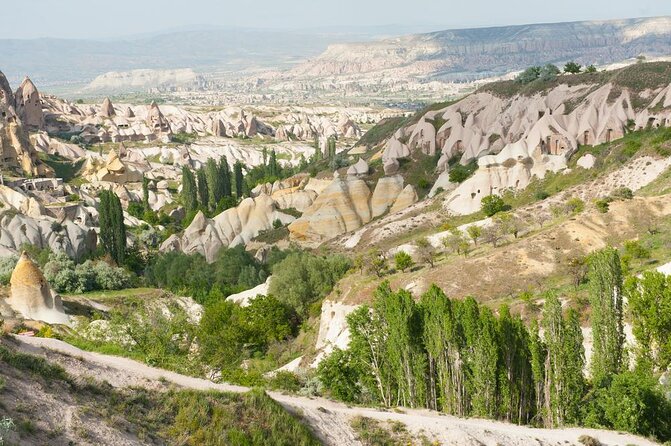
Day ten is packed with Cappadocia’s signature sights. At the Göreme Open Air Museum, rock-cut churches contain colorful frescoes dating from the second half of the ninth century. Admission is extra, and the two-hour visit is well used. Look closely at the wall paintings rather than racing only to the most famous views.
Devrent Valley looks like a natural sculpture park, with rock formations that suggest animals and other shapes. It is a short stop, but the strange forms make it one of the easiest places to enjoy Cappadocia without a long walk.
Paşabağı, also called Monks Valley, contains some of the region’s most unusual mushroom-shaped fairy chimneys. Some have twin or triple caps, and one chimney includes a chapel and shelter linked with the hermit tradition of St. Simeon. Admission is extra.
Avanos brings lunch and a hands-on pottery demonstration with local experts. It is a pleasant way to connect the area’s clay tradition with its landscapes, though guided routes can sometimes include repeated craft-shop visits. If shopping is not your interest, make your preference clear before the day begins.
Göreme Panorama and Uchisar Castle finish the route with big views. Uchisar is the region’s highest natural rock castle, while the panorama stop gives you a broad look at the fairy-chimney country. These are excellent photo stops, but the itinerary allows only limited time at each.
Day eleven provides a second look at Cappadocia. Rose and Red Valley are especially appealing near sunset, when the mineral colors deepen to pink and red. Cavusin has homes cut into rock formations and several old rock churches, while Pigeon Valley gets its name from the dovecotes carved into the soft volcanic rock.
Kaymaklı Underground City is the most unusual stop. The settlement extends through eight levels, with corridors connecting bedrooms, a church, meeting spaces, and food-storage rooms. It once sheltered as many as 15,000 Christians and was used into the seventh century. The passages can feel tight, so this is not the place to linger if enclosed spaces bother you.
Ortahisar closes the sightseeing day with stone houses, narrow streets, churches, and a castle-like rock formation. Then you transfer to Kayseri Airport for a roughly one-hour-30-minute flight to Istanbul and a final hotel check-in. It is a productive day, but the late transfer can make the last evening quiet.
A hot-air balloon flight is not included. The provider can arrange a place in advance, but the price changes with the season and demand. If this is important to you, ask about the current cost before booking rather than treating it as a small add-on.
Hotels, meals, and the human side of the trip
The accommodation plan favors central locations and locally styled properties. Examples connected with this operation include the old-fashioned Celal Sultan in Istanbul, the waterfront Woyn Point Hotel in Fethiye, and a cave-style property in Cappadocia that received especially warm praise for its setting and service.
Expect variety rather than a uniform hotel standard. Some rooms may be small or charmingly old, while a resort-style thermal hotel near Pamukkale may feel much larger and less personal. Breakfast is one of the safer strengths of the package, with 11 included hotel breakfasts described as a dependable start to sightseeing.
Eight lunches are included, but I would not book this trip mainly for food. Lunches may be served in large buffet-style halls used by tour groups, and the quality can be ordinary. Use free evenings to seek out family-run restaurants on your own. The operator specifically aims to use family-owned local restaurants, but the actual meal experience can vary by region and guide.
Communication appears to be a strong point. Kerem has handled booking questions, flights, and optional activities, while Seda has used WhatsApp to send pickup reminders and travel tickets. The system is practical, though most support is through WhatsApp rather than a formal in-person desk.
Guiding can vary by day. Hatice, Şükran, and Matie are among the guides associated with the wider route, with Matie particularly connected to Pamukkale and Ephesus. Ask questions, request a little more time when possible, and tell the operator quickly if a guide is rushing or skipping a stop.
Who should book this 12-day route?
I would recommend it to a first-time visitor who wants to see Turkey’s major highlights without building a complicated chain of hotels, flights, buses, and drivers. It is also a good match for solo visitors who want structure, airport reception, and a small group without being locked into a giant coach.
You should be comfortable with frequent packing, early coordination, long road days, and several changes of scenery. The itinerary gives you free evenings in some towns, but it does not provide many full rest days. I would add extra nights if you can, especially in Istanbul, Fethiye, or Cappadocia.
The tour is less suitable if your priority is slow travel, local food at every meal, or unplanned wandering. Repeated carpet, leather, or ceramic stops may also bother shoppers who prefer to choose their own activities. Ask in advance if those visits can be shortened or skipped.
Cancellation is flexible up to 24 hours before the start time for a full refund. Changes or cancellations inside that window are not accepted, and the cutoff uses local time.
FAQ
Are domestic flights included in the $2,250 price?
They are included only if you select the included-flight option during booking. If you select excluded flights, you must purchase the required domestic tickets yourself.
How many nights of accommodation are included?
The package includes 11 nights: three in Istanbul, two in Kusadasi, two in Fethiye, two in Antalya, and two in Cappadocia.
Are historical-site entrance fees included?
No. Historical-site entrance fees are listed separately at €265 per person. Children aged eight and under receive free entry to historical sites.
Is a hot-air balloon flight included in Cappadocia?
No. The balloon flight is optional. The provider can arrange a place, but prices vary by season and demand.
What meals are included?
The package includes 11 breakfasts and eight lunches. Drinks with meals and personal expenses are not included.
How large is the group?
The maximum group size is 12 people. Airport pickups, transfers, and domestic travel are organized as part of the route.
Should you book Highlights of Turkey?
Book this tour if you want maximum coverage with minimum planning. The route links Istanbul, Ephesus, Pamukkale, the Mediterranean coast, Konya, and Cappadocia in a way that would take real effort to arrange independently. The best parts are the Bosphorus cruise, Ephesus, Pamukkale, the Fethiye boat day, and Cappadocia’s two-day program.
Think twice if you need spacious days, consistent restaurant quality, or complete freedom. I would also price the €265 entrance fees, optional balloon ride, drinks, and excluded airfare before deciding. For an active first visit to Turkey, the value is strong. For a slower holiday, book the same regions with extra nights and fewer scheduled stops.
Latest additions around Istanbul
- Istanbul: Hagia Sophia Skip-the-Line Ticket with Live Guide★ 3.7 · 3 reviews
- Ephesus Private Tour From Istanbul including transfers & domestic fights★ 5.0 · 3 reviews
- 6 Days Multi City Turkey Tour★ 5.0 · 3 reviews
- Princess Islands Daily Tour from Istanbul★ 5.0 · 3 reviews
- Premium Line : Private Istanbul Tour : All Inclusive Package★ 4.3 · 3 reviews
- Private Istanbul Combo Tour – Classic Old City and Bosphorus Cruise★ 5.0 · 3 reviews
- Private tour: 12-Day Turkish Adventure Package Tour From Istanbul★ 4.5 · 3 reviews
- Istanbul: Hagia Sophia Guided Tour with Optional Ticket★ 3.3 · 3 reviews