
Reviewed · TROY & GALLIPOLI TOURS
Istanbul: 2-Day Gallipoli, Troy, and Bergama Tour
Gallipoli brings the recent past into sharp focus, while Troy and Pergamon carry you thousands of years further back. In just two days, you’ll see trenches, memorials, city walls, temples, royal ruins, and one of the finest surviving Hellenistic theaters.
I like the useful route to Selcuk or Kusadasi, which turns a long transfer from Istanbul into a proper history trip. I also like the guides Burak and Charlie, who bring knowledge, humor, and a personal touch, including help tracing family connections at Gallipoli. The drawback is the early start and long driving days, with little spare time at each site.
In This Review
- Key points to know before booking
- Why this two-day route works
- Day 1: Istanbul to Gallipoli and the ANZAC sites
- Day 2: Troy’s layers of settlement
- Pergamon’s hilltop Acropolis above Bergama
- Transport, lodging, and the real value of the price
- Guides who add context and humor
- Who should book this tour?
- Final call: a smart bridge to western Turkey
- FAQ
- How long is the tour?
- Where does the tour begin in Istanbul?
- Is pickup available from Istanbul’s Asian side?
- Where does the tour finish?
- Is accommodation included?
- Is the room private?
- Which meals are included?
- Are entrance fees included?
- What language is the tour conducted in?
- What should I bring?
Key points to know before booking
- Gallipoli is the emotional center: Visit ANZAC Cove, Lone Pine, Chunuk Bair, the Nek, and several cemeteries and memorials.
- Troy goes beyond the wooden horse: See city walls dating back roughly 3,700 years, houses from Troy I, the Bouleuterium, and the Odeon.
- Pergamon requires an uphill visit: The Acropolis sits above Bergama and includes temples, palaces, a library, and a dramatic theater.
- Your route ends in western Turkey: The tour finishes around 5:30 PM on Day 2 in Selcuk or Kusadasi, not back in Istanbul.
- Two lunches are included: Breakfast on the first morning, dinner, drinks, and a single room cost extra.
- Pickup is limited: Service is available from hotels in Taksim and Sultanahmet, with no pickup from Istanbul’s Asian side.
Why this two-day route works
This is a history-heavy trip with a practical purpose. You leave Istanbul early, cross toward the Gallipoli Peninsula, continue south to Troy, and then reach Bergama before finishing near Ephesus country. Instead of returning to Istanbul after every outing, you keep moving toward Turkey’s Aegean sites.
That makes the $496 price easier to assess. The cost covers transportation in an air-conditioned, non-smoking vehicle, ferry fees, three guided site visits, entrance fees for Troy and the Pergamon Acropolis, two lunches, and one night in a three-star hotel or similar property with breakfast.
It is not a bargain if you only want a quick Gallipoli excursion. It becomes more useful if you were already planning to visit Selcuk, Kusadasi, or Ephesus after Istanbul. The tour acts as both sightseeing and transportation, though you pay for a packed schedule rather than an unhurried stay.
The route also gives you a good sweep of Turkish history. Gallipoli concerns the First World War and the human cost of military campaigns. Troy connects to Bronze Age settlements and Homeric legend. Pergamon shows the political and cultural power of a Hellenistic royal capital. You get three very different kinds of historic places in a short span.
More Troy and Gallipoli trips:
- Istanbul to Gallipoli Full Day Tour with Lunch and Transfers
★ 5.0 · 567 reviews - Gallipoli Full-Day Tour from Istanbul
★ 4.9 · 468 reviews - From Istanbul: Gallipoli and Anzac Full-Day Tour
★ 4.9 · 345 reviews
Day 1: Istanbul to Gallipoli and the ANZAC sites
The first morning begins early. Pickup from Taksim hotels is scheduled between 6:00 and 6:20 AM, while Sultanahmet pickup runs from 6:30 to 7:00 AM. The exact meeting point may depend on your hotel, so confirm it before departure.
You’ll make a break halfway along the route. Breakfast is at your own expense, so keep money and time ready for that stop. Lunch in Eceabat is included before the guided visit to the peninsula.
That early departure matters. Gallipoli is not a quick side trip from Istanbul, and the first day includes substantial road time. The upside is that you reach the battlefield with a guide and continue south rather than losing the evening to a return journey.
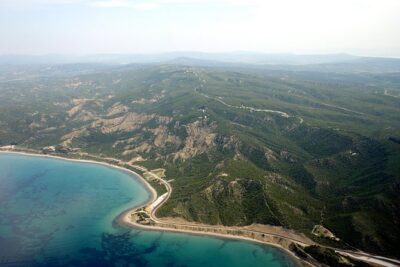
The tour begins around the Gallipoli battle sites and memorials. Brighton Beach and the Beach Cemetery help establish the coastal setting, while ANZAC Cove and Ariburnu Cemetery bring you closer to the landing area associated with Australian and New Zealand forces.
At the ANZAC Commemorative Site, the guide can explain the place in relation to the wider campaign. The Mehmetcik Statue gives attention to the Turkish side, a useful balance in a story that is often presented mainly through Australian and New Zealand memory.
The Lone Pine Australian Memorial is one of the key stops. Its name is tied to a battlefield area where Australian troops fought, and the memorial gives the visit a strong human focus. The 57th Regiment Turkish Memorial provides another view of the fighting and honors Turkish soldiers.
Johnston’s Jolly, the Nek, and Chunuk Bair complete the main group of stops. The Nek is especially associated with a disastrous attack, while Chunuk Bair is central to New Zealand remembrance. You’ll want a guide who can explain how these places fit together, since the terrain and military movements are not always easy to understand from a roadside viewpoint.
Bring your passport or identity card. You should also wear shoes suited to uneven ground and carry water, although the supplied information does not specify how much walking is involved. Wheelchair users should note that this tour is not suitable for them.
The guides are a major part of the experience. Burak and Charlie are named as guides connected with the tour, and Burak is noted for asking about family connections at Gallipoli and helping people consider where ancestors might have been buried. That kind of personal question can change the tone of the day from a list of monuments into something more meaningful.
The day ends with a transfer to your accommodation at about 6:00 PM. Sam, another member of the tour team, has been described as walking a guest to the hotel, explaining something about the town, and suggesting restaurants. That is a small service, but it matters after a long day when you are arriving somewhere unfamiliar.
Dinner is not included. You’ll need to arrange it yourself in town, and drinks throughout the tour are also extra. Your room is based on double or twin sharing for two people. If you need a single room, book it separately rather than assuming one will be available.
Day 2: Troy’s layers of settlement
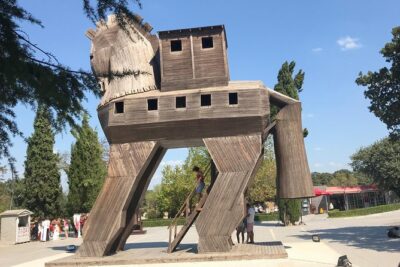
The second day turns from modern war memorials to the much older site of Troy. The wooden horse replica is the obvious photo stop, but it should not be the main reason you come.
Troy is important because the archaeological site contains multiple settlement layers, identified from Troy I through Troy IX. These layers reflect repeated building, destruction, and rebuilding over a very long period. The remains can be confusing without explanation, so the English-speaking guide is especially useful here.
You’ll see the 3,700-year-old city walls, houses associated with Troy I, sacrificial altars, the Bouleuterium, and the Odeon. The Bouleuterium was a council building, while the Odeon was used for musical or public performances. These remains help you picture Troy as a functioning settlement, not just a stage for the story of Helen and the Trojan War.
The challenge is scale. Troy does not offer a single intact monument that explains everything at a glance. Walls, foundations, terraces, and partial structures require patience and context. I would listen closely to the guide, then take a few minutes to look across the site and understand how the layers overlap.
The famous Trojan Horse replica is useful for photographs and for connecting the archaeological place to the literary tradition. Still, the value of Troy lies in the old walls and settlement remains. The legend draws you in, but the excavation is what gives the visit substance.
The tour then continues to Bergama, with views along the road and a lunch stop before the uphill visit to the Pergamon Acropolis. This is another long moving day, so Troy is best approached with realistic expectations. You will see the central remains, not spend an entire day examining every section.
Pergamon’s hilltop Acropolis above Bergama
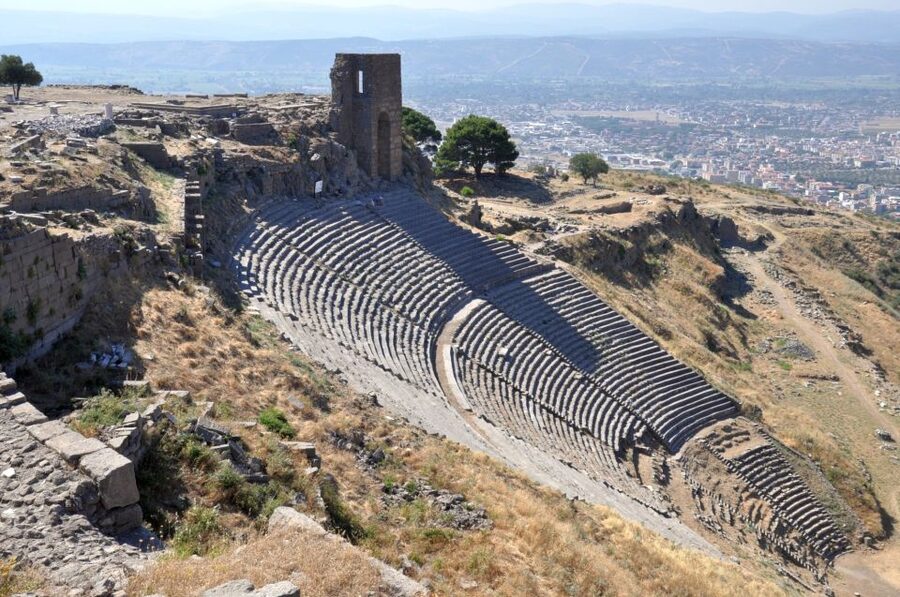
The Acropolis of Pergamon was once the seat of royal families and aristocrats. It occupies a hill above modern Bergama, and the climb in position gives the site much of its power. The tour includes entrance to the Acropolis and a guided visit.
You’ll see former palaces, temples, water reservoirs, and the remains of major public buildings. The Library of Pergamon points to the city’s intellectual importance, while the Temple of Athena and the Temple of Trajan show the range of religious and imperial influences present at the site.
The Altar of Zeus is another major feature. What remains at the hilltop helps you understand the former arrangement, though some famous Pergamon material is no longer in its original setting. The tour information focuses on the ruins at the Acropolis, so ask the guide what you are seeing as you move between terraces.
The gymnasium is arranged across terraces, a reminder that ancient education and physical training could require substantial public architecture. The Lower Agora gives another sense of daily civic life, away from the royal and religious buildings.
The Hellenistic Theater is likely to be the visual high point. It is among the best-preserved ancient theaters of its period, with steep seating and a strong view down the hill. The setting makes the scale easy to grasp. You can imagine how sound, spectacle, and status worked together in a theater built for a large audience.
The site is uphill, so this is not a flat, easy stroll. Take care on uneven surfaces and expect the sun to matter, especially in warmer months. The itinerary does not provide a detailed walking distance, but the arrangement of the Acropolis means you should be prepared for steps, slopes, and exposed ruins.
The day also includes a chance to look at Turkish handicrafts. That can be a pleasant cultural addition, but it may not appeal to everyone. If you are focused only on archaeology, treat it as optional browsing rather than a central part of the historic visit.
A few more Istanbul experiences to weigh up
- Istanbul: 1 or 2-Day Hop-On-Hop-Off Bus Tour Ticket
★ 4.1 · 863 reviews - Istanbul: 1 or 2-Day Private Guided Tour with Hotel Transfer
★ 4.7 · 438 reviews - 2 Day All Inclusive Cappadocia Tour from Istanbul with Optional Balloon Flight
★ 5.0 · 429 reviews - From Istanbul: 2-Day All-Inclusive Cappadocia Guided Trip
★ 4.9 · 380 reviews
Transport, lodging, and the real value of the price
The air-conditioned vehicle is important here. Day 1 begins in Istanbul and reaches Gallipoli, while Day 2 links Troy, Bergama, and your final destination. A comfortable vehicle makes a long route more manageable, though no two-day road trip of this length will feel leisurely.
The ferry fee is included, which removes one small but necessary cost from the route. Transportation is arranged throughout, so you do not need to work out separate buses, ferries, taxis, or connections between the sites.
One night of accommodation is included at a three-star hotel or similar property, with breakfast. The room arrangement is double or twin share for two people. If you are traveling alone and want your own room, the single supplement needs to be arranged separately.
The two included lunches also help. Breakfast on Day 1, dinner, drinks, and other personal spending are not covered, so budget for those. The meal plan is practical rather than luxurious: you get fed during the route without having to search for restaurants in the middle of a sightseeing day.
The tour’s strongest value is time. You can see three major historic areas without planning a complex route yourself. The tradeoff is control. You will not choose how long to stay at each site, and the driving schedule leaves limited room for detours.
Guides who add context and humor
A tour like this depends heavily on the guide. Gallipoli and Troy can both feel scattered if you only see names on signs. Pergamon can also seem like a collection of stones unless someone explains how the royal, religious, civic, and theatrical areas fit together.
Burak and Charlie are associated with the guiding team, and Burak is noted for mixing jokes with a serious tone when the subject requires it. That balance matters at Gallipoli. The memorials deserve respect, but a completely solemn presentation for hours can make it hard to stay engaged.
The personal touch at Gallipoli is especially useful if you have Australian, New Zealand, Turkish, or other family connections to the campaign. Tell the guide if you know an ancestor’s name or regiment. No result is guaranteed, but the question can help you look at the cemeteries with a clearer purpose.
The organization also appears to be a strength. The handoff to the accommodation and advice about local restaurants are exactly the sort of details that make a packed route easier. You should still confirm your pickup time and location before leaving Istanbul, since hotel arrangements can vary.
Who should book this tour?
I would recommend it to you if you want a structured history route and plan to continue toward Selcuk or Kusadasi. It is particularly useful if you have only a short time in Turkey and want Gallipoli, Troy, and Pergamon in one sweep.
It also suits people who prefer a guide at complex archaeological sites. Troy and Pergamon reward explanation, and Gallipoli carries enough emotional and military detail that a good guide can make a major difference.
I would hesitate if you dislike early mornings, long road journeys, or fixed schedules. The tour is not designed for slow archaeology or quiet contemplation at every memorial. It is also a poor fit for wheelchair users, and you should not book it expecting to return to Istanbul on Day 2.
The $496 cost is easier to justify when you use the final transfer. If you need to return to Istanbul and have no interest in Selcuk or Kusadasi, compare the price with a shorter Gallipoli outing and separate transport. If western Turkey is already part of your plan, this route saves planning time and adds three substantial historic stops.
Final call: a smart bridge to western Turkey
Book this tour if you want history, organized transport, and a direct move from Istanbul toward Ephesus country. The best parts are the carefully chosen Gallipoli memorials, the layered remains at Troy, and Pergamon’s theater and hilltop setting.
Skip it if you need generous free time, a private room without an added booking, or a relaxed pace. For the right itinerary, though, this is a practical two-day bridge between Istanbul and Selcuk or Kusadasi, with enough serious history to make the long drive worthwhile.
FAQ
How long is the tour?
The experience lasts two days. Starting times should be confirmed when you check availability.
Where does the tour begin in Istanbul?
Pickup is available from hotels in the Taksim and Sultanahmet areas. Taksim pickup is scheduled between 6:00 and 6:20 AM, and Sultanahmet pickup between 6:30 and 7:00 AM.
Is pickup available from Istanbul’s Asian side?
No. Pickup and drop-off service is not available from the Asian side of Istanbul.
Where does the tour finish?
The tour finishes in Selcuk or Kusadasi at about 5:30 PM on Day 2. It does not return to Istanbul.
Is accommodation included?
Yes. One night at a three-star hotel or similar accommodation is included, with breakfast.
Is the room private?
The included accommodation is based on double or twin sharing for two people. A single room requires a separate booking.
Which meals are included?
Lunch in Eceabat on Day 1 and lunch in Bergama on Day 2 are included. Breakfast on the first morning, dinner, and drinks are not included.
Are entrance fees included?
Entrance fees to Troy and the Pergamon Acropolis are included. Ferry fees are also covered.
What language is the tour conducted in?
The live guided tour is conducted in English by professional English-speaking guides.
What should I bring?
Bring your passport or identity card. Pets are not allowed, and the tour is not suitable for wheelchair users.
Latest additions around Istanbul
- Istanbul: Hagia Sophia Skip-the-Line Ticket with Live Guide★ 3.7 · 3 reviews
- Ephesus Private Tour From Istanbul including transfers & domestic fights★ 5.0 · 3 reviews
- 6 Days Multi City Turkey Tour★ 5.0 · 3 reviews
- Princess Islands Daily Tour from Istanbul★ 5.0 · 3 reviews
- Premium Line : Private Istanbul Tour : All Inclusive Package★ 4.3 · 3 reviews
- Private Istanbul Combo Tour – Classic Old City and Bosphorus Cruise★ 5.0 · 3 reviews
- Private tour: 12-Day Turkish Adventure Package Tour From Istanbul★ 4.5 · 3 reviews
- Istanbul: Hagia Sophia Guided Tour with Optional Ticket★ 3.3 · 3 reviews
Troy & Gallipoli Tours, compared.
Istanbul to Gallipoli Full Day Tour with Lunch and Transfers
Read our review →
Istanbul to Gallipoli, Canakkale and Troy. 2 Day Tour with Hotel
Read our review →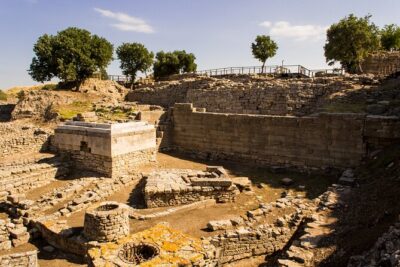
Istanbul to Truva Troy Guided Day Tour with Lunch and Transfers
Read our review →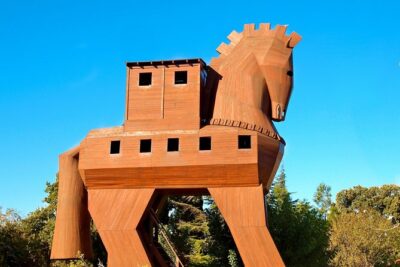
Troy Full-Day Guided Tour incl. Transfer, Ferry Tickets w/Lunch
Read our review →Browse the lists this tour appears in