
Reviewed · CITY TOURS
Istanbul Small-Group City and Secret Streets Tour with Guide
Istanbul’s grandest sights sit close together, but their stories span Roman, Byzantine, and Ottoman rule. This tour gives you a brisk introduction to that layered center, then slips into quieter lanes such as Soğukçeşme Sokak before ending among the spices and shops of Eminönü. I like the way it combines major landmarks with lesser-seen streets, and I like the practical advice guides give about food, transport, photo spots, and bargaining. Erol, Gamze, Tolga, Hüseyin, and several other guides have made especially strong impressions.
The main thing to understand is that this is primarily a walking orientation tour, not a full museum visit. The advertised stops are generally viewed from outside, and admission fees are not included. The Blue Mosque may be entered when timing allows, while the Basilica Cistern costs extra. Prayer times, queues, and a late start can affect what you see inside, so plan to return later if you want a thorough look.
In This Review
- Key points before you book
- Why this is a useful first morning in Istanbul
- The Basilica Cistern: a quick look below ground
- Quiet corners beside Topkapı Palace
- Hagia Sophia and Topkapı Palace from the outside
- Sultanahmet, the Hippodrome, and imperial monuments
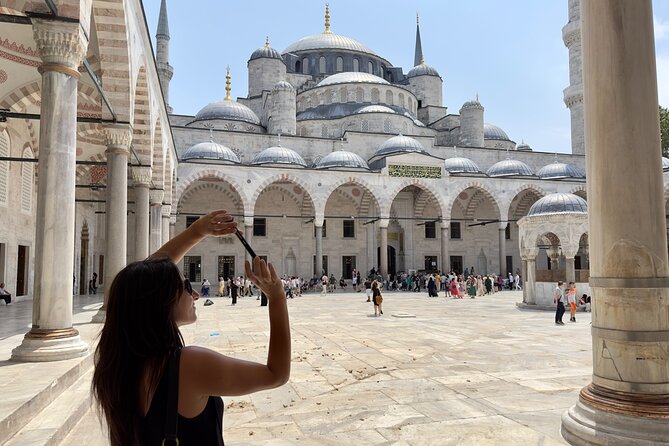
- The Blue Mosque and the importance of timing
- Tahtakale and the Spice Market
- The guides are the real value
- What the $72.59 price delivers
- Who should take this walk
- Should you book it?
- FAQ
- How long does the tour last?
- Where does the tour begin?
- Where does the tour end?
- Is hotel pickup included?
- Is the tour offered in English?
- How large is the group?
- Does the tour enter the Basilica Cistern?
- Does the tour enter the Blue Mosque?
- Are admission tickets included?
- Can I cancel the tour for a full refund?
Key points before you book
- Fourteen Old City stops in about three hours: The route covers the Basilica Cistern, Hagia Sophia, Topkapı Palace, Hippodrome, Blue Mosque, Spice Market, and more.
- Secret streets add variety: Soğukçeşme Sokak and Caferağa Medresesi provide a quieter contrast to Istanbul’s famous squares.
- Usually a small group: The maximum is 15 people, with private and small-group options available.
- Blue Mosque access depends on timing: Guides may take you inside, but prayer schedules and delays can change the plan.
- The tour finishes at the Egyptian Bazaar: You can continue shopping or sightseeing in Eminönü after the guide leaves.
- Allow for steady walking: There is a moderate amount of walking, with no hotel pickup or drop-off.
Why this is a useful first morning in Istanbul
Istanbul can feel like several cities at once. The old center packs imperial palaces, ancient monuments, mosques, markets, tram lines, and steep or crowded streets into a relatively tight area. A guide helps you connect the pieces instead of seeing each building as an isolated photo stop.
The route begins near Foodie-ist Cafe and Brasserie in Sultanahmet. That is a practical starting point because you are already close to the city’s principal historic sights. The tour ends at the Egyptian Bazaar, not back at the café, so you finish in an area with plenty more to explore.
I would choose this tour early in an Istanbul stay. Guides explain how the old city fits together, point out transport options, and help you decide which attractions deserve a later, longer visit. Kiymet, for example, has helped people understand where to buy transport tickets, while other guides have offered restaurant suggestions and advice for handling the bazaars.
The group limit of 15 keeps the walk more manageable than a large coach outing. Still, a group of that size can spread out around the Hippodrome or market lanes. Stay close to the guide, especially when crossing busy streets or moving through crowded shopping areas.
A few more Istanbul experiences to weigh up
- Istanbul: Daytime or Sunset Sightseeing Cruise & Audio Guide
★ 4.8 · 14,430 reviews - Best of Istanbul 1, 2 or 3-Day Private Guided Istanbul Tour
★ 5.0 · 8,922 reviews - Istanbul: Basilica Cistern Fast-Track Entry and Audio Guide
★ 4.6 · 7,521 reviews
The Basilica Cistern: a quick look below ground
The Basilica Cistern was built in 532 under Emperor Justinian. This huge underground water chamber is a fine example of Roman engineering adapted by the Byzantine Empire, with rows of columns creating a cool, shadowy space beneath the city.
The stop is scheduled for about 10 minutes. That is enough for an explanation and a sense of the structure, but not enough for an unhurried visit. The admission ticket is not included, despite the stop being shown without an admission charge. If you want to walk through the cistern properly, set aside extra time and money for a separate entry.
This distinction matters. Some guides have entered with their groups when participants paid the additional fee, but you should not assume that entrance is part of the basic tour. The cistern is especially appealing on a hot day, yet it is one of the places you may prefer to revisit after the walking tour.
Quiet corners beside Topkapı Palace
Soğukçeşme Sokak is a short historic lane pressed against the walls of Topkapı Palace. Its old houses offer a welcome change from the broad squares and heavily photographed monuments nearby.
The stop is brief, but it helps explain how Ottoman Istanbul was not only palaces and mosques. Small residential streets, workshops, religious schools, and market districts filled the spaces between imperial buildings. This is also one of the tour’s better chances to slow down and take photographs without the full pressure of a major entrance queue.
At Caferağa Medresesi, a former religious school now devoted to Turkish classical arts, you may see references to calligraphy, ceramics, jewelry, and other traditional crafts. The 10-minute visit does not promise a hands-on workshop, but it gives your guide a useful place to discuss Turkish art and the role of medreses in city life.
One caution: craft-related stops can vary. A pottery visit has sometimes felt too much like a sales pitch, with high prices and pressure to buy. If a shopping stop is offered, treat it as optional and feel free to decline. The strongest part of the tour is the explanation of the craft, not purchasing something.
Hagia Sophia and Topkapı Palace from the outside
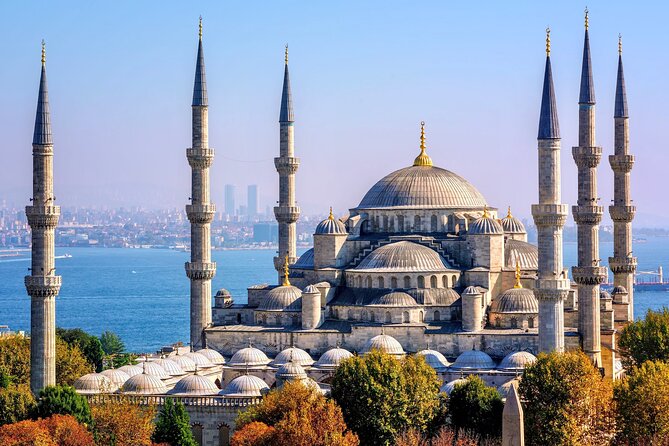
Hagia Sophia began as a church in 532, became a mosque after the Ottoman conquest of Constantinople in 1453, and has served different public roles over time. Its dome and surviving mosaics helped make it one of the world’s great monuments, and it forms part of Istanbul’s UNESCO-listed historic area.
The tour’s short stop gives you context and a chance to study the building from outside. Do not expect enough time for a full interior visit. Access arrangements and visitor controls can change, so a separate visit is the sensible choice if the dome, mosaics, and interior details are central to your plans.
Topkapı Palace was the Ottoman court and home of roughly 24 sultans across nearly four centuries. The stories connected with its rulers, courtiers, concubines, and palace officials can fill an entire afternoon.
Here, too, the basic walk is an introduction rather than a palace tour. One guide has entered the first courtyard with a group, but you should confirm what your chosen departure includes. The palace grounds, treasury, and harem require far more time than the tour’s 10-minute stop.
This is where an energetic guide can make a real difference. Öz, also called Ozzie, has used an iPad to show how Istanbul changed over time. That kind of visual aid can help you understand what stood where, especially when modern streets hide the shape of the old palace district.
Two continents, plenty of other ways to spend a day:
- Istanbul: Bosphorus Dinner Cruise & Show with Private Table
★ 4.8 · 44,561 reviews - Istanbul: Bosphorus Dinner Cruise with Turkish Night Show
★ 4.8 · 10,127 reviews - Istanbul: Hagia Sophia Skip-the-Line Ticket & Museum Option
★ 3.7 · 4,958 reviews - Istanbul: Hodjapasha Whirling Dervishes Show & Exhibition
★ 4.4 · 4,790 reviews
Sultanahmet, the Hippodrome, and imperial monuments
Sultanahmet Square is the heart of Istanbul’s Old City. From here, Byzantine and Ottoman rulers governed empires that reached far beyond the peninsula. The square also gives you one of the clearest views of Hagia Sophia and the Blue Mosque together.
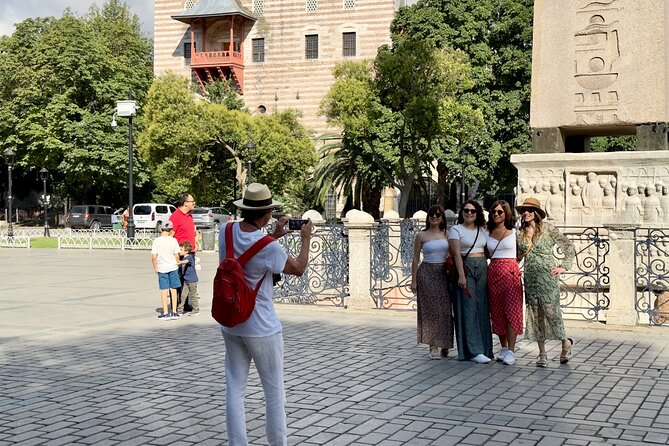
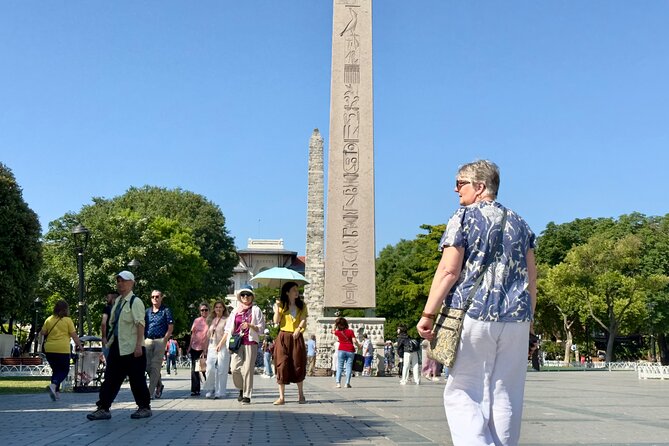
The nearby Hippodrome was once Constantinople’s sporting and social center. Today it is an open square with fragments and monuments from the ancient chariot-racing course. Your guide will point out the Egyptian Obelisk, the Serpent Column, and the Walled Obelisk.
Each object has a story that reaches beyond Istanbul. The Serpent Column began as part of a Greek sacrificial tripod at Delphi and was moved to Constantinople by Constantine the Great in 324. The Walled Obelisk is a Roman monument, while the Egyptian Obelisk is far older than the city’s Byzantine era.
The German Fountain adds a later imperial note. Germany’s Emperor Wilhelm II gave it to Istanbul in 1898, and its domed form makes it one of the square’s most attractive monuments. Öz is particularly fond of explaining the authentic German Fountain, which suggests that this stop may include a little more detail than a quick photograph.
Because most of these monuments are in open public spaces, the tour can keep moving without admission queues. The trade-off is that you get short explanations rather than the time to examine every carving or inscription. I see this section as a useful map of the city’s past, not a substitute for a specialist archaeology tour.
The Blue Mosque and the importance of timing
The Sultan Ahmed Mosque is better known to many visitors as the Blue Mosque, named for the blue tiles used inside. It sits beside the Hippodrome and remains one of the defining buildings of the Old City.
This is the stop most likely to include interior access, but it is also the stop most affected by prayer times. Modest clothing is required for mosque visits, and normal religious activity takes priority over sightseeing. A late guide or an unexpected delay can mean missing the interior, even if a return visit was discussed.
For that reason, ask at the start of the tour if the mosque is expected to be open during your departure. If it is not, you can still appreciate the exterior and use the guide’s explanation to plan a later visit. Some people have entered the Blue Mosque, while others have only viewed it from outside because of timing.
The square is an excellent place for photographs, and guides often point out good angles. Gamze has been especially good at keeping groups of around 10 together in this busy area, while Abdullah has paid close attention to shade and rest breaks. Those details matter during a warm afternoon.
Tahtakale and the Spice Market
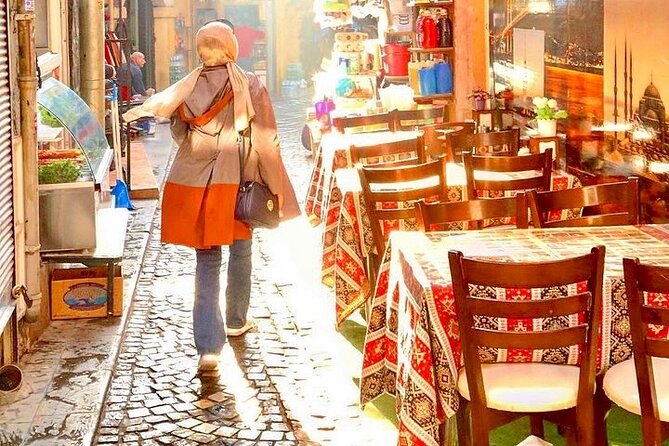
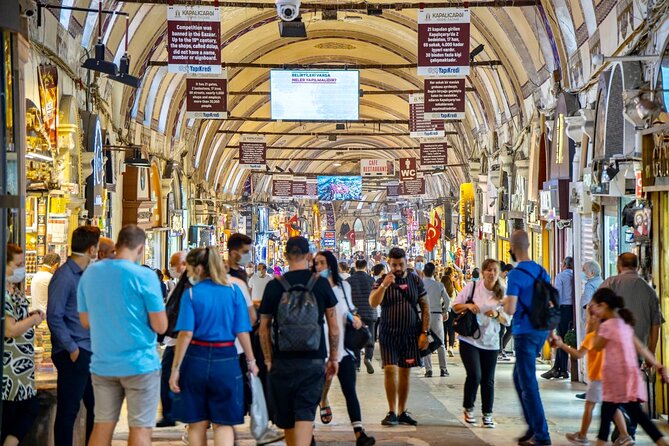
The route then heads toward Tahtakale, a shopping district in Eminönü where small stores sell a wide range of everyday goods at reasonable prices. This is the point where the walk feels less like a monument survey and more like a look at working Istanbul.
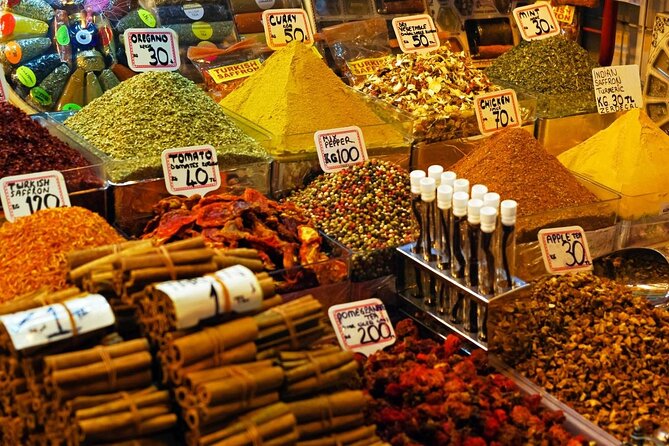
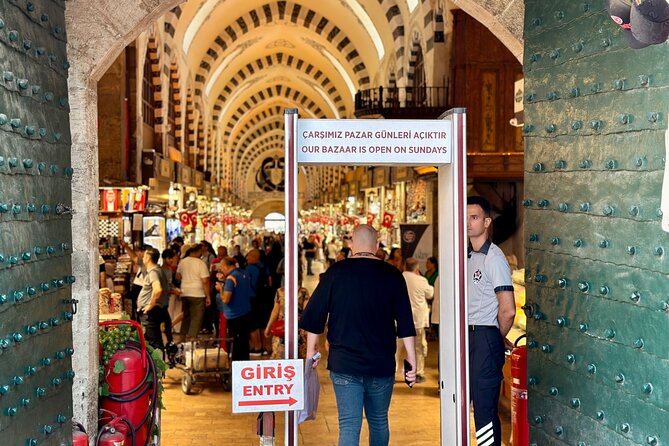
The final stop is the Misır Çarşısı, or Spice Market, founded in 1660. Its stalls display spices, Turkish delight, dried herbs, honey, nuts, dried fruit, and other foods. Some vendors also sell caviar and assorted gifts.
Your guide may explain how to approach shopping and bargaining without rushing into a purchase. This advice is useful because the market is designed to tempt you with color, scent, and samples. I would save space in your day and luggage for this area, since the tour ends here and you are free to continue browsing.
The market is also a practical ending point. From Eminönü, you can continue exploring on foot or use nearby public transportation. Since there is no hotel drop-off, check your route back before the tour begins.
The guides are the real value
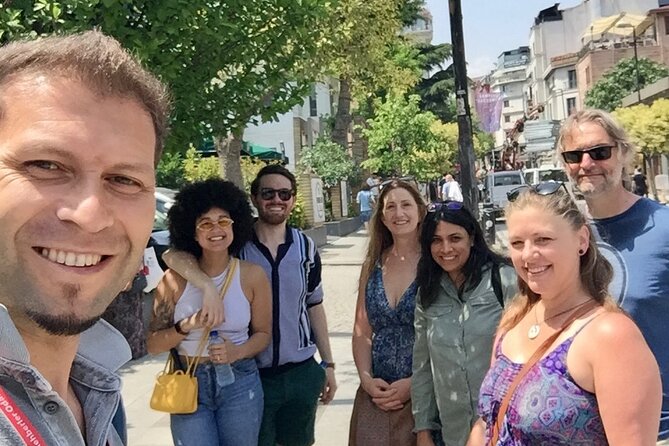
The buildings are the reason to book, but the guide determines how much you take away. Erol has been praised for an engaging manner, strong command of the city’s past, and patience when explaining each sight. Gamze combines warmth with clear English and is willing to adapt the walk to a group’s interests.
Tolga has helped participants find their way back to their hotels, and Hüseyin has been especially effective at explaining Istanbul’s layered past while keeping the pace comfortable. Alp is noted for clear English and genuine enthusiasm for the subject. Abdullah has taken care with shade, breaks, and helping people navigate the tram.
That range of guide styles is a strength, but it also means your experience can vary. One participant found a guide too quiet to hear easily, while others described guides as lively, personable, and highly informed. If you have hearing concerns, stay near the front and tell the guide early.
The best guides also answer practical questions. You can ask about Turkish customs, local food, restaurant areas, transport, and how to handle market prices. That turns a three-hour walk into a useful base for the rest of your stay.
What the $72.59 price delivers
At $72.59 per person, the tour is not the cheapest way to walk through Sultanahmet. Its value depends on how much you want interpretation and orientation rather than entry to attractions.
You are paying for an English-speaking professional guide, a small-group format, and a route that links 14 significant stops with quieter lanes and market districts. You are not paying for hotel pickup, drop-off, or general admission. The Basilica Cistern is an extra charge, and access to other interiors should be confirmed rather than assumed.
For a first visit, the price can make sense if you want to understand the city quickly and receive useful advice for later sightseeing. It is less attractive if you already know the Old City well or plan to visit every attraction independently with an audio guide.
The average booking lead time is 36 days, so popular departure times may fill ahead of your visit. Free cancellation is available up to 24 hours before the start time. Poor weather or failure to reach the minimum group size can lead to a new date, another experience, or a full refund.
Who should take this walk
I would recommend it to first-time visitors, people with only a short stay, and families who want a clear introduction before tackling Istanbul alone. One guide kept children aged 10 and 12 interested by turning the city’s past into a story rather than a list of dates.
It also suits people who like markets and street life as much as formal monuments. The secret lanes, craft center, Tahtakale shops, and Spice Market prevent the walk from becoming a straight line between famous buildings.
You should think twice if you dislike walking, need long indoor visits, or want a museum-style tour with guaranteed admission. The route includes a moderate amount of walking, and the 10-minute stops can feel rushed when a site captures your interest.
Wear comfortable shoes, bring water, and keep your schedule flexible around mosque prayer times. Most travelers can participate, but the tour is not a seated sightseeing experience.
Should you book it?
Book this tour if you want a high-value introduction to Istanbul’s Old City, especially at the start of your trip. The strongest reasons are the compact route, small group, excellent guide feedback, secret backstreets, and practical advice that helps with the days that follow.
Do not book it expecting a full visit to Hagia Sophia, Topkapı Palace, or the Basilica Cistern. Think of the experience as a guided orientation with selected access, then return on your own to the places you want to explore in detail. At its best, it gives you a map, a sense of the city’s many eras, and enough local advice to make the rest of Istanbul easier.
FAQ
How long does the tour last?
The tour lasts approximately three hours, although one account describes a duration closer to three and a half hours.
Where does the tour begin?
It begins at Foodie-ist Cafe and Brasserie, Alemdar, Muhterem Efendi Sk. No:13, ground floor, in Fatih, Istanbul.
Where does the tour end?
The tour ends at the Egyptian Bazaar in Eminönü after the Spice Market visit.
Is hotel pickup included?
No. Hotel pickup and drop-off are not included.
Is the tour offered in English?
Yes. The tour includes an English-speaking professional guide.
How large is the group?
The maximum group size is 15 people. A private option is also available, depending on the option selected.
Does the tour enter the Basilica Cistern?
The basic tour does not guarantee entry. The Basilica Cistern requires an additional admission charge.
Does the tour enter the Blue Mosque?
The Blue Mosque may be entered when conditions allow, but prayer times and delays can affect access. Some departures have viewed it only from outside.
Are admission tickets included?
The tour price does not generally include admission to the attractions. Most listed sights are viewed during the walk, and extra charges may apply for entry.
Can I cancel the tour for a full refund?
Yes, if you cancel at least 24 hours before the experience start time. Changes or cancellations made less than 24 hours in advance are not accepted for a refund.
Latest additions around Istanbul
- Istanbul: Hagia Sophia Skip-the-Line Ticket with Live Guide★ 3.7 · 3 reviews
- Ephesus Private Tour From Istanbul including transfers & domestic fights★ 5.0 · 3 reviews
- 6 Days Multi City Turkey Tour★ 5.0 · 3 reviews
- Princess Islands Daily Tour from Istanbul★ 5.0 · 3 reviews
- Premium Line : Private Istanbul Tour : All Inclusive Package★ 4.3 · 3 reviews
- Private Istanbul Combo Tour – Classic Old City and Bosphorus Cruise★ 5.0 · 3 reviews
- Private tour: 12-Day Turkish Adventure Package Tour From Istanbul★ 4.5 · 3 reviews
- Istanbul: Hagia Sophia Guided Tour with Optional Ticket★ 3.3 · 3 reviews
City Tours, compared.

Private Turkish Bath, Massage, and Spa in Old City
Read our review →
ISTANBUL BEST: Iconic Landmarks Full Day PRIVATE Guided City Tour
Read our review →
Full Day Istanbul 1, 2 or 3-Day Private City Guided Tour
Read our review →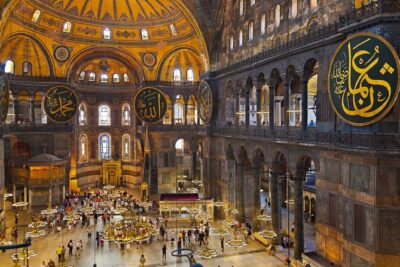
City Highlights Tour w/Hagia Sophia & Blue Mosque
Read our review →
Public, Private or VIP Hammam & Spa in Old City
Read our review →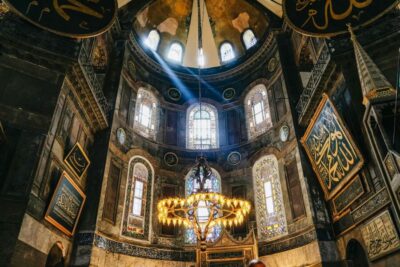
Best of the City 1, 2 or 3-Day Private Guided Tour
Read our review →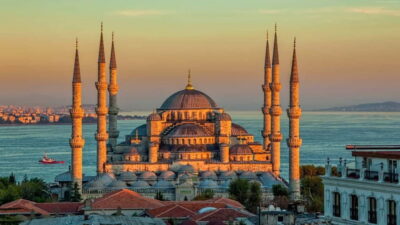
Browse the lists this tour appears in