
Reviewed · ISTANBUL
Istanbul Unveiled: A Quest for the Unique and Unusual Jewels
Istanbul’s most rewarding stories often sit below street level, behind ordinary walls, or under busy roads. This private tour follows that idea through two Byzantine cisterns, old forums, an early Christian church, Ottoman mosques, local food, and a final look at the Valens Aqueduct. It is far more than a greatest-hits walk around Hagia Sophia.
I like the unusual route and the personal attention from guide Serif Yenen, whose past tours have included groups of about 20 as well as smaller private parties. I also like the useful mix of history and daily life: Turkish tea, a lokanta lunch, and a tasting of boza give you more than stones and dates.
The main drawback is the price: $490 per person is a serious outlay for a six to seven-hour outing, especially since transportation is not included. You should also expect a demanding day on foot, with a minimum age of eight and a strong fitness level advised.
In This Review
- Key points at a glance
- Why this route feels different from a standard Istanbul tour
- Little Hagia Sophia starts the day with tea and context
- A private look at the Great Palace ruins
- Two cisterns, two different underground experiences
- The Hippodrome connects imperial spectacle to the modern city
- Constantine’s Column and the Forum of Theodosius
- Ottoman buildings layered over Byzantine foundations
- Boza gives the route a local taste
- Ending beneath the Valens Aqueduct
- Is $490 per person a fair price?
- Who should book this walking tour?
- Final call: book it for access and a strong guide
- FAQ
- How long does the Istanbul Unveiled tour last?
- Where does the tour begin?
- Where does the tour end?
- Is transportation included?
- What is included in the price?
- Is this a private tour?
- What are the age and fitness requirements?
Key points at a glance
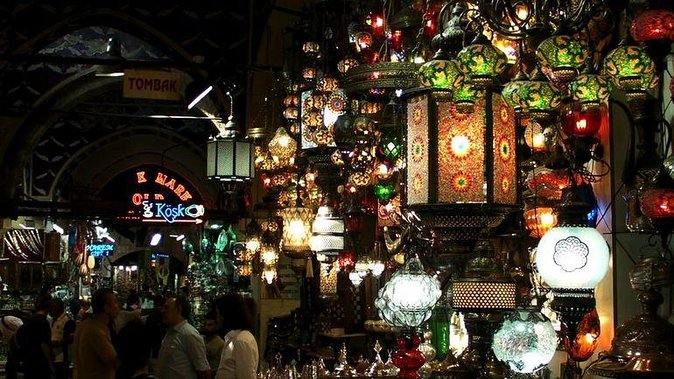
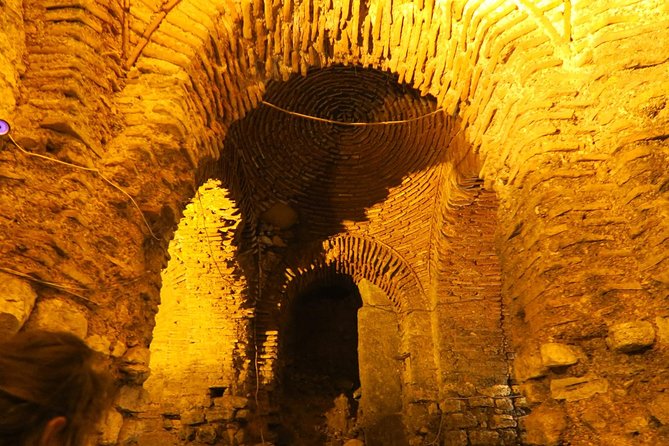
- Two underground cisterns: Visit the private-access Byzantine cistern near Nakkas Oriental Rugs & Textiles, then the larger Binbirdirek Cistern.
- A private route through Old Istanbul: Special permission opens access to the ruins of the Byzantine Great Palace and a secluded cistern.
- History beyond the headline sights: See Little Hagia Sophia, the Hippodrome, Constantine’s Column, the Forum of Theodosius, and the Valens Aqueduct.
- Local tastes included: Sip Turkish tea, eat lunch at a Turkish lokanta, and sample traditional boza.
- A guide with strong personal praise: Serif Yenen is repeatedly described as warm, flexible, attentive, and well informed across Turkish history, food, and local customs.
- A full walking day: The tour begins at Little Hagia Sophia and finishes by the Valens Aqueduct, with no private transportation provided.
Why this route feels different from a standard Istanbul tour
Many first visits to Istanbul focus on Hagia Sophia, the Blue Mosque, Topkapı Palace, and the Basilica Cistern. Those places deserve their fame, but this route asks a more interesting question: what else is here?
You begin at Little Hagia Sophia, then move through traces of imperial Constantinople, underground waterworks, Ottoman religious buildings, old Roman forums, and a Roman aqueduct. The result is a long chronological walk through the city. You are not simply collecting monuments. You are seeing how one district changed from Roman capital to Byzantine city to Ottoman center and modern neighborhood.
That range is the tour’s strongest feature. The sites are close enough to connect on foot, yet different enough to keep the day moving. One stop may be a mosque garden with tea. The next may be a private ruin beneath a hotel. Later, you are standing beside an ancient column or tasting a fermented drink in a traditional shop.
The format is private, so only your party participates. That matters here. Some stops need explanation to make sense, and the route includes places that are not self-explanatory from the pavement. A good guide can turn a broken wall, underground chamber, or half-buried column into part of a larger story.
Other Istanbul days travellers pair with this one:
- Istanbul: Bosphorus Dinner Cruise & Show with Private Table
★ 4.8 · 44,561 reviews - Istanbul: Daytime or Sunset Sightseeing Cruise & Audio Guide
★ 4.8 · 14,430 reviews - Istanbul: Bosphorus Dinner Cruise with Turkish Night Show
★ 4.8 · 10,127 reviews
Little Hagia Sophia starts the day with tea and context
The meeting point is the garden cafe at Küçük Ayasofya Mosque, commonly called Little Hagia Sophia. The tour begins with Turkish tea, giving you a calm place to get oriented before the walking starts.
This is a smart opening. Istanbul can feel like a wall of names, dynasties, empires, and competing claims. An introduction to Turkey’s geography and history helps you place the old capital in context before the monuments begin.
The building was constructed under Emperor Justinian before the better-known Hagia Sophia. Its Byzantine design makes it an important early stop, yet it usually receives less attention than its famous neighbor. You get a more intimate look at the architectural and religious changes that shaped the city.
Plan on about an hour here. Admission is free, but the tea is included. If you want a gentle start, this is one of the best parts of the schedule. If you hoped to begin with a quick photo and rush onward, the hour may feel long, but the guide’s introduction is meant to set up the rest of the day.
A private look at the Great Palace ruins
At the Eresin Hotel Sultanahmet, you visit ruins connected to the Byzantine Great Palace. The stop lasts about 30 minutes and requires special permission, which is one reason this itinerary costs more than a normal self-guided walk.
The appeal is access. From the street, Istanbul’s imperial past can be hard to read. A private location gives you a chance to see remains in a setting that most casual sightseeing routes do not reach.
The description promises a surprise visit, so the exact nature of the experience may depend on access arrangements. That is worth keeping in mind. This is not a full archaeological complex with a large display system. Its value comes from the setting and the guide’s ability to explain what you are seeing.
Two cisterns, two different underground experiences
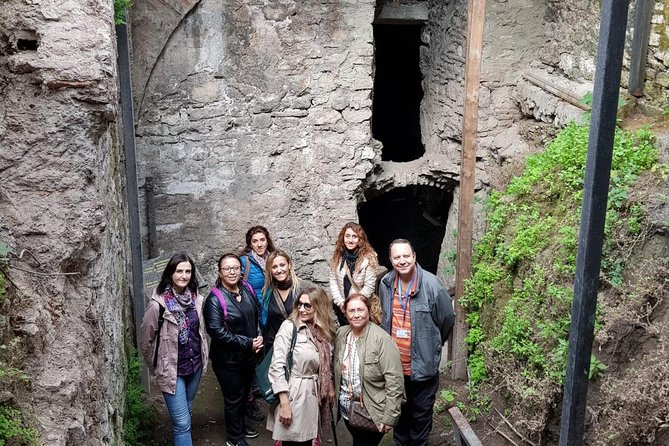
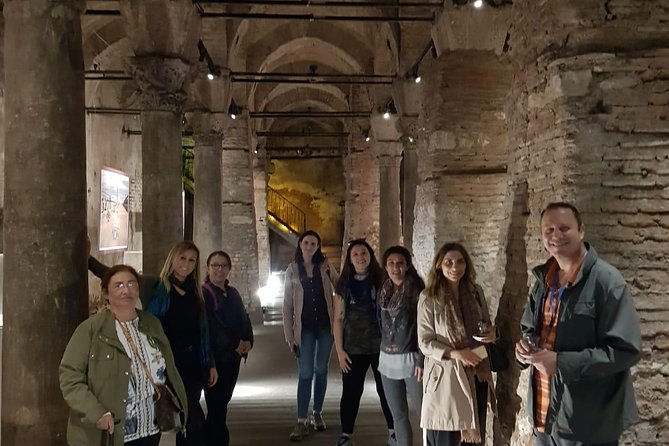
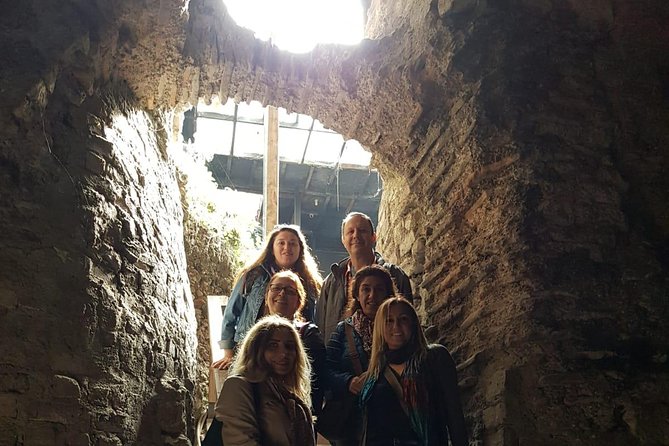
The tour’s underground focus is its clearest selling point. First comes a Byzantine cistern accessed through a special arrangement near Nakkas Oriental Rugs & Textiles. This secluded site also includes an exhibition about the ancient Hippodrome.
You spend roughly 45 minutes here. Expect an enclosed historic space rather than a broad open-air ruin. Anyone who likes old engineering, forgotten corners, and the practical side of city life should enjoy this stop. Cisterns were not built for beauty alone. They helped supply water to a huge imperial city, and their columns and vaulted spaces show the scale of that effort.
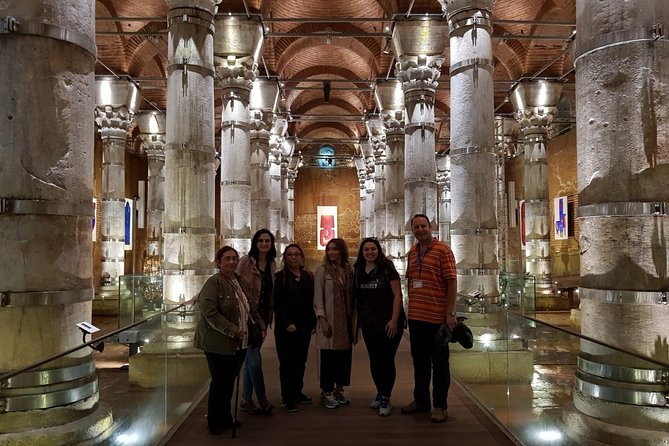
Later, you visit Binbirdirek Cistern, also called the Cistern of Philoxenos. It is described as Istanbul’s second-largest cistern and is often overlooked beside the famous Basilica Cistern. That comparison is useful. You are not being sent to the city’s best-known underground attraction. You are being shown a quieter alternative with its own atmosphere and historical importance.
The Binbirdirek stop lasts about 30 minutes. Mark Twain is noted among its past visitors, having written about its secretive appearance. The important point for you is simple: this is a chance to see a different side of Istanbul’s water system without making the Basilica Cistern the center of the day.
The two cistern visits add real value, but they also make comfortable footwear essential. The tour advises a strong physical fitness level, and you should take that seriously. The route includes several hours of walking, stairs or uneven surfaces may be present at historic sites, and underground spaces can feel tiring after a full morning.
Two continents, plenty of other ways to spend a day:
- Best of Istanbul 1, 2 or 3-Day Private Guided Istanbul Tour
★ 5.0 · 8,922 reviews - Istanbul: Basilica Cistern Fast-Track Entry and Audio Guide
★ 4.6 · 7,521 reviews - Istanbul: Hagia Sophia Skip-the-Line Ticket & Museum Option
★ 3.7 · 4,958 reviews - Istanbul: Hodjapasha Whirling Dervishes Show & Exhibition
★ 4.4 · 4,790 reviews
The Hippodrome connects imperial spectacle to the modern city
The Hippodrome stop lasts about 20 minutes. In ancient Constantinople, this was the center of public entertainment and political life, famous for chariot races and large gatherings.
Today, the original arena is not intact in the way many people expect. You are reading the shape and surviving monuments of the old space rather than entering a preserved stadium. That makes a guide especially useful. Without explanation, the surrounding streets can look like an ordinary city square. With context, you can picture emperors, charioteers, rival factions, and thousands of spectators occupying the same ground.
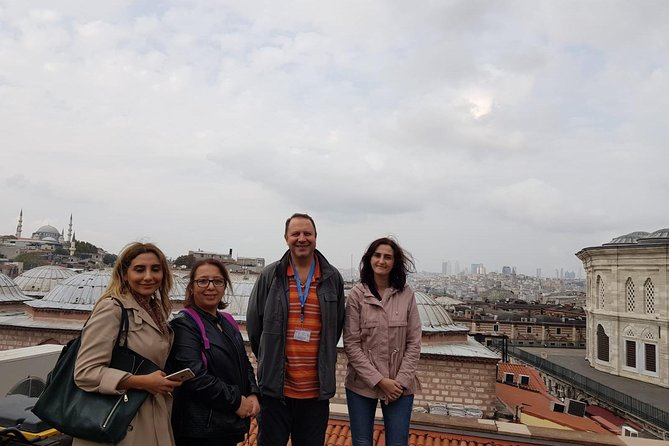
The nearby Seven Hills Hotel provides a 20-minute panoramic terrace stop. This is a practical pause in a walking-heavy schedule and a chance to see Istanbul from above. The views are intended to be memorable, but the exact sightlines can vary with weather and access. Treat it as a short visual break, not a long rooftop stay.
Constantine’s Column and the Forum of Theodosius
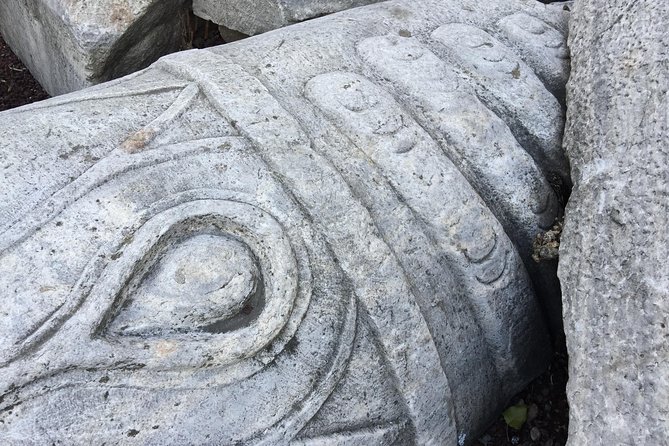
At Çemberlitaş, you see the Column of Constantine, the surviving monument from the Forum of Constantine. The column dates to the time when Emperor Constantine established the new Roman capital at Istanbul, roughly 1,700 years ago.
The stop lasts around 20 minutes and is outside. That is typical of much of Istanbul’s Roman past. You often see one column, one arch, or a piece of masonry surrounded by modern traffic. The challenge is imagining the huge public spaces that once connected these monuments.
Lunch follows at a nearby lokanta, a Turkish eatery known for quick service and daily cooked food. Lunch is included, and this is one of the tour’s most useful practical choices. A lokanta gives you a taste of ordinary Turkish dining rather than a meal designed only for sightseeing groups.
The menu is described as offering a broad selection of traditional dishes for local shopkeepers. The exact dishes are not specified, so you should not expect a fixed list in advance. If you have dietary needs, mention them when booking or before lunch. One past guest with a vegetarian diet received careful help selecting food, which suggests that Serif pays attention to individual needs.
After lunch, the route reaches the Forum of Theodosius. The visit is short, about 15 minutes, because little of the original public square remains. In its prime, the forum had arcades, shops, markets, and the Column of Theodosius, decorated with reliefs celebrating imperial victories.
This stop rewards imagination more than photography. You are standing in a place where processions, trade, politics, and daily errands once overlapped. It also shows the limits of archaeological sightseeing in Istanbul. Some major Roman sites survive only in fragments, and the guide’s explanation is what gives those fragments shape.
Ottoman buildings layered over Byzantine foundations
The Kalenderhane Mosque is visited from the outside for about 15 minutes. The building began as the Byzantine Church of Theotokos Kyriotissa and later became a mosque, giving you a compact example of Istanbul’s changing religious and political identity.
The exterior shows Byzantine and Islamic influences, including domes and brickwork. Since the visit is outside only, this is a brief architectural stop rather than a full mosque visit. That limitation should be clear if interior design is a major reason you book.
The Şehzade Mosque offers more time, about 30 minutes. Designed by Mimar Sinan and commissioned by Sultan Süleyman the Magnificent in memory of his son, it represents the confidence and balance of 16th-century Ottoman architecture.
You can expect elegant domes and detailed calligraphy, along with a quieter atmosphere than the headline mosques may offer. Admission is free. Dress and conduct should respect the religious setting, though specific clothing rules are not supplied in the tour details.
Boza gives the route a local taste
At Vefa Bozacısı, you sample boza, a fermented Turkish drink with a sweet and tangy flavor and a thick texture. The tasting lasts about 15 minutes.
This is a small stop, but it helps break up a day built around monuments. Boza is tied to Turkish food traditions and everyday life, so it gives you something sensory and distinctly local. You may enjoy it immediately, or you may need a sip or two to decide. That is part of the fun.
Tea, lunch, and boza are included in the price, along with entrance fees and an Istanbul map. These inclusions reduce the number of small decisions you need to make during a long day. They also support the tour’s balance between history and local culture.
Ending beneath the Valens Aqueduct
The final stop is the Valens Aqueduct, also called Bozdoğan Kemeri. The aqueduct was built in the fourth century to carry water into Constantinople and cross the city’s valley between its hills.
The visit lasts about 10 minutes, and the tour ends here. This is a fitting finish because the aqueduct brings together several themes from the day: Roman engineering, the needs of a growing capital, and the way ancient structures remain part of modern Istanbul.
The end point is not the starting point, and hotel drop-off is listed for centrally located accommodations. Private transportation is not included, so confirm exactly how the drop-off works for your address. You may need to arrange your own ride from the aqueduct if your accommodation is outside the central area.
Is $490 per person a fair price?
At $490 per person, this is not a budget walking tour. The price makes the most sense if you value a private guide, special access, admissions, lunch, tea, boza, and a route built around less familiar sites.
The cost is harder to justify if you mainly want the classic monuments or prefer to explore at your own pace. You could visit several public landmarks for much less, though you would not receive the same connected explanation or private access.
The strongest value comes from the guide. Serif Yenen is repeatedly praised for his command of Turkish history, his warmth, his humor, and his ability to adjust plans. Past groups have also valued his care with food choices and his ability to arrange access to places other guides may not reach.
I would book this for a special day in Istanbul, especially if you have already seen the main sights or want a more personal introduction to the city. For a family or small group, the private format may make the cost easier to share. For one person, the price is much harder to defend.
Who should book this walking tour?
You are a good match if you:
- Like Byzantine and Ottoman history more than simple sightseeing
- Want underground sites beyond the Basilica Cistern
- Prefer a private English-language guide
- Enjoy mixing monuments with lunch, tea, and local food
- Can walk for most of a six to seven-hour day
- Are comfortable paying more for access and personal attention
You may want another option if you need private transportation, have limited mobility, dislike enclosed underground spaces, or want a slower day with fewer stops. The itinerary is full, and some visits are short. You will see a lot, but you will not linger everywhere.
The minimum booking is two people, and the minimum age is eight. Confirmation is subject to availability and is sent within 48 hours. Free cancellation is available up to 24 hours before the start time, while later cancellations and changes are not refunded or accepted.
Final call: book it for access and a strong guide
Book this tour if your idea of Istanbul includes old waterworks, half-visible Roman forums, layered religious buildings, local food, and stories that connect the pieces. Serif Yenen’s personal approach is the main reason to choose it, and the special-access cisterns and Great Palace ruins give the day a clear purpose.
Skip it if $490 feels too high or if you need transportation built in. For the right audience, this is a thoughtful, history-led way to see Old Istanbul beyond the standard checklist. For a first-time visitor with limited time and a tight budget, public landmarks may offer better value.
FAQ
How long does the Istanbul Unveiled tour last?
The tour lasts approximately six to seven hours.
Where does the tour begin?
It begins at Little Hagia Sophia Mosque, Küçük Ayasofya Camii Sokagi No:20, in Istanbul’s Fatih district.
Where does the tour end?
The tour ends near the Valens Aqueduct on the European side of Istanbul.
Is transportation included?
No. Private transportation is not included. Hotel drop-off is offered for centrally located accommodations.
What is included in the price?
Entrance costs, a professional guide, coffee or tea, an Istanbul map, boza tasting, and lunch are included.
Is this a private tour?
Yes. Only your group participates in the activity.
What are the age and fitness requirements?
The minimum age is eight, and participants should have a strong physical fitness level. Comfortable walking shoes are recommended.
Latest additions around Istanbul
- Istanbul: Hagia Sophia Skip-the-Line Ticket with Live Guide★ 3.7 · 3 reviews
- Ephesus Private Tour From Istanbul including transfers & domestic fights★ 5.0 · 3 reviews
- Princess Islands Daily Tour from Istanbul★ 5.0 · 3 reviews
- 6 Days Multi City Turkey Tour★ 5.0 · 3 reviews
- Premium Line : Private Istanbul Tour : All Inclusive Package★ 4.3 · 3 reviews
- Private Istanbul Combo Tour – Classic Old City and Bosphorus Cruise★ 5.0 · 3 reviews
- Private tour: 12-Day Turkish Adventure Package Tour From Istanbul★ 4.5 · 3 reviews
- Istanbul: Hagia Sophia Guided Tour with Optional Ticket★ 3.3 · 3 reviews