
Reviewed · HAGIA SOPHIA TOURS
Istanbul: Whirling Dervish Ceremony next to Hagia Sophia
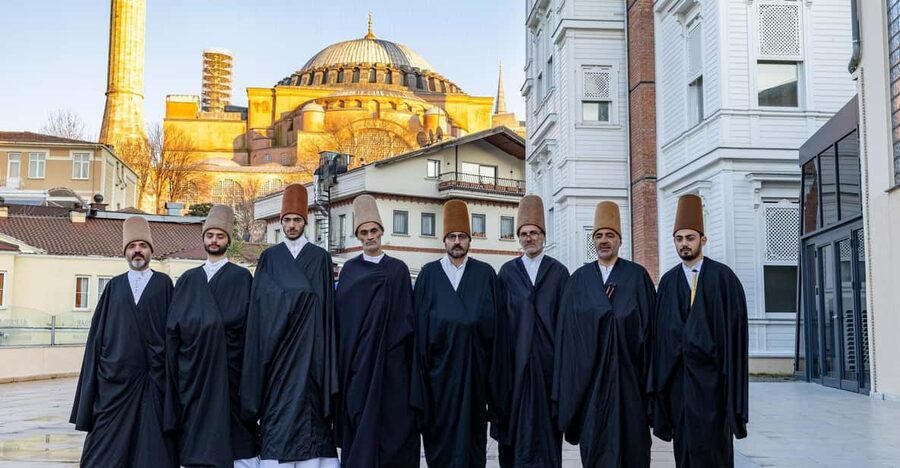
The striking thing here is that you are not watching a flashy stage act. You are sitting quietly with local Sufi followers as they perform the Sema, a prayer ceremony built around music, recitation, and measured turning. The setting is a handsome wooden house beside Hagia Sophia, and the 55-minute program gives you a calm cultural pause in the middle of Istanbul’s busiest historic district.
I like the clear introduction before the ritual, which explains the gestures, music, and ideas behind the ceremony. I also like the excellent value: for $17, you get live traditional music, an English explanation, a multilingual digital guide, water, and tea or sherbet. The main consideration is that this is slow, quiet, and religious. If you want a lively folk show, you may find the pace too restrained, and the spoken introduction can be hard to follow if the host speaks quickly.
In This Review
- Key points to know before you book
- Why the Sema feels different from an Istanbul show
- Reaching the white wooden house beside Hagia Sophia
- What happens during the 55-minute program
- The music, silence, and visual rhythm
- Understanding the robes, gestures, and turning
- The welcome drink and the value of $17
- Who will appreciate this ceremony most
- Practical advice for a respectful visit
- Should you book the Whirling Dervish Ceremony?
- FAQ
- Where does the Whirling Dervish Ceremony take place?
- How long does the ceremony last?
- What is included in the ticket?
- Is the ceremony performed with live music?
- Is the explanation available in English?
- Can I take photos or videos?
- Is the venue wheelchair accessible?
- Can I cancel my booking?
Key points to know before you book
- The Sema is a religious ritual, not a theatrical dance show, so silence and respectful behavior matter.
- Live music uses traditional strings, drums, and flutes, with pieces composed from the 1400s through the early 1800s.
- The venue is a traditional wooden house beside Hagia Sophia, reached from the meeting point next to the Basilica Cistern.
- An English-speaking host explains the ceremony before and after, while a digital guide is available in seven languages.
- Your $17 ticket includes tea or sherbet and water, making this one of the lower-cost cultural evenings near Sultanahmet.
- The program lasts 55 minutes, with seats designed so you can see the ceremony from every place in the hall.
Why the Sema feels different from an Istanbul show
Istanbul offers plenty of cultural performances made for a quick holiday evening. This experience asks for something else from you: attention. The dervishes enter quietly, the musicians establish the mood, and the ritual gathers force through repetition rather than spectacle.
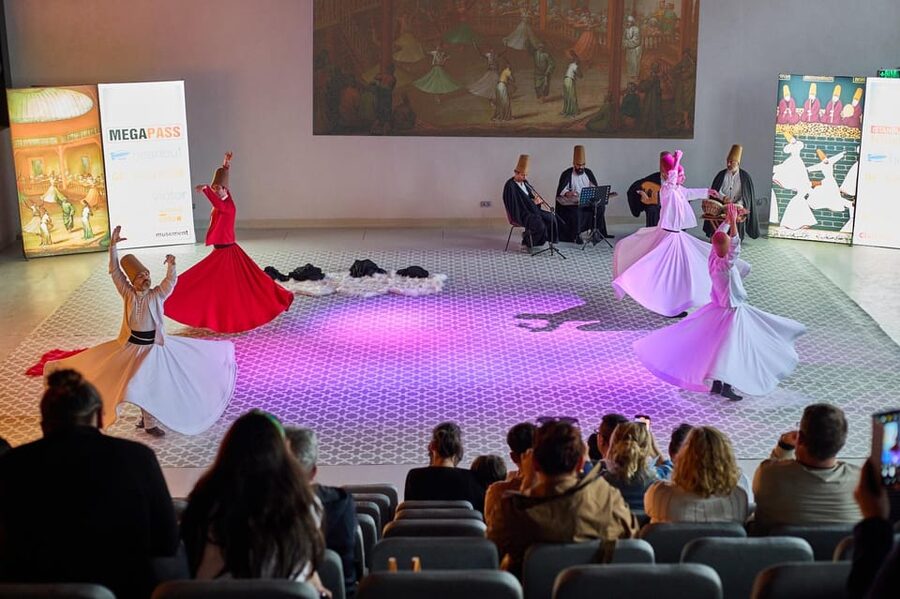
The turning is the part most people expect, but it makes more sense when you understand the symbolism. One hand reaches upward and the other points toward the earth, representing the receiving of divine grace and the sharing of it with the world. The movement is linked to letting go of the ego and moving toward divine love and unity.
That context matters. Without it, you may simply see people spinning in long white robes. With it, the ceremony becomes a sequence of gestures, music, prayer, and concentration. I recommend giving yourself permission not to analyze every movement. Sit still, listen, and let the rhythm develop.
The Sema is recognized by UNESCO as Intangible Cultural Heritage. That does not mean every ceremony is identical, nor does it make the event automatically meaningful for everyone. It does explain why the ritual deserves more respect than the word performance might suggest.
More Hagia Sophia visits:
- Istanbul: Hagia Sophia Skip-the-Line Ticket & Museum Option
★ 3.7 · 4,958 reviews - Istanbul: Blue Mosque & Hagia Sophia Guided Tour w/ Tickets
★ 4.8 · 3,600 reviews - Istanbul: Hagia Sophia Skip-the-Line Ticket and Audio Guide
★ 4.3 · 2,246 reviews
Reaching the white wooden house beside Hagia Sophia
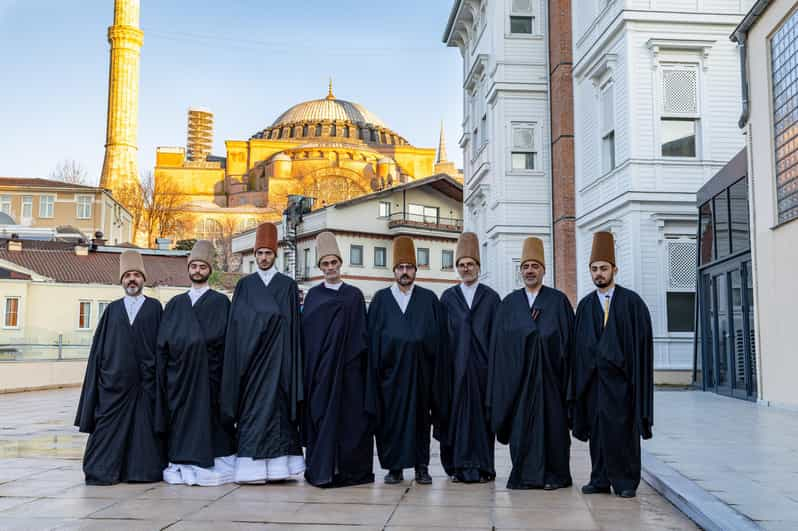
The meeting point is next to the entrance of the Basilica Cistern. Look for the reception desk at the gate of a large white wooden house. The gate opens 30 minutes before the ceremony, so arriving early gives you time to locate the building and settle down without rushing.
This part of Sultanahmet is crowded and full of similar-looking historic structures. One practical warning: a map link has led some people to the wrong side of the road. Check the address carefully and use the Basilica Cistern as your main landmark rather than relying only on the pin.
The venue itself is part of the appeal. It is a traditional house used as an arts center, not a generic modern theater. That setting helps the ceremony feel connected to Istanbul’s older cultural life. The hall is arranged so the seats have a good view, and several people have found the chairs comfortable.
The space can fill up, especially during popular periods. You may want to arrive before the gate opens fully if choosing a particular seat matters to you. The experience is wheelchair accessible, although access may require staff assistance in practice. If you use a wheelchair, allow extra time and speak with the host on arrival.
What happens during the 55-minute program
The evening begins with an explanation from an English-speaking host. The host introduces Sufism, the background of the dervishes, and the purpose of the Sema. The presentation is short, but it gives you the basic map you need before the ritual starts.
At the end, there may be another explanation and a chance to ask questions. The host named Kasl has been especially helpful with questions and with assisting a wheelchair user. The quality of the introduction is important here, and it is one of the strongest parts of the experience.
You also receive access to a smart audio guide through a QR code. It is available in English, German, French, Italian, Russian, Spanish, and Arabic. This is useful if you want more background than the spoken introduction provides, though you may prefer to read it before the ceremony rather than checking your phone during it.
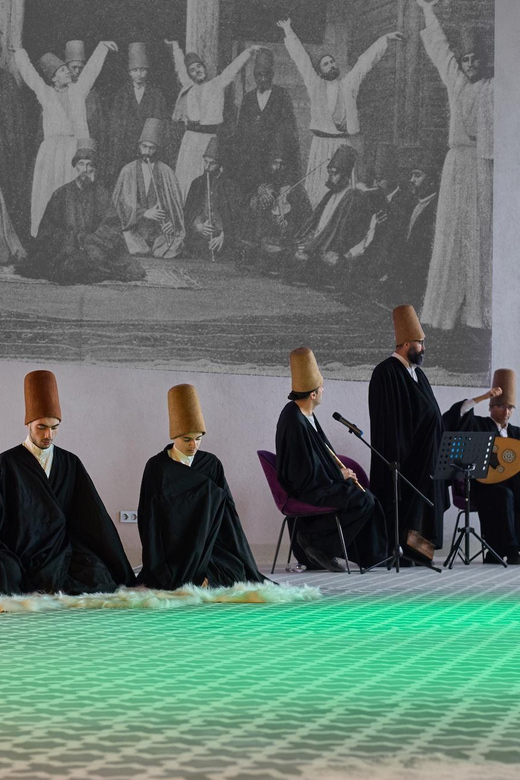
The musicians begin with traditional instrumental music. Strings, drums, and flutes shape the sound, with the ney flute carrying the airy tone often linked with Sufi music. The pieces date from the 15th century through the early 19th century, so the musical program connects the ceremony to several centuries of Ottoman and Sufi artistic practice.
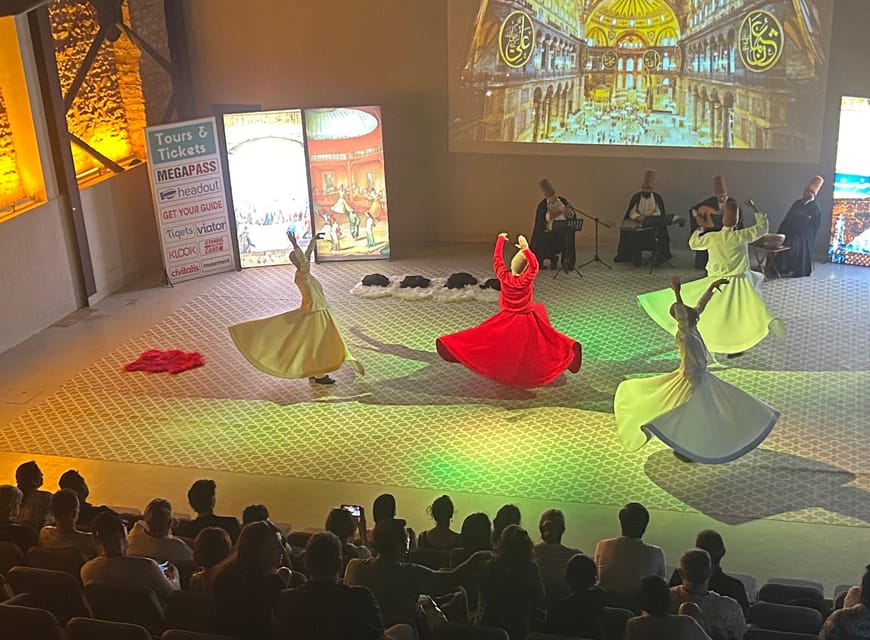
As the music settles, the prayers begin and the dervishes enter. Their movements start with ceremony and restraint, then become more continuous as the music develops. The turning is not presented as a stunt or test of balance. It is part of a prayerful sequence in which posture, clothing, music, and movement carry meaning.
The ceremony may include four dervishes and a traditional music ensemble, though the exact number of people involved can vary. One account described eight people taking part overall. Do not expect a large cast or constant activity. The power of the ritual comes from its small scale and quiet focus.
The program is brief enough to fit easily into an evening near Hagia Sophia. Some people feel it ends too soon, especially once they have adjusted to the slow pace. Others will appreciate the 55-minute limit, particularly if this is their first experience with Sufi ceremony.
The music, silence, and visual rhythm
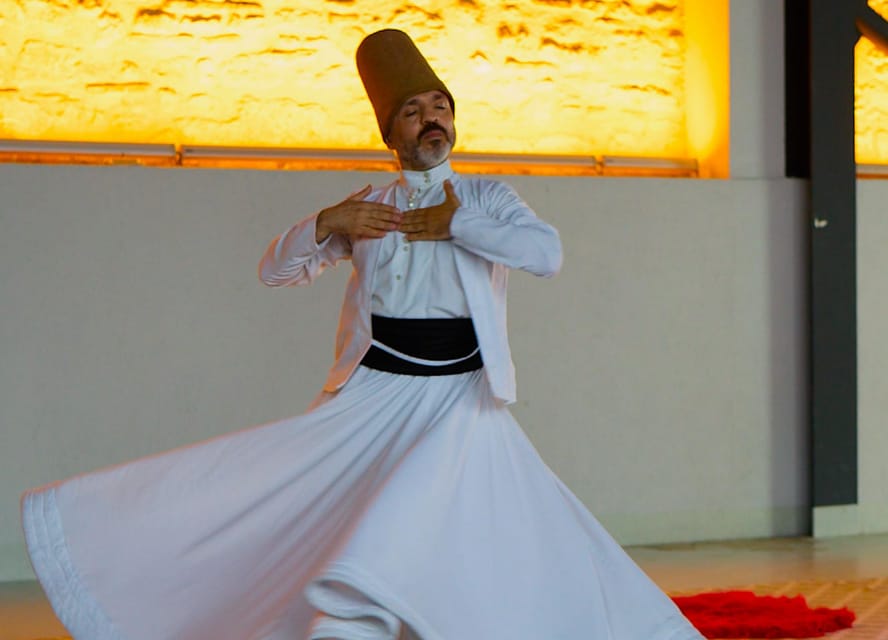
The music deserves more attention than it usually gets. If you arrive expecting the ceremony to be carried only by the turning, you may be surprised by how much the musicians shape the experience. The sound begins as an introduction, then becomes the thread that holds the ritual together.
The room is kept quiet. You are asked not to make noise, and you should use the restroom before or after the ceremony. This is not simply a rule for keeping order. Talking, phone alerts, and constant movement would break the concentration that makes the ritual work.
You may be allowed to take photos and videos, but I would keep your phone away for most of the ceremony. A screen pulls your eyes from the musicians and dervishes, and the images rarely convey the stillness of the room. Photography can also be difficult because illuminated panels on either side of the hall may create harsh reflections.
There is also some visual material in the background. Painted or moving imagery can add atmosphere, but it may not suit every taste. Some people find it distracting or out of place beside the traditional ritual. If your attention shifts between the projected material and the ceremony, focus on the musicians and the dervishes instead.
More whirling dervish ceremonies:
- Istanbul: Hodjapasha Whirling Dervishes Show & Exhibition
★ 4.4 · 4,790 reviews - Istanbul: Whirling Dervishes Ceremony and Mevlevi Sema
★ 4.3 · 1,694 reviews - Istanbul Hodjapasha Whirling Dervishes Show & Exhibition
★ 4.0 · 503 reviews - Istanbul Traditional Turkish Dinner and Dervish Experience
★ 5.0 · 490 reviews
Understanding the robes, gestures, and turning
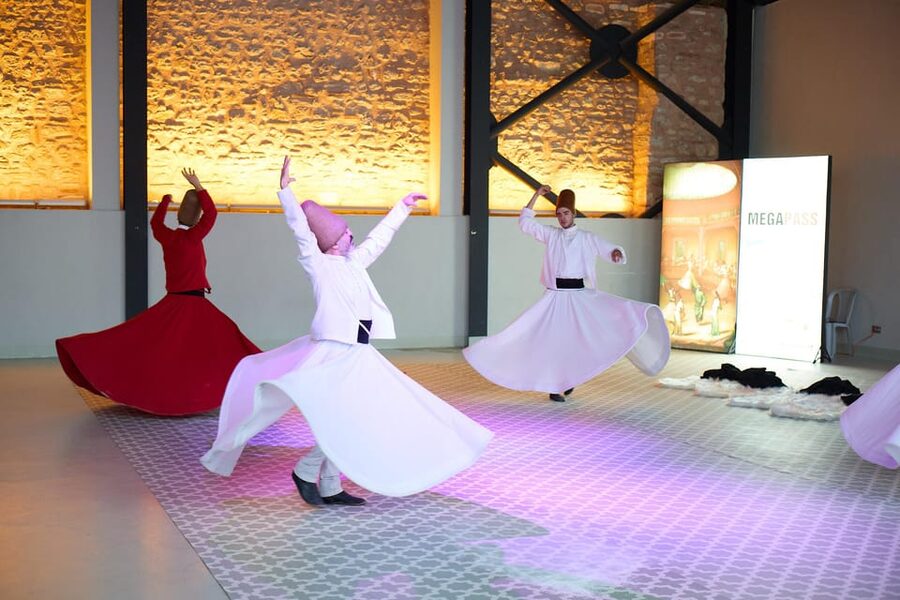
The dervishes’ clothing and movements are not decoration. The ceremony uses visual language to express a spiritual journey. The turning suggests the movement of the universe and the surrender of the individual ego.
The raised and lowered hands are among the clearest symbols. One hand faces upward, receiving from the divine, while the other faces downward, passing that grace into the world. The gesture gives you a simple way to understand the larger idea: spiritual practice is not only about personal experience, but also about how a person relates to others.
The ceremony is associated with Rumi and the Mevlevi Sufi tradition. If you have time before your visit, read a short introduction to Rumi, Shams Tabrizi, the ney flute, and the idea of letting go of the self. You do not need a university course. A little preparation will help you see the ritual as something more than continuous spinning.
The recited words may not be translated into English during the ceremony. This is a real limitation if you want to understand every line. The digital guide offers useful background, but it does not necessarily provide a live translation of each passage being sung or recited.
The welcome drink and the value of $17
At $17 per person, this is a strong-value cultural activity in central Istanbul. You are paying for a 55-minute ceremony, live music, an English explanation before and after, a seven-language digital guide, water, and a local drink.
The tea or sherbet is a small touch, not a full refreshment stop. You choose one drink, usually served as you leave or as part of the welcome. Food and other drinks are not included, so plan to eat separately before or after.
The low price also comes with a reasonable expectation. This is not a long lecture, private concert, or extended guided tour. It is a compact introduction to Sufi culture with a genuine ritual at its center. Compared with more elaborate evening shows in Istanbul, it can be a sensible choice for a first encounter.
Another worthwhile detail is the connection to the arts center. Ticket income helps fund scholarships for students, according to the information shared during the experience. That gives the purchase a useful local purpose, although you should still book because you want to attend the ceremony, not only because of the charitable element.
Who will appreciate this ceremony most
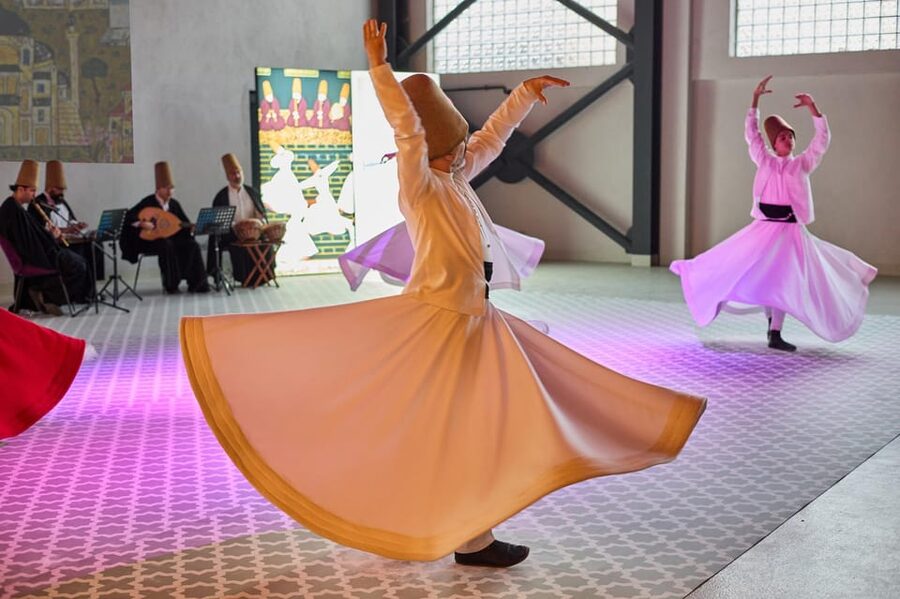
I would choose this experience if you enjoy history, religious traditions, classical music, or quiet cultural activities. It works especially well for a first visit to Istanbul because it gives you a glimpse of a living tradition without requiring a full-day excursion outside the city.
It also suits you if you are tired of crowded sightseeing. After the noise around Hagia Sophia and the Basilica Cistern, the silence inside the wooden house can feel like a welcome change. The ceremony builds slowly and rewards patience.
You may not enjoy it if you need constant explanation, fast action, or a polished entertainment format. The ritual does not aim for applause or dramatic surprises. Some people may find the pacing too slow, and the spoken introduction can be difficult to follow when delivered quickly.
Children under two are not admitted. Older children may attend, but parents should explain that this is a religious ceremony requiring silence. A child who cannot sit quietly for nearly an hour may have a hard time, even though the program is shorter than many concerts.
Practical advice for a respectful visit
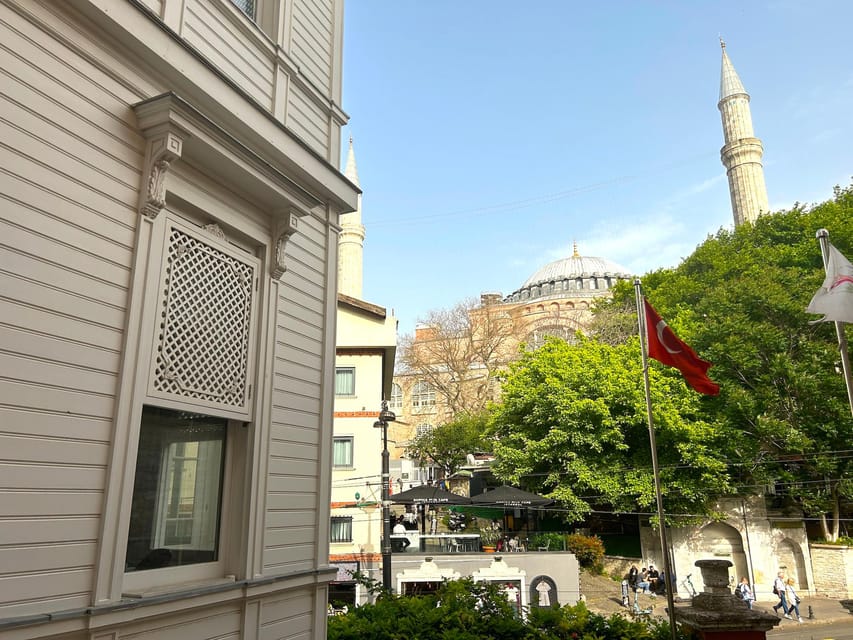
Arrive early enough to find the white house and get seated before the ceremony begins. The gate opens 30 minutes ahead, and the Basilica Cistern is the easiest landmark for finding the meeting point.
Use the restroom before entering. The organizers specifically ask you to do this because leaving during the ceremony interrupts the quiet atmosphere.
Read the digital guide before the lights go down. You can also prepare by learning a little about Rumi, Shams Tabrizi, Sufism, and the ney flute. A few basic facts will help you recognize the purpose behind the gestures.
Keep your phone silent and out of sight. Even if photos and videos are permitted, recording the entire ceremony can make you miss the very stillness you came to experience.
Dress and behave as you would for a place of worship. The organizers ask for silence, and respectful conduct is more important than getting the perfect photograph.
If you need wheelchair access, contact the staff at the venue on arrival. The space is advertised as accessible, but assistance may be needed to make the route work comfortably.
Cancellation is free up to 24 hours before the start, and you can reserve now and pay later. Starting times vary, so check the available time when you choose your date.
Should you book the Whirling Dervish Ceremony?
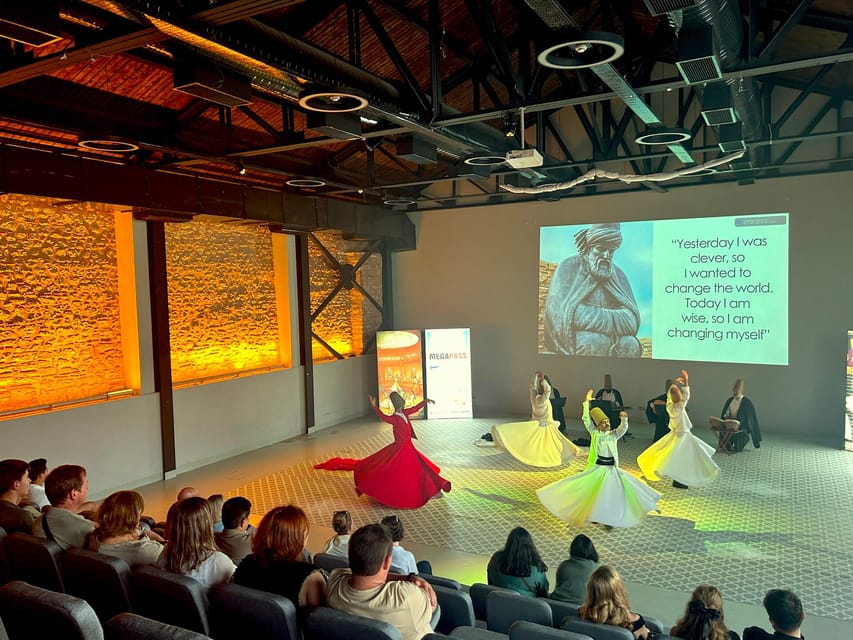
Book it if you want a short, affordable, and serious look at one of Istanbul’s best-known spiritual traditions. The combination of live music, a traditional wooden venue, clear background information, and a local drink makes the $17 price easy to justify.
Go with the right expectations. This is not a loud dance show, and the ceremony is not translated line by line. Give it your full attention, accept the slow pace, and treat it as a religious ritual rather than a tourist attraction.
I would especially recommend it for first-time visitors who want something beyond mosques and museums. I would skip it only if you know that quiet ceremonies, repeated movement, or spiritual music are not your interests. For everyone else, it offers an unusually thoughtful hour beside Hagia Sophia, with enough explanation to help you understand what you are seeing.
FAQ
Where does the Whirling Dervish Ceremony take place?
The ceremony takes place in a traditional white wooden house next to Hagia Sophia in Istanbul. The meeting point is next to the entrance of the Basilica Cistern, at the gate of the house.
How long does the ceremony last?
The full experience lasts 55 minutes. It includes the ceremony and explanations before and after.
What is included in the ticket?
Your ticket includes entrance to the whirling dervish ceremony, live traditional music, an authentic ritual, water, one local drink of tea or sherbet, and a smart audio guide.
Is the ceremony performed with live music?
Yes. Traditional musicians accompany the ceremony with instruments including strings, drums, and flutes. The musical pieces date from the 1400s through the early 1800s.
Is the explanation available in English?
Yes. The live host speaks English. The digital information guide is also available in English, German, French, Italian, Russian, Spanish, and Arabic.
Can I take photos or videos?
Photos and videos are allowed, according to the provided information. You should still keep your phone silent and avoid using it in a way that distracts from the ceremony or other people.
Is the venue wheelchair accessible?
The experience is listed as wheelchair accessible. Staff may need to provide assistance at the venue, so allow extra time when you arrive.
Can I cancel my booking?
Yes. You can cancel up to 24 hours before the ceremony for a full refund. A reserve-now, pay-later option is also available.
Latest additions around Istanbul
- Istanbul: Hagia Sophia Skip-the-Line Ticket with Live Guide★ 3.7 · 3 reviews
- Ephesus Private Tour From Istanbul including transfers & domestic fights★ 5.0 · 3 reviews
- 6 Days Multi City Turkey Tour★ 5.0 · 3 reviews
- Princess Islands Daily Tour from Istanbul★ 5.0 · 3 reviews
- Premium Line : Private Istanbul Tour : All Inclusive Package★ 4.3 · 3 reviews
- Private Istanbul Combo Tour – Classic Old City and Bosphorus Cruise★ 5.0 · 3 reviews
- Private tour: 12-Day Turkish Adventure Package Tour From Istanbul★ 4.5 · 3 reviews
- Istanbul: Hagia Sophia Guided Tour with Optional Ticket★ 3.3 · 3 reviews
Hagia Sophia Tours, compared.
Hagia Sophia Skip-the-Line Ticket & Museum Option
Read our review →
Blue Mosque & Hagia Sophia Guided Tour w/ Tickets
Read our review →
Hagia Sophia Skip-the-Line Ticket and Audio Guide
Read our review →
Blue Mosque, Hagia Sophia, & Basilica Cistern Tour
Read our review →
Hagia Sophia Skip-the-Line Ticket with Audio Tour
Read our review →
Blue Mosque, Basilica Cistern, & Hagia Sophia Tour
Read our review →
Hagia Sophia Skip-the-Ticket Line & Audio Guide
Read our review →Browse the lists this tour appears in