
Reviewed · WHIRLING DERVISH SHOWS
Istanbul: Whirling Dervishes Ceremony and Mevlevi Sema
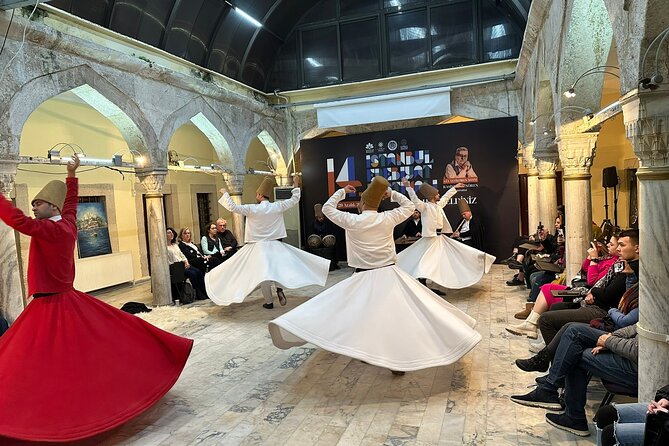
The first thing to understand is that this is not simply a dance show. At Hoca Rüstem Medrese, you watch the Mevlevi Sema, a Sufi ritual shaped by 800 years of tradition. Live music and chanting set the mood before the dervishes enter and begin their measured turning.
I like two things especially: the small, intimate setting in the heart of Istanbul, and the sensible one-hour length. The $23 price also feels fair for a focused cultural experience, particularly if you want more than mosques and palace rooms. The main drawback is the lack of a spoken introduction, so you should read about the ceremony first or use the audio guide.
In This Review
- Key points at a glance
- What the Mevlevi Sema means
- Entering Hoca Rüstem Medrese in Fatih
- Why arriving early matters
- The opening music sets the tone
- Watching the dervishes turn
- Authentic ritual or tourist performance?
- The value of a one-hour, $23 experience
- Who will enjoy this ceremony most?
- How to prepare for a respectful visit
- Should you book the Istanbul Whirling Dervishes Ceremony?
- FAQ
- How long does the Whirling Dervishes Ceremony last?
- Where does the ceremony take place?
- How much does the experience cost?
- What is included in the ticket?
- Is hotel pickup included?
- Is there a live guide?
- What should I bring?
- How early should I arrive?
- Is the ceremony wheelchair accessible?
- Can I cancel for a refund?
Key points at a glance
- A ritual, not a theatrical dance: The whirling represents harmony with creation and a spiritual path toward divine love.
- Music comes first: Expect roughly 20 to 30 minutes of instrumental music, singing, and prayer before the dervishes appear.
- A historic venue: The ceremony takes place at Hoca Rüstem Medrese in the Fatih area, close to Istanbul’s major sights.
- Arrive early for sightlines: The room is small, with limited front seating. A late arrival can leave you behind a pillar or in a crowded row.
- Tea may greet you: Hot tea is served before the ceremony for early arrivals, a welcome touch on a cool evening.
- Bring your own guide tools: The English audio guide works through your smartphone, so bring headphones and a full charge.
What the Mevlevi Sema means
The whirling dervishes belong to the Mevlevi Sufi Order, founded around the teachings of Mevlana Jelaleddin Rumi. The tradition began in the 13th century, although its roots reach back about 800 years. Rumi’s poetry and spiritual ideas later became widely known far beyond Turkey.
The Sema ceremony presents a spiritual journey through music, prayer, movement, and silence. The whirling is not meant as a feat of balance or endurance. It expresses harmony with creation, which the Mevlevi tradition sees in cycles such as day and night, summer and winter, life and death, and the circulation of blood.
That background changes what you see. Without it, the ceremony can look like a graceful performance with unusual costumes. With it, each movement carries a purpose.
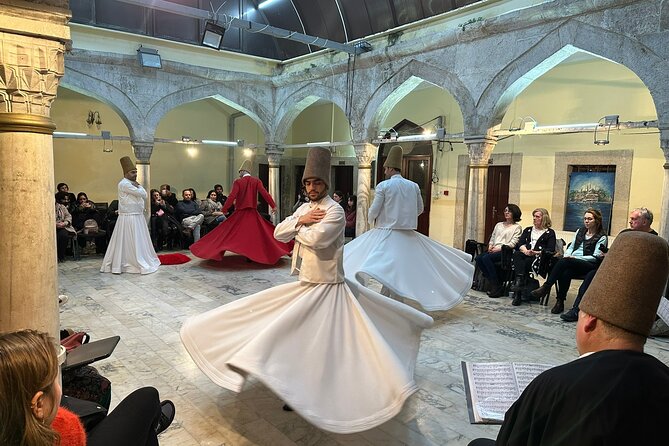
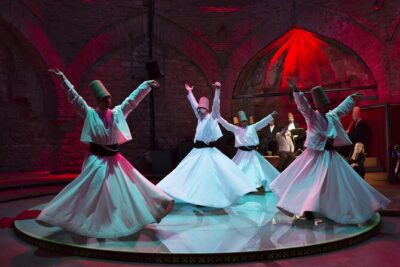
The dervish begins in a black cloak, associated with death or the old self. Underneath is a white robe, linked with rebirth. The tall felt hat represents a tombstone for the ego. During the turning, one hand reaches upward while the other points downward, symbolizing the receiving and sharing of divine grace.
You do not need to understand every theological detail to appreciate the ceremony. But a few minutes of reading before you go will help you watch with greater respect and attention.
More whirling dervish ceremonies:
- Istanbul: Hodjapasha Whirling Dervishes Show & Exhibition
★ 4.4 · 4,790 reviews - Istanbul: Whirling Dervish Ceremony next to Hagia Sophia
★ 4.5 · 906 reviews - Istanbul Hodjapasha Whirling Dervishes Show & Exhibition
★ 4.0 · 503 reviews
Entering Hoca Rüstem Medrese in Fatih
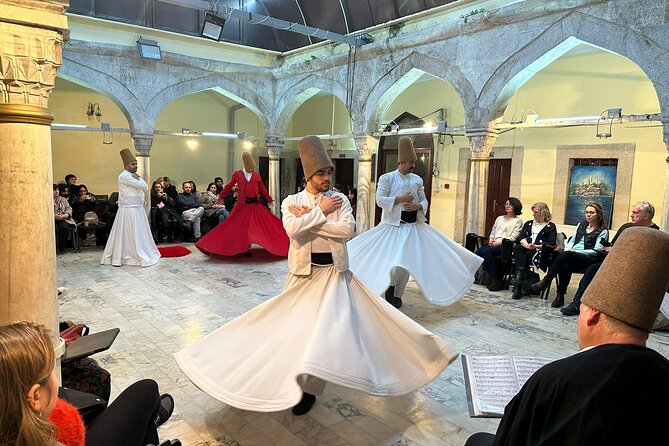
The venue is one of the strongest parts of this experience. Hoca Rüstem Medrese sits in central Istanbul, in the Fatih area near the main historic attractions. The old setting suits a ceremony rooted in religious study and monastic life far better than a modern theater would.
The room is small and intimate. That gives you a clear sense of the musicians and dervishes, but it also creates practical limits. Seating is not spread across a large auditorium, and pillars or crowded rows can affect your view.
The meeting point is generally easy to find once you are close, but the lanes of Fatih can confuse you, especially after dark. Allow extra time. The stated arrival requirement is 15 minutes before the start, yet I would arrive 30 to 40 minutes early if you care about seating.
Early arrivals may receive hot tea while waiting. It is a simple touch, but it makes the experience feel calmer and more welcoming. It also gives you time to settle in rather than rushing through the door just before the music begins.
Why arriving early matters
This is one of those activities where timing affects the quality of the experience. The ceremony lasts only an hour, and the room has limited seating. Arriving at the minimum 15-minute mark may get you inside, but it may not get you the view you want.
For the best chance of a front-row place, come well before the start. The front seats provide a close look at the dervishes’ hands, robes, and footwork. From farther back, you may gain a better view of the full circular movement, but pillars and other people can block parts of the ceremony.
Photography also becomes easier if you think ahead. Some lighting panels at the sides of the hall can distract the eye or affect photographs. More important, remember that this is a religious ceremony. Keep your phone quiet, avoid moving around once the ritual begins, and do not treat the room like a stage show.
Applause can feel natural at the end of a performance, but it may not suit the devotional character of the Sema. Watch the room and follow the tone set by the organizers.
The opening music sets the tone
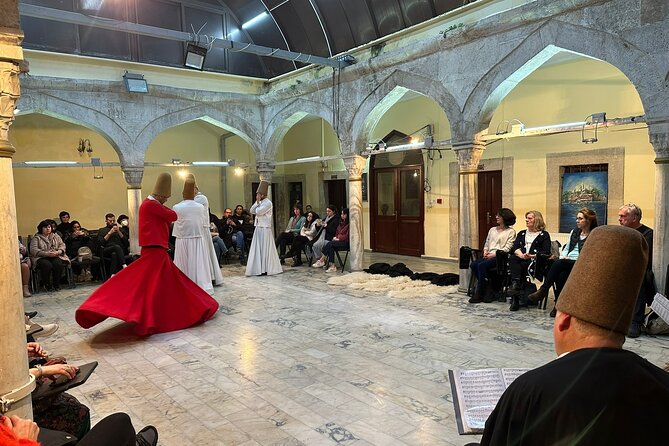
The first part usually belongs to the musicians. Plan on about 20 to 30 minutes of music, singing, and chanting before the whirling begins. The sound is not background entertainment. It prepares the room and gives the ceremony its inward, reflective quality.
The musical ensemble includes traditional instruments and vocal prayer. The exact repertoire can vary, but the opening creates a slow shift away from the noise of Istanbul outside. You sit in a historic room, listen to the musicians, and wait for the dervishes to enter.
This portion may test your patience if you came expecting immediate action. I think it is important to let it work on its own terms. If you only want to watch the spinning, the opening may feel long. If you want to understand the Sema as a religious ritual, the music is an essential part of the hour.
The performance is conducted in English for the practical side of the visit, and an English audio guide is included on your smartphone. Bring headphones. The audio guide can provide useful context, but it does not replace the quiet atmosphere of the ceremony itself.
Two continents, plenty of other ways to spend a day:
- Istanbul: Bosphorus Dinner Cruise & Show with Private Table
★ 4.8 · 44,561 reviews - Istanbul: Daytime or Sunset Sightseeing Cruise & Audio Guide
★ 4.8 · 14,430 reviews - Istanbul: Bosphorus Dinner Cruise with Turkish Night Show
★ 4.8 · 10,127 reviews - Best of Istanbul 1, 2 or 3-Day Private Guided Istanbul Tour
★ 5.0 · 8,922 reviews
Watching the dervishes turn
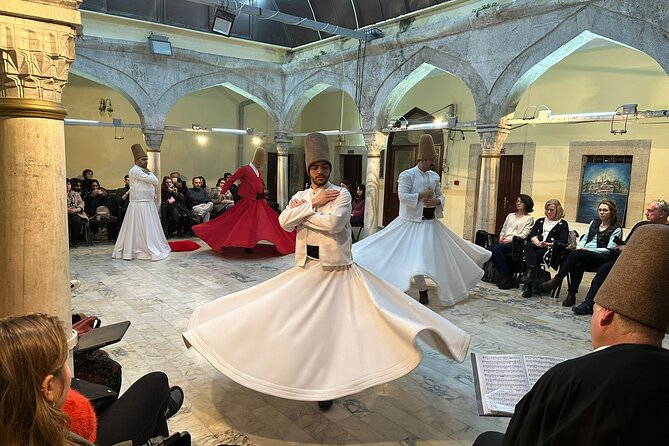
When the dervishes enter, the pace changes. Their movements are controlled, formal, and surprisingly calm. The turning looks effortless, but it comes from discipline rather than simple repetition.
The white skirts open as the dervishes rotate. Their upper bodies remain composed while the fabric moves around them in broad, steady circles. The effect can be hypnotic, but the point is not spectacle. Their attention appears directed inward, toward prayer and spiritual connection.
The small room helps here. You are close enough to see the performers’ concentration and the precision of their movements. At the same time, a crowded seat or poor angle can keep you from seeing the footwork clearly. That is another reason to arrive early.
You may find the ceremony peaceful, moving, or simply fascinating. You might also find it slow. This is not an activity built around constant action or verbal explanation. It asks you to sit quietly and watch a repeated movement unfold.
The full experience lasts about one hour, making it easy to fit into an evening in Sultanahmet or Fatih. It is long enough to feel substantial without taking over your night.
Authentic ritual or tourist performance?
That question deserves a straight answer. The setting, music, costumes, and ceremony are presented as a traditional Mevlevi Sema, not as a comedy act or a staged cultural medley. The lack of flashy production is part of its appeal.
You should still remember that a paid public ceremony for visitors is different from attending a private religious gathering. People sit watching, phones appear, and some may applaud. That can feel uncomfortable if you expect a strictly devotional setting.
The best approach is to treat the ceremony with care. Do not talk during the ritual. Avoid wandering around for pictures. Read about the Sema before arriving, and use the audio guide discreetly. This helps you see the event as a spiritual practice rather than a novelty.
The experience does not include a detailed live explanation before or after the ritual. That is the clearest weakness. Several aspects, such as the black cloak, white robe, tall hat, hand positions, and sequence of movements, make much more sense once you know their meaning.
If you want a lecture, guided religious history tour, or chance to ask questions, this is not the right format. If you want to witness the ceremony itself in an atmospheric historic room, it fits well.
The value of a one-hour, $23 experience
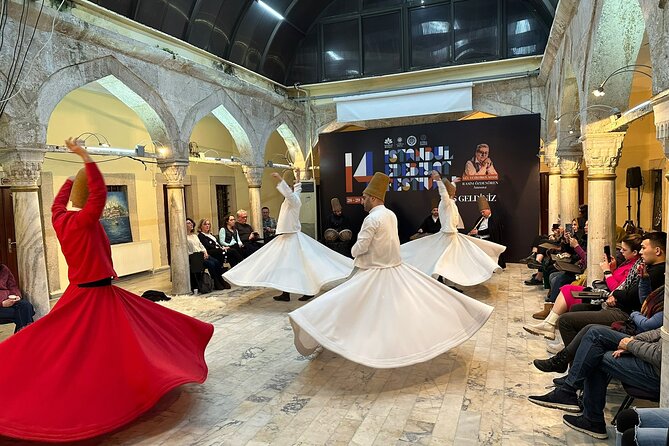
At $23 per person, this is one of Istanbul’s easier cultural additions to justify. You receive admission, the ceremony, and access to an English audio guide. There is no hotel transfer, so you must make your own way to the venue, but the central location keeps the cost down.
The price is especially reasonable for a short evening activity near major sights. You do not need to commit half a day, arrange transport outside the city, or build a complicated itinerary around it.
Value depends on your expectations. If you want a full history lesson, the ticket may feel incomplete because the introduction is limited. If you want live music, a traditional ritual, and a distinctive Istanbul setting for one hour, it offers a good return.
Tea served before the ceremony adds a pleasant extra, though it should not be treated as the main feature. The real value lies in seeing the relationship between music, prayer, costumes, and movement.
Flexible booking also helps. You can reserve now and pay later, and cancellation is available up to 24 hours before the ceremony for a full refund. Check the available starting time when booking, since the schedule can affect your dinner plans.
Who will enjoy this ceremony most?
I would recommend it to you if you want to see Istanbul’s spiritual side beyond its famous buildings. It works well after visiting the Blue Mosque, Hagia Sophia, Topkapi Palace, or the Grand Bazaar because the venue is in the same broad historic district.
It is also a good choice for couples, parents and adult children, and anyone interested in music, religious traditions, or Rumi’s teachings. The quiet format suits people who prefer observation to active participation.
Families with older children may find it meaningful, though younger children could struggle with the stillness and repeated motion. The ceremony is wheelchair accessible, which makes it a practical option for many visitors.
I would think twice if you dislike religious ceremonies, need constant explanation, or want an interactive activity. The audio guide helps, but you still spend most of the hour sitting quietly.
The experience can also feel different depending on your seat. If seeing every detail matters to you, arrive early. If you are more interested in the overall pattern and atmosphere, a rear position may provide a wider view.
How to prepare for a respectful visit
Before you leave your hotel, charge your smartphone and pack headphones. The audio guide is included, but it is only useful if your phone is ready.
Read a short explanation of Mevlevi symbolism before entering. At minimum, learn the basic meaning of the black cloak, white robe, tall hat, and raised and lowered hands. This small effort gives shape to what you are seeing.
Arrive at least 15 minutes early, and preferably 30 to 40 minutes early. Use the waiting time for tea, the audio guide, or your own reading rather than expecting a pre-show lecture.
During the ceremony:
- Keep conversation to a minimum.
- Silence your phone.
- Avoid walking around for photographs.
- Do not assume applause is expected.
- Watch the performers rather than treating the ritual as a photo opportunity.
These are simple rules, but they matter. The ceremony depends on concentration, and your behavior affects the room.
Should you book the Istanbul Whirling Dervishes Ceremony?
Book it if you want a short, affordable encounter with Mevlevi tradition in a historic Istanbul setting. The live music, chanting, disciplined whirling, and intimate hall create a memorable hour, and the location is convenient for an evening in Fatih.
Go with realistic expectations. You will not receive a long explanation from a live guide, hotel pickup, or a full evening of cultural instruction. You will receive a focused ceremony, an English audio guide, and a chance to watch a distinctive spiritual tradition up close.
My practical advice is simple: read first, arrive early, bring headphones, and treat the Sema as a religious ritual rather than a stage performance. Do that, and the $23 ticket is a sensible way to add depth and quiet to a busy Istanbul schedule.
FAQ
How long does the Whirling Dervishes Ceremony last?
The ceremony lasts one hour.
Where does the ceremony take place?
It takes place at Hoca Rüstem Medrese in the heart of Istanbul, in the Fatih area of the Marmara Region.
How much does the experience cost?
The listed price is $23 per person.
What is included in the ticket?
The ticket includes admission to the Whirling Dervishes ceremony and access to an English audio guide app on your smartphone.
Is hotel pickup included?
No. Hotel pickup and drop-off are not included.
Is there a live guide?
An English-speaking host or greeter is available, but the ceremony does not include a detailed live explanation. An English audio guide is included.
What should I bring?
Bring headphones and a charged smartphone for the audio guide.
How early should I arrive?
You must arrive at the hall 15 minutes before the show starts. Arriving earlier is recommended if you want a better seat.
Is the ceremony wheelchair accessible?
Yes, the activity is listed as wheelchair accessible.
Can I cancel for a refund?
Yes. You can cancel up to 24 hours in advance for a full refund. You can also reserve now and pay later.
Latest additions around Istanbul
- Istanbul: Hagia Sophia Skip-the-Line Ticket with Live Guide★ 3.7 · 3 reviews
- Ephesus Private Tour From Istanbul including transfers & domestic fights★ 5.0 · 3 reviews
- 6 Days Multi City Turkey Tour★ 5.0 · 3 reviews
- Princess Islands Daily Tour from Istanbul★ 5.0 · 3 reviews
- Premium Line : Private Istanbul Tour : All Inclusive Package★ 4.3 · 3 reviews
- Private Istanbul Combo Tour – Classic Old City and Bosphorus Cruise★ 5.0 · 3 reviews
- Private tour: 12-Day Turkish Adventure Package Tour From Istanbul★ 4.5 · 3 reviews
- Istanbul: Hagia Sophia Guided Tour with Optional Ticket★ 3.3 · 3 reviews
Whirling Dervish Shows, compared.
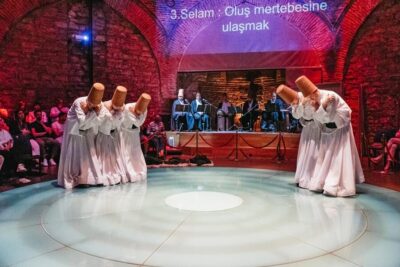
Hodjapasha Whirling Dervishes Show & Exhibition
Read our review →
Istanbul Hodjapasha Whirling Dervishes Show & Exhibition
Read our review →
Istanbul Traditional Turkish Dinner and Dervish Experience
Read our review →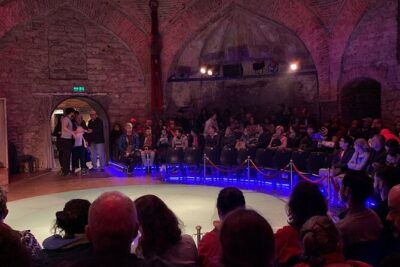
Whirling Dervish Ceremony: Go on a Spiritual Journey
Read our review →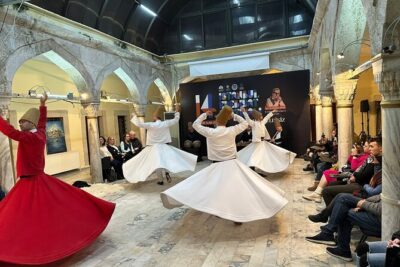
Istanbul Whirling Dervish Ceremony, A Mystical Sufi Experience
Read our review →Traditional Turkish Dinner and Dervish Experience
Read our review →Browse the lists this tour appears in