
Reviewed · WHIRLING DERVISH SHOWS
Whirling Dervish Ceremony Tickets in Istanbul
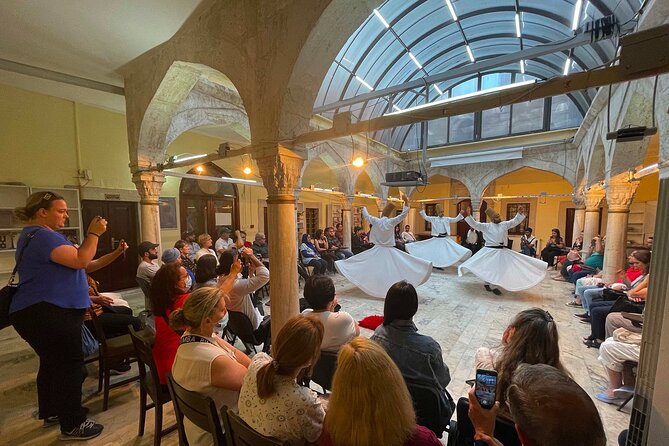
The most striking part of this Istanbul evening is the setting: a small, old dervish house near Hagia Sophia, where musicians and whirling performers create a quiet Sufi ceremony rather than a large stage show. The hour-long program gives you a close view of the Mevlevi tradition linked to Rumi, the medieval poet from Konya.
I like the live traditional music and the brief introduction before the ceremony, which helps you understand the gestures and the spiritual purpose of the turning. I also like the modest price of $22.88, especially with tea or coffee, a booklet, and skip-the-line entry included.
The main concern is organization. Some bookings have begun late, and the venue can feel cramped or hard to identify. Seating is not equally good, so arriving early matters.
In This Review
- Key points at a glance
- What the whirling ceremony is really showing you
- The setting near Hagia Sophia
- What happens during the one-hour program
- Why the live music matters
- Seating, timing, and the small-room problem
- Coffee, tea, and the booklet
- Is $22.88 a fair price?
- Who will enjoy this most
- Practical advice before you book
- Should you book this Istanbul ceremony?
- FAQ
- How long does the Whirling Dervish ceremony last?
- Where does the ceremony take place?
- What is included with the ticket?
- Is the experience offered in English?
- Can most people participate?
- Can I cancel for a full refund?
Key points at a glance
- A one-hour Sufi ceremony near Hagia Sophia: You stay in Istanbul’s Old City and can pair the performance with nearby sights.
- Live music comes first: The musicians receive a substantial part of the program, and the dancing is not nonstop.
- A short introduction adds useful context: You hear about Rumi, the Mevlevi Order, and the meaning behind the movements.
- The venue is intimate but small: A historic two-century-old house creates atmosphere, though some seats have blocked views.
- Included extras add value: Coffee and tea, an information booklet, and skip-the-line access are part of the ticket.
- Allow flexibility before the start: Delays of 40 minutes, and even later, have occurred.
What the whirling ceremony is really showing you
The Whirling Dervish ceremony is connected to the Mevlevi Order, a Sufi tradition associated with Jalal al-Din Rumi. Rumi lived in medieval Anatolia, and his poetry and teachings shaped a spiritual practice centered on love, devotion, music, and turning toward God.
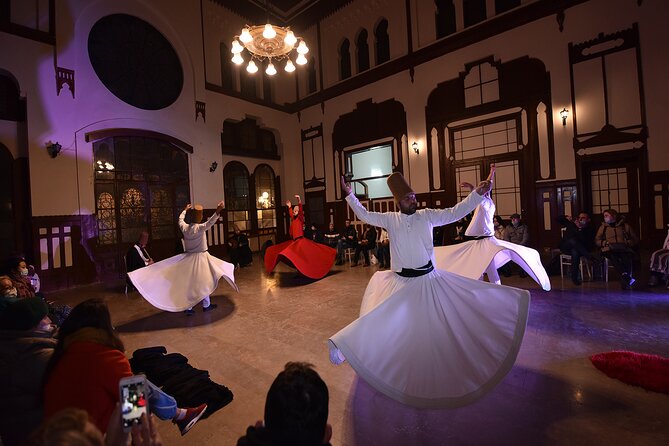
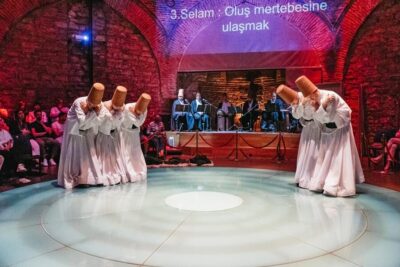
This is not simply a folk dance. The turning has religious meaning. One hand is raised toward heaven, while the other points down toward the earth. The gesture represents receiving spiritual grace and passing it onward. The controlled spinning is intended as prayer, not as a stunt.
That distinction matters when you decide how to watch. If you expect a fast theatrical dance show with constant action, the ceremony may seem repetitive. If you give your attention to the music, measured gestures, robes, and calm rhythm, the performance has a more serious character.
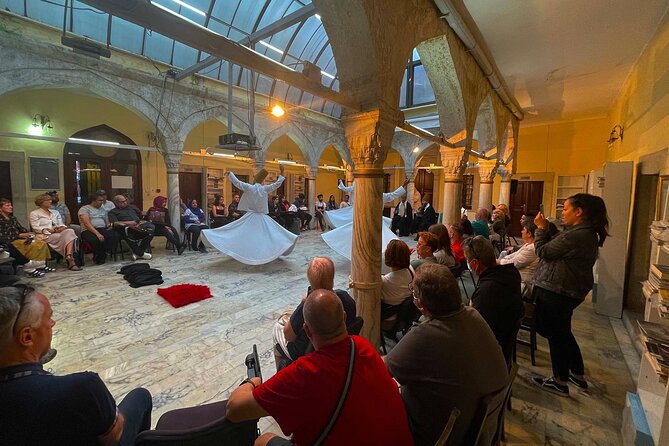
The program takes place in a traditional house close to Hagia Sophia. It has been described as an old, two-century-old space, with the worn feel of an Istanbul building rather than a polished modern theater. One side of this is appealing: the old walls and intimate room help you picture the ceremony in a traditional setting.
The other side is practical. The room is small, and it can become crowded. Some people have found the air-conditioned theater comfortable, while others have found the space cramped or less comfortable than the promotional images suggest.
More whirling dervish ceremonies:
- Istanbul: Hodjapasha Whirling Dervishes Show & Exhibition
★ 4.4 · 4,790 reviews - Istanbul: Whirling Dervishes Ceremony and Mevlevi Sema
★ 4.3 · 1,694 reviews - Istanbul: Whirling Dervish Ceremony next to Hagia Sophia
★ 4.5 · 906 reviews
The setting near Hagia Sophia
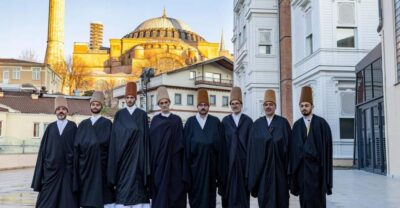
The location puts you in the heart of Istanbul’s historic district. The venue is near public transportation and close to Hagia Sophia, so it is easy to combine the ceremony with a day in Sultanahmet.
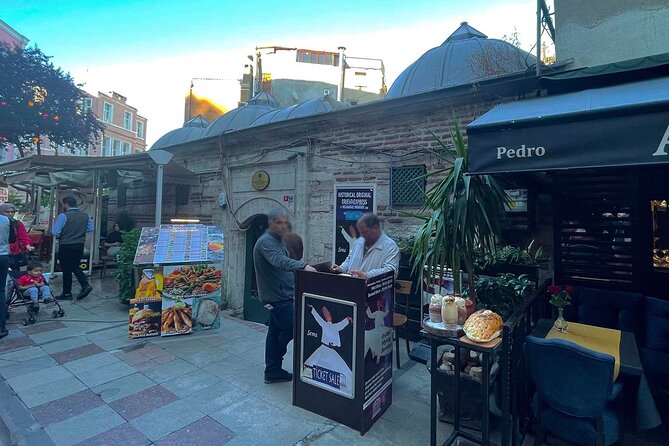
Finding the entrance may require care. The location information has not always been clear, and some ticket holders have walked past the venue or only recognized it by chance. Ticket sellers and people at the site have also occasionally seemed unsure about the exact arrangement.
I recommend saving the venue information on your phone before you leave your hotel. Since the ceremony is in an old house rather than a large, obvious performance hall, allow extra time to locate the entrance.
Once inside, the atmosphere is more personal than grand. You are close to the musicians and performers. That helps you see the details of the movement, but it also means that the room does not offer the broad sightlines of a formal theater.
Some visual distractions have appeared in the room, including posters advertising ticket sales and unrelated photographs on a shelf behind the performers. These details can break the mood, especially if you are hoping for a carefully designed stage. Still, the old house gives the performance a sense of place that a modern auditorium would lack.
What happens during the one-hour program
The evening begins with live music. Traditional instruments and repeated melodies establish the mood before the dervishes begin turning. Several people have found the musicians especially enjoyable, and the music may occupy more of the program than you expect.
A presenter gives a short explanation at the beginning. This is useful because the ceremony uses symbols that are not obvious at first glance. You learn about the Sufi tradition, Rumi, the Mevlevi Order, and the general meaning of the ritual.
The explanation is brief, not a full lecture. If you want detailed background on Sufism, you will need to read more on your own. The included booklet about Sufis, dervishes, and Rumi helps fill that gap.
The dancers then enter and perform the whirling ceremony. The number of performers can vary. The promotional image may show more dancers, while the actual performance has sometimes included three or four. You should treat the pictures as an indication of the style, not a guarantee of the exact cast or costumes.
Some performances include imagery projected on a wall behind the dancers. The visuals can match the music and add atmosphere, though their meaning is not always explained. For some people, the projections make the ceremony feel more theatrical. For others, they raise questions that the short introduction does not answer.
The ceremony has a steady pace. You will see repeated turning and measured movements rather than a sequence of different dances. That repetition is part of the prayer, but it will not suit everyone. One hour can feel peaceful and absorbing, or it can feel long if you prefer variety.
Why the live music matters
The strongest part of the program may be the music. The musicians play traditional sounds before and during the whirling, and the slow build gives the ceremony its emotional shape.
I would not book this expecting an hour of nonstop spinning. There is a lot of playing, with the musicians setting the pace and the dervishes appearing for a more focused portion. That balance is appropriate for a ceremony, but it is important to know before you buy a ticket.
The music also gives you something to appreciate if the visual elements are less polished. A cramped room, bright lighting, or a distracting poster can weaken the stage picture. The live sound still carries much of the feeling.
The lighting has received mixed reactions. Some people have wished for dimmer lights to create a more prayerful mood. If you are sensitive to presentation details, you may find the room less atmospheric than the historic building suggests.
A few more Istanbul experiences to weigh up
- Istanbul: Hagia Sophia Skip-the-Line Ticket & Museum Option
★ 3.7 · 4,958 reviews - Istanbul: Topkapi Palace & Harem Museum Ticket & Audio Guide
★ 4.1 · 3,977 reviews - Istanbul: Blue Mosque & Hagia Sophia Guided Tour w/ Tickets
★ 4.8 · 3,600 reviews - Istanbul: Basilica Cistern Skip-the-Line Entry Ticket
★ 4.6 · 2,270 reviews
Seating, timing, and the small-room problem
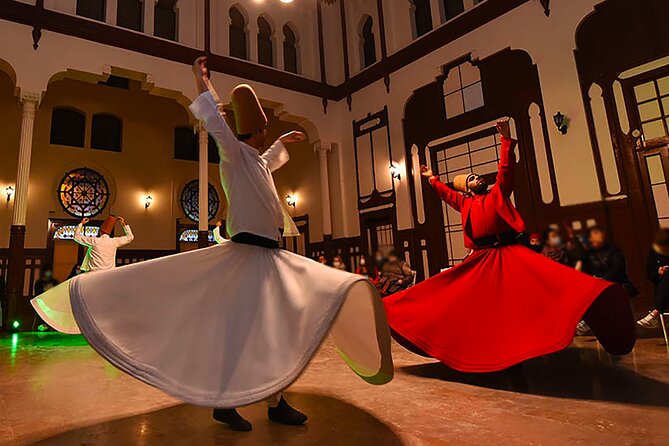
Arrive early if you care about your view. Seating is limited, and the best chairs can go quickly. From some positions, another person’s head may block part of the ceremony, especially if the room is full.
The small size brings one clear benefit: you are close to the performers. You can watch their posture, arm positions, and controlled turns without feeling far away. The drawback is that the room has little spare capacity when attendance is high.
Timing is the biggest practical weakness. The stated duration is about one hour, but that does not include waiting before the performance. A scheduled 6:30 start has sometimes been delayed by 40 minutes, with further changes communicated poorly.
That makes this a poor choice immediately before a dinner reservation, ferry departure, airport transfer, or another timed activity. Give yourself a generous buffer. If the ceremony starts on time, you will simply have a few extra minutes in the old house.
The skip-the-line feature can speed entry, but it does not guarantee an orderly start. It is most useful when there is a queue at the door. It does not solve unclear instructions or delays inside the venue.
Coffee, tea, and the booklet
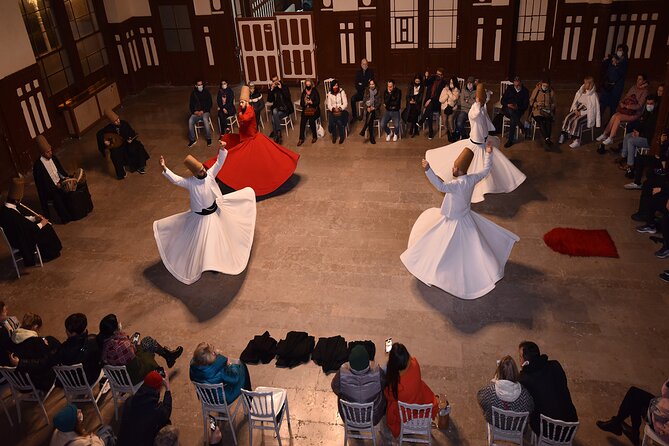
Coffee and tea are included, along with an information booklet about Sufis, dervishes, and Rumi. These are modest extras, but they make the ticket feel more complete at this price.
The booklet is particularly useful because it lets you follow the ceremony with a little more understanding. Read it before the performance if it is handed out early, or look through it afterward to recall the symbolism.
Do not treat the refreshments as a major part of the outing. They are a small courtesy, not a full café visit. Also, the promised tea or coffee has not always been provided. In at least one case, only a small cup of water was offered.
That inconsistency is worth keeping in mind. The ceremony itself is the reason to book. The refreshments and booklet add value when available, but they should not determine your decision.
Is $22.88 a fair price?
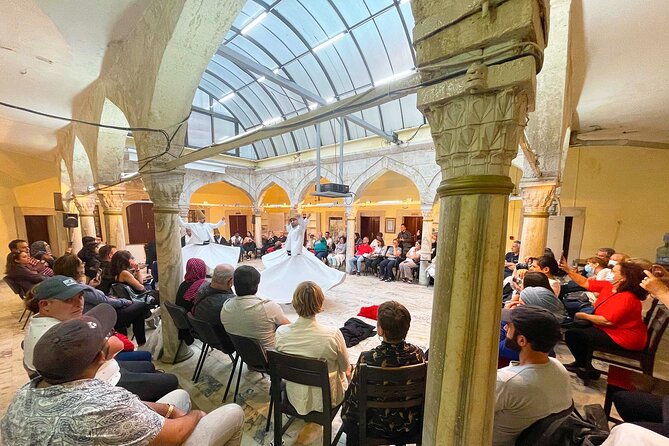
At $22.88 per person, this is an affordable way to see a traditional Sufi ceremony in central Istanbul. The price covers admission, the performance, the introductory explanation, and the listed extras. You also avoid arranging a separate visit to a more distant venue.
The value depends on what you want. If you are curious about Rumi, Sufi ritual, and Turkish musical traditions, the ticket is reasonably priced for a short cultural stop. It also works well for a first evening in Istanbul because the ceremony is near major Old City sights.
The value is weaker if you expect a lavish stage production. The room is small, the lighting may be plain, the cast can vary, and the performance may include more music than dancing. You are paying for access to an intimate ceremony, not a large-scale cultural spectacle.
I would also factor in your schedule. A low-cost ticket loses some value if you spend a long time waiting or need to rearrange dinner plans. If your itinerary is flexible, the risk is easier to accept.
Who will enjoy this most
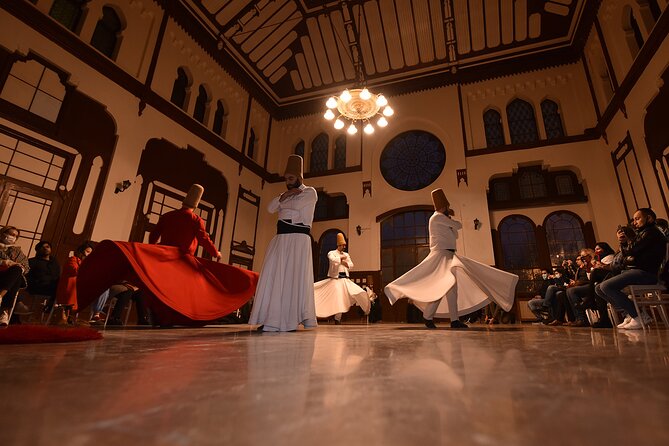
I would recommend the ceremony to you if you enjoy quiet cultural events, traditional music, religious symbolism, and historic interiors. It suits families and first-time visitors who want something different from Istanbul’s mosques, palaces, and food tours.
It is also a good fit if you want to stay near Hagia Sophia. You can visit the surrounding Old City, have dinner nearby, and walk to the venue with less planning than a performance outside the center.
You may not enjoy it if you need polished production standards, clear stage management, or constant movement. The repetitive turning is intentional, but it may feel monotonous if you do not connect with the spiritual purpose.
Photography can also be awkward. A person in front of you may block the view, and promotional posters or unrelated objects can appear in the background. Go for the atmosphere and ceremony first, not for perfect photographs.
Practical advice before you book
Check the meeting information carefully and allow time to find the entrance. The venue is near public transportation, but the exact location has caused confusion.
Arrive early for better seating. This is one of the few ways you can improve the experience yourself, since the room is small and not every chair offers the same view.
Keep your evening open after the scheduled start. Delays have happened, and communication about them has not always been smooth. If you have a fixed reservation, choose a different time or another performance.
Expect the number of dervishes, costumes, lighting, and projections to vary. The ceremony’s core elements remain the Mevlevi tradition, music, and whirling, but the visual presentation is not completely fixed.
The ticket offers free cancellation if you cancel at least 24 hours before the start time. Cancellations or changes made less than 24 hours ahead are not accepted for a refund.
Should you book this Istanbul ceremony?
Book it if you want an affordable, close-up look at the spiritual side of Istanbul and can accept a simple, sometimes imperfect presentation. The live music, short introduction, old house, and serious tone make this more meaningful than a generic dance show.
Skip it if you need a guaranteed start time, spacious seating, or a polished production with clear explanations of every visual detail. The best approach is to arrive early, keep your schedule flexible, and judge the ceremony on its ritual and music rather than on the room’s decorations.
At $22.88, I consider it a reasonable cultural add-on for a flexible evening in Sultanahmet. Just remember that this is a small local performance in an old house, not a grand theater production.
FAQ
How long does the Whirling Dervish ceremony last?
The ceremony lasts approximately one hour. This does not necessarily include time spent waiting before the performance begins.
Where does the ceremony take place?
It takes place in a traditional house and salon near Hagia Sophia in Istanbul’s Old City. The venue is close to public transportation.
What is included with the ticket?
Admission to the ceremony, coffee and tea, an information booklet about Sufis, dervishes, and Rumi, and skip-the-line access are included.
Is the experience offered in English?
Yes. The experience is offered in English, and a presenter gives background information before the ceremony begins.
Can most people participate?
Yes. Most people can participate, and the venue is near public transportation.
Can I cancel for a full refund?
Yes. You can cancel for a full refund up to 24 hours before the experience starts. Changes or cancellations made less than 24 hours before the start time are not accepted for a refund.
Latest additions around Istanbul
- Istanbul: Hagia Sophia Skip-the-Line Ticket with Live Guide★ 3.7 · 3 reviews
- Ephesus Private Tour From Istanbul including transfers & domestic fights★ 5.0 · 3 reviews
- 6 Days Multi City Turkey Tour★ 5.0 · 3 reviews
- Princess Islands Daily Tour from Istanbul★ 5.0 · 3 reviews
- Premium Line : Private Istanbul Tour : All Inclusive Package★ 4.3 · 3 reviews
- Private Istanbul Combo Tour – Classic Old City and Bosphorus Cruise★ 5.0 · 3 reviews
- Private tour: 12-Day Turkish Adventure Package Tour From Istanbul★ 4.5 · 3 reviews
- Istanbul: Hagia Sophia Guided Tour with Optional Ticket★ 3.3 · 3 reviews
Whirling Dervish Shows, compared.
Hodjapasha Whirling Dervishes Show & Exhibition
Read our review →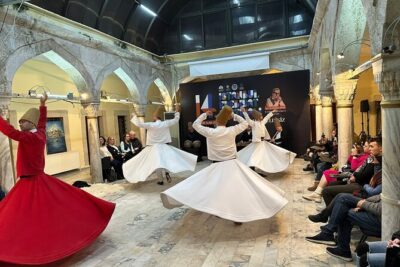
Istanbul Hodjapasha Whirling Dervishes Show & Exhibition
Read our review →
Istanbul Traditional Turkish Dinner and Dervish Experience
Read our review →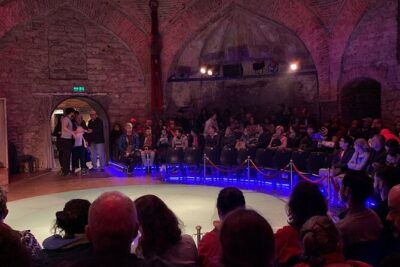
Whirling Dervish Ceremony: Go on a Spiritual Journey
Read our review →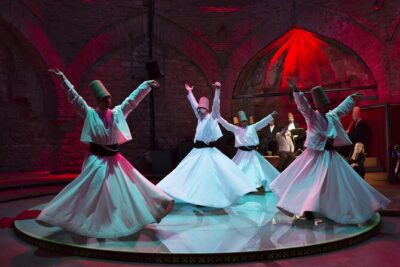
Istanbul Whirling Dervish Ceremony, A Mystical Sufi Experience
Read our review →Browse the lists this tour appears in